Tucatinib for HER2-Positive Breast Cancer: Treatment Guide
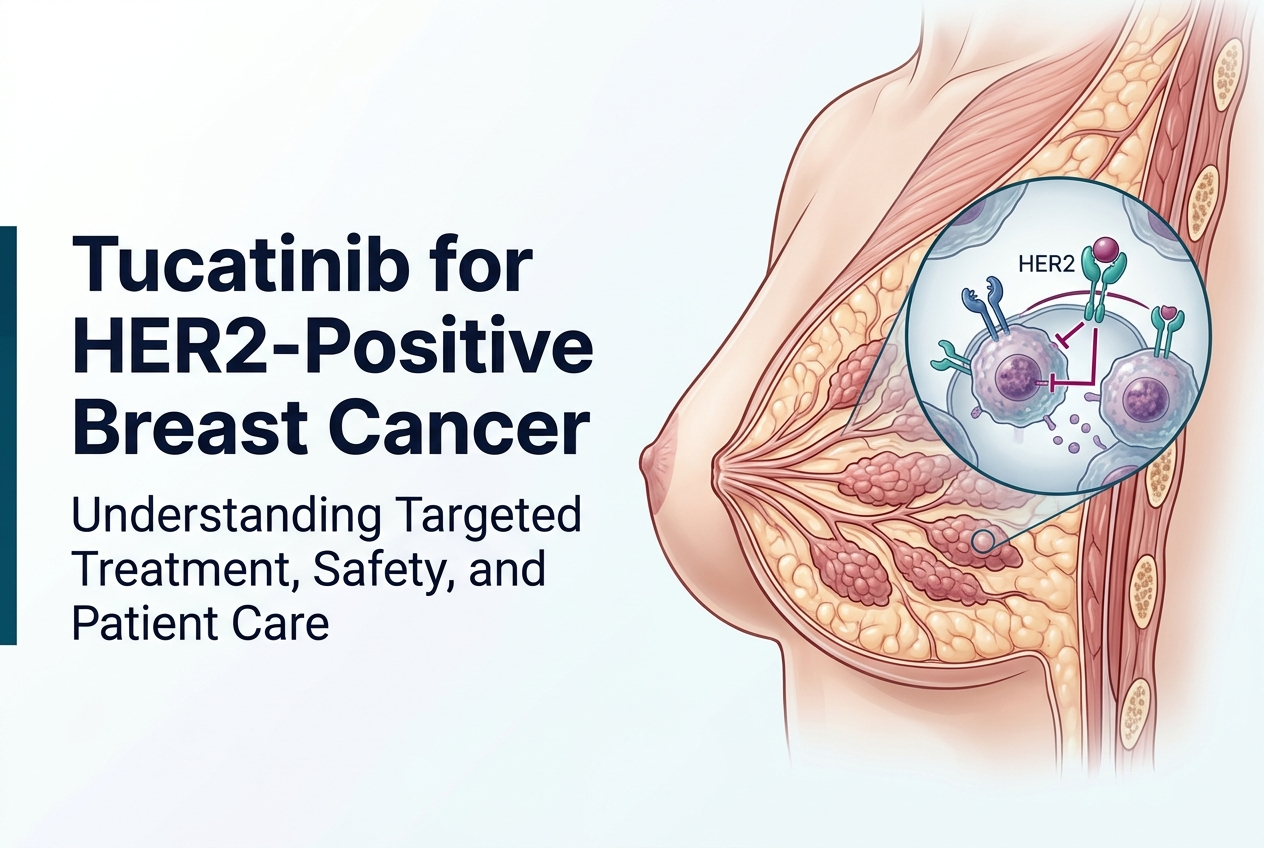
Tucatinib for HER2-Positive Breast Cancer: Treatment, Benefits, Side Effects, and Patient Care
Introduction
Breast cancer is one of the most common cancers worldwide. Although breast cancer can develop in different forms, identifying the biological characteristics of a tumor is essential for selecting an appropriate treatment. One important subtype is HER2-positive breast cancer, in which cancer cells have increased levels or activity of human epidermal growth factor receptor 2 (HER2).
Advances in targeted cancer therapy have created additional treatment options for people with HER2-positive disease. Tucatinib is an oral targeted therapy that inhibits HER2 signaling. It is used in specific treatment combinations for certain adults with advanced or metastatic HER2-positive breast cancer. It also has an approved role in selected patients with advanced HER2-positive colorectal cancer.
This guide explains HER2-positive breast cancer, how tucatinib works, how doctors assess treatment eligibility, possible side effects, and the importance of ongoing medical monitoring.
Medical note: Tucatinib is a prescription anticancer medicine. It is not appropriate for every person with breast cancer and should only be used under the supervision of a qualified oncology specialist.
What Is HER2-Positive Breast Cancer?
Breast cancer begins when cells in breast tissue grow abnormally and multiply without normal control. The disease may remain within the breast or spread to nearby lymph nodes and distant organs.
HER2 is a protein involved in cell growth and signaling. Some breast cancer cells produce excessive amounts of HER2 or show increased HER2 activity. These tumors are described as HER2-positive.
HER2-positive breast cancer can grow more rapidly than some other breast cancer subtypes, but it may also respond to treatments specifically designed to target the HER2 pathway.
HER2-positive disease is not the same as hormone receptor-positive disease. A tumor may be HER2-positive and also express estrogen or progesterone receptors, or it may lack these hormone receptors. Doctors use these test results to help develop an individualized treatment plan.
What Is Tucatinib?
Tucatinib is an oral targeted anticancer medicine belonging to a class of drugs called tyrosine kinase inhibitors (TKIs). It inhibits the HER2 protein's intracellular signaling activity, helping interfere with signals that can support cancer cell growth.
Unlike conventional chemotherapy, which affects many rapidly dividing cells, targeted therapies are designed to interfere with particular molecular pathways involved in cancer. However, targeted medicines can still cause significant side effects and require careful monitoring.
Tucatinib is not generally used as a stand-alone treatment for the approved breast cancer indications. Depending on the treatment setting, it is used in combination with other anticancer medicines.
How Does Tucatinib Work?
HER2 can transmit signals that encourage cancer cells to grow and survive. Tucatinib selectively inhibits the HER2 tyrosine kinase, disrupting part of this signaling process.
For certain patients with advanced or metastatic HER2-positive breast cancer, tucatinib may be used with other HER2-directed treatment and chemotherapy. The combination is intended to control disease more effectively than an unsuitable or incomplete treatment approach.
Tucatinib has also been studied in patients with brain metastases, which occur when cancer spreads from its original site to the brain. Treatment decisions in this situation depend on the patient's overall condition, previous therapies, imaging findings, and other clinical factors.
The response to treatment varies. Tucatinib does not guarantee a cure, and its use should be based on the approved indication and an oncologist's assessment.
When Is Tucatinib Used for Breast Cancer?
Tucatinib has specific uses in adults with advanced, unresectable, or metastatic HER2-positive breast cancer.
Depending on the applicable prescribing information and clinical circumstances, it may be used:
In combination with trastuzumab and capecitabine for certain adults with advanced or metastatic HER2-positive breast cancer, including some patients with brain metastases, following previous anti-HER2 treatment.
In combination with trastuzumab and pertuzumab as maintenance treatment for eligible adults with unresectable locally advanced or metastatic HER2-positive breast cancer following induction treatment.
The appropriate combination depends on the treatment setting, previous medicines, local regulatory approval, and the patient's medical history. These regimens are not interchangeable without specialist guidance.
Tucatinib is also approved in certain circumstances for advanced HER2-positive, RAS wild-type colorectal cancer that has progressed after specified chemotherapy treatments. That is a separate indication with its own eligibility requirements.
Symptoms of Breast Cancer
Breast cancer symptoms vary. Some people notice a breast change, while others are diagnosed during routine screening.
Possible symptoms include:
A new lump or thickened area in the breast.
A change in breast size, shape, or appearance.
Skin dimpling, redness, or other persistent skin changes.
A newly inverted nipple or unusual nipple changes.
Nipple discharge that is not breast milk.
A lump or swelling in the underarm area.
Persistent localized breast discomfort.
These symptoms do not necessarily mean that a person has cancer. However, a new or persistent change should be assessed by a healthcare professional.
Advanced breast cancer may cause additional symptoms depending on where the disease has spread. For example, bone pain, persistent headaches, neurological changes, or breathing difficulties need appropriate medical evaluation.
Causes and Risk Factors
There is no single cause of breast cancer. The disease develops through a combination of biological, genetic, hormonal, and environmental factors.
Factors associated with breast cancer risk include:
Increasing age.
A personal or family history of breast cancer.
Certain inherited genetic variants.
Previous exposure to therapeutic radiation involving the chest.
Hormonal and reproductive factors.
Certain lifestyle and metabolic factors.
HER2 positivity is a tumor characteristic that helps classify the cancer and guide treatment. It does not, by itself, establish why a particular person developed breast cancer.
A person may develop HER2-positive breast cancer without any obvious risk factor.
How Is HER2-Positive Breast Cancer Diagnosed?
Accurate diagnosis is essential before selecting targeted therapy.
1. Clinical examination
A healthcare professional assesses breast changes, symptoms, relevant medical history, and possible lymph node involvement.
2. Breast imaging
Depending on the circumstances, diagnostic tests may include mammography, breast ultrasound, and magnetic resonance imaging (MRI).
3. Biopsy
A biopsy collects tissue from a suspicious area. A pathologist examines the sample to determine whether cancer is present and to characterize the tumor.
4. HER2 testing
HER2 status is assessed using validated laboratory methods, commonly immunohistochemistry (IHC) and, when appropriate, in situ hybridization (ISH). These tests help establish whether the tumor meets the criteria for HER2-positive disease.
5. Hormone receptor testing
Estrogen receptor (ER) and progesterone receptor (PR) testing can provide additional information about the tumor and potential treatment options.
6. Staging and further assessment
Doctors may recommend additional imaging and laboratory tests to determine whether the cancer has spread. If metastatic disease is suspected, the location and extent of disease help guide treatment.
Before prescribing tucatinib, the oncology team also reviews previous treatment, concurrent medicines, liver function, and the specific indication being considered.
Treatment Options for HER2-Positive Breast Cancer
Treatment depends on the stage of the cancer, HER2 and hormone receptor results, previous therapies, overall health, and patient preferences.
Surgery
Surgery may be used to remove a breast tumor or, in selected cases, other areas of disease. Whether surgery is appropriate depends on the extent and location of the cancer.
Radiation therapy
Radiation therapy uses high-energy radiation to destroy cancer cells in a targeted area. It may be used after surgery or for symptom control in selected advanced cases.
Chemotherapy
Chemotherapy uses medicines that damage or destroy cancer cells. It may be combined with HER2-targeted treatment when clinically appropriate.
HER2-targeted therapy
HER2-targeted medicines interfere with pathways that support the growth of HER2-positive cancer cells. Options may include trastuzumab, pertuzumab, antibody-drug conjugates, or targeted oral medicines, depending on the clinical setting.
Tucatinib-based combinations
Tucatinib may be prescribed as part of a combination regimen for eligible patients with advanced or metastatic HER2-positive breast cancer. The other medicines in the combination are important parts of the treatment plan.
Treatment for metastatic disease
When breast cancer has spread to distant organs, treatment often aims to control the disease, extend survival, preserve quality of life, and relieve symptoms. Treatment selection is individualized, and the plan may change if the cancer progresses or side effects become difficult to manage.
Tucatinib Dosage and Administration
Tucatinib is supplied as an oral tablet. The strength listed for a product, such as 150 mg, refers to the amount of tucatinib in each tablet. It does not automatically determine the number of tablets a particular patient should take.
The prescribed regimen depends on the specific indication, the medicines used in combination, tolerability, liver function, interactions, and the applicable prescribing information.
Patients should:
Follow the exact prescription provided by their oncology team.
Take the medicine according to the instructions supplied with the product.
Ask their pharmacist or doctor what to do if a dose is missed or vomiting occurs after a dose.
Never double a dose or independently change the treatment schedule.
Inform their care team before starting or stopping other medicines, supplements, or herbal products.
Do not use another patient's prescription as a guide. Dose adjustments and treatment interruptions must be directed by the treating clinician.
Possible Side Effects of Tucatinib
Tucatinib can cause side effects. The type and severity vary between individuals and may also depend on the other medicines used in the regimen.
Potential side effects include:
Diarrhea.
Nausea or vomiting.
Fatigue.
Reduced appetite.
Abdominal discomfort.
Changes in liver blood tests.
Increased blood creatinine measurements.
Other medicines in a combination regimen can cause additional side effects, so symptoms should be assessed in the context of the complete treatment plan.
Serious liver problems
Tucatinib can cause severe liver injury, which may be life-threatening. Doctors generally check liver function before treatment and regularly during therapy.
Contact the treating team promptly if symptoms such as yellowing of the skin or eyes, dark urine, unusual itching, or significant abdominal discomfort develop.
Severe diarrhea or dehydration
Persistent or severe diarrhea can cause dehydration and other complications. Patients should follow their clinician's instructions for managing diarrhea and seek medical advice promptly if symptoms are severe, persistent, or accompanied by dizziness, weakness, or reduced urination.
When to seek urgent care
Seek urgent medical assessment for severe symptoms, signs of significant dehydration, confusion, fainting, difficulty breathing, or other rapidly worsening problems. Follow any emergency instructions provided by the oncology team.
Monitoring During Treatment
Regular monitoring helps doctors evaluate treatment response and identify complications early.
Monitoring may include:
Liver function blood tests.
Review of diarrhea and other side effects.
Assessment of appetite, hydration, and general wellbeing.
Review of prescription and non-prescription medicines.
Imaging to evaluate the cancer's response.
Additional laboratory tests based on the patient's condition.
Patients should attend scheduled appointments even when they feel well. Some treatment-related abnormalities may be detected on laboratory tests before noticeable symptoms appear.
Living With Advanced Breast Cancer
A diagnosis of advanced breast cancer can affect physical health, emotional wellbeing, family relationships, and financial circumstances. Supportive care is an important part of comprehensive cancer treatment.
Helpful approaches may include:
Maintaining adequate nutrition and fluid intake as advised by the care team.
Reporting side effects early rather than waiting until they become severe.
Discussing pain, sleep problems, fatigue, and emotional distress with healthcare professionals.
Asking about counseling, support groups, rehabilitation, or palliative care when appropriate.
Keeping a written list of medicines and scheduled appointments.
Involving trusted family members or caregivers when the patient wishes.
Supportive care can be provided alongside anticancer treatment. It is not limited to end-of-life care and may help patients manage symptoms and maintain quality of life throughout treatment.
Tucatinib and HER2-Positive Colorectal Cancer
Although this article focuses on breast cancer, tucatinib also has a specific role in selected adults with advanced colorectal cancer.
The relevant indication involves HER2-positive, RAS wild-type colorectal cancer that cannot be removed surgically or has metastasized and has progressed following specified fluoropyrimidine-, oxaliplatin-, and irinotecan-based chemotherapy. In this setting, tucatinib is used with trastuzumab.
This treatment is not suitable for every person with colorectal cancer. Tumor biomarker results, previous treatment, overall health, and the current prescribing information must be reviewed before treatment is considered.
Frequently Asked Questions
1. What is tucatinib used for?
Tucatinib is a targeted anticancer medicine used in specific treatment combinations for certain adults with advanced or metastatic HER2-positive breast cancer. It also has an indication for selected HER2-positive, RAS wild-type advanced colorectal cancer.
2. Is tucatinib a chemotherapy medicine?
Tucatinib is classified as a targeted tyrosine kinase inhibitor rather than conventional cytotoxic chemotherapy. However, it may be combined with chemotherapy or other targeted medicines.
3. Does tucatinib treat all types of breast cancer?
No. Its approved breast cancer uses apply to specific HER2-positive disease settings. HER2 testing and assessment by an oncology specialist are essential.
4. Can tucatinib be used for breast cancer that has spread to the brain?
Tucatinib-based treatment may be appropriate for certain patients with HER2-positive breast cancer and brain metastases. The decision depends on the individual clinical situation and the treatment regimen.
5. Is tucatinib used alone?
For the approved breast cancer indications discussed here, tucatinib is used in combination with other anticancer medicines. Patients should not take it as a self-selected or stand-alone treatment.
6. What does HER2-positive mean?
HER2-positive means that testing shows the tumor has HER2 characteristics that meet the criteria for HER2-positive disease. This result can help doctors select HER2-targeted treatments.
7. Is a 150 mg tablet the same as a complete prescribed dose?
No. Tablet strength and the patient's prescribed dose are different concepts. The number of tablets and timing must follow the individual prescription.
8. What are the common side effects of tucatinib?
Possible side effects include diarrhea, nausea, fatigue, reduced appetite, and laboratory changes. Side effects should be discussed with the treating oncology team.
9. Can tucatinib cause liver problems?
Yes. Tucatinib can cause serious liver injury. Regular liver function monitoring and prompt reporting of warning symptoms are important.
10. What should I do if I develop severe diarrhea?
Contact your oncology team promptly and follow their management instructions. Severe diarrhea can cause dehydration and may require urgent medical care.
11. Can tucatinib cure metastatic breast cancer?
No medicine can guarantee a cure. In advanced or metastatic disease, treatment commonly aims to control cancer, delay progression, prolong survival, and maintain quality of life.
12. Can I take other medicines with tucatinib?
Some medicines can interact with tucatinib or affect its safety. Tell your doctor and pharmacist about all medicines, supplements, and herbal products you use before starting treatment.
13. Does every HER2-positive tumor respond to tucatinib?
No. Treatment response varies, and not every patient will benefit. Biomarker results, prior therapies, disease characteristics, and treatment tolerance all matter.
14. Is tucatinib used for colorectal cancer?
Yes, in a specific setting involving HER2-positive, RAS wild-type unresectable or metastatic colorectal cancer that has progressed after specified prior chemotherapy. It is used with trastuzumab when indicated.
15. Where can I ask about tucatinib medicine information?
For medicine information and availability enquiries, visit RootAid Pharma at https://rootaidpharma.com.bd. Confirm current product details, pack information, and availability directly with the website or its authorized representatives. Cancer treatment decisions should always be made with a qualified oncology specialist.
Conclusion
Tucatinib is an important HER2-targeted treatment option for certain adults with advanced or metastatic HER2-positive breast cancer. Its role depends on the patient's tumor biomarkers, previous treatment, prescribed combination, and overall medical condition. It also has a separate indication for selected patients with advanced HER2-positive colorectal cancer.
Appropriate testing, specialist supervision, regular monitoring, and timely management of side effects are essential for safe treatment. Patients should never begin, stop, or adjust tucatinib without guidance from their oncology team.
For medicine information and availability enquiries, visit RootAid Pharma at https://rootaidpharma.com.bd.
Medical Disclaimer
This article is for general educational and informational purposes only. It does not replace professional medical advice, diagnosis, or treatment. Tucatinib is a prescription anticancer medicine that may cause serious adverse effects, including liver injury. Indications, approved combinations, and prescribing requirements can vary by jurisdiction and may change over time. Always consult a qualified oncologist and the current official prescribing information before making treatment decisions.
Need help after reading this?
Talk to our support team for sourcing guidance, product availability, and global delivery assistance.