Symptoms, Causes & Treatment Options
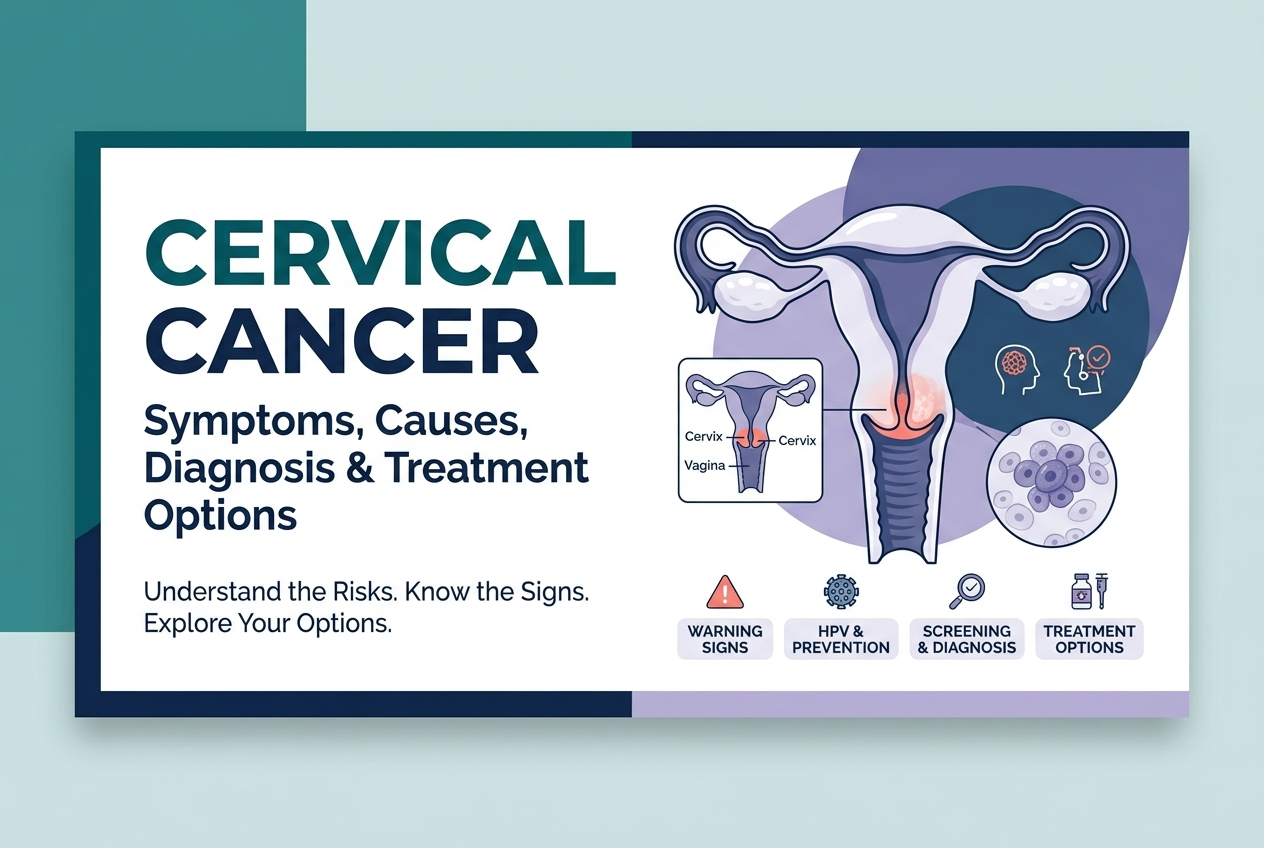
Cervical Cancer: Symptoms, Causes, Diagnosis and Treatment Options
Introduction
Cervical cancer is a type of cancer that begins in the cervix, the lower part of the uterus that connects to the vagina. It often develops gradually, and early changes in cervical cells may be detected through routine screening before cancer develops or spreads.
Persistent infection with certain high-risk types of human papillomavirus (HPV) is responsible for nearly all cases of cervical cancer. Regular screening, HPV vaccination, timely medical assessment, and appropriate treatment can help reduce the burden of this disease.
Understanding the warning signs, risk factors, diagnostic tests, and available treatments can help people make informed decisions about their health. This guide explains cervical cancer in clear, patient-friendly language.
What Is Cervical Cancer?
Cervical cancer occurs when abnormal cells in the cervix begin to grow uncontrollably. The cervix forms the opening between the uterus and the vagina. Most cervical cancers are either squamous cell carcinomas, which develop from the thin cells lining the cervix, or adenocarcinomas, which arise from glandular cells.
Cancer usually develops over time. Before invasive cancer appears, some cervical cells may undergo precancerous changes. These changes do not always become cancer, but certain high-grade abnormalities need careful assessment and treatment.
The type of cancer, its stage, the person's general health, and whether fertility preservation is important all influence the treatment plan.
Causes and Risk Factors of Cervical Cancer
Persistent HPV infection
High-risk HPV infection is the main cause of cervical cancer. HPV is a common virus transmitted through intimate skin-to-skin contact. Most infections clear naturally, but persistent infection with high-risk HPV types can cause cellular changes that may eventually lead to cancer.
Having HPV does not mean a person has cervical cancer. Screening and appropriate follow-up are important when an HPV test is positive.
Other risk factors
Factors associated with a higher risk include:
Not receiving recommended cervical screening.
Smoking tobacco.
Having a weakened immune system.
Persistent infection with high-risk HPV.
Certain medical and reproductive factors that may influence individual risk.
A person can develop cervical cancer without having every known risk factor. Regular screening remains important even when someone feels healthy.
Symptoms and Warning Signs
Early cervical cancer may cause no noticeable symptoms. This is one reason routine screening matters.
Possible symptoms include:
Vaginal bleeding after sexual intercourse.
Bleeding between menstrual periods.
Menstrual bleeding that is heavier or lasts longer than usual.
Vaginal bleeding after menopause.
Unusual vaginal discharge that may be watery, bloody, or have a strong odor.
Pelvic pain or pain during sexual intercourse.
When disease is more advanced, symptoms may include persistent lower back or abdominal pain, leg swelling, painful urination, blood in the urine, bowel changes, or unusual tiredness.
These symptoms can occur for reasons other than cancer. However, unexplained vaginal bleeding—especially after menopause or after sex—should be assessed by a healthcare professional rather than ignored.
How Is Cervical Cancer Diagnosed?
Diagnosis generally begins with a medical history and pelvic examination. The clinician may recommend one or more of the following tests.
HPV test
An HPV test looks for high-risk HPV types associated with cervical cell changes. A positive result does not by itself diagnose cancer.
Pap test
A Pap test, also called cervical cytology, checks cervical cells for abnormalities. It can identify changes that may need further investigation.
Colposcopy
During colposcopy, a healthcare professional examines the cervix using a magnifying instrument and may take a tissue sample from an abnormal area.
Cervical biopsy
A biopsy removes a small sample of cervical tissue for laboratory examination. It is generally needed to confirm a suspected cancer.
Imaging and staging tests
If cancer is confirmed, additional examinations or imaging may be used to determine whether it has spread. The results help the specialist select an appropriate treatment strategy.
Screening tests are designed to detect risk or abnormal cell changes; they are not interchangeable with a diagnostic biopsy.
Stages of Cervical Cancer
Staging describes how far the cancer has developed or spread. The precise stage is determined by the treating team using clinical findings and appropriate tests.
Stage I: Cancer is limited to the cervix.
Stage II: Cancer has extended beyond the cervix and uterus but has not reached the pelvic wall or lower third of the vagina.
Stage III: Cancer involves the lower vagina, pelvic wall, nearby lymph nodes, or causes certain effects on the urinary system.
Stage IV: Cancer has spread to nearby organs such as the bladder or rectum, or to distant parts of the body.
The stage is a major factor in treatment planning, but it is not the only one. Tumor characteristics, overall health, and personal preferences may also affect decisions.
Cervical Cancer Treatment Options
Treatment depends on the stage, tumor characteristics, previous treatment, general health, and whether the person wants to preserve fertility.
Surgery
For selected early cancers, surgery may remove abnormal or cancerous tissue. Procedures can include cone biopsy, trachelectomy, or hysterectomy. The appropriate operation depends on the extent of disease and individual circumstances.
Radiation therapy
Radiation therapy uses high-energy radiation to damage cancer cells. External radiation may be combined with brachytherapy, in which a radiation source is placed inside or close to the treatment area.
Chemotherapy
Chemotherapy uses medicines that kill cancer cells or slow their growth. For some locally advanced cervical cancers, chemotherapy—often a platinum-based medicine—is given alongside radiation therapy.
Immunotherapy
Immunotherapy helps the immune system recognize or attack cancer cells. It may be an option for selected patients, depending on the disease setting, prior treatment, test results, and local approvals.
Targeted therapy
Targeted treatments act on specific molecules or processes involved in cancer growth. Medicines such as bevacizumab or tisotumab vedotin may be considered in certain advanced or recurrent cervical cancer settings. Eligibility depends on the clinical situation and applicable treatment guidance.
Treatment for recurrent or advanced disease
If cancer returns or spreads, treatment may involve systemic medicines, radiation for symptom control, clinical trials, or combinations of therapies. The oncology team considers the expected benefits, potential side effects, previous treatments, and the patient's goals.
No single treatment is appropriate for every patient, and no medicine should be started without specialist guidance.
Can Cervical Cancer Be Prevented?
Although not every case can be prevented, several measures can substantially reduce risk.
HPV vaccination: Vaccination helps protect against HPV types responsible for many cervical cancer cases. Recommendations depend on age, previous vaccination, and local guidance.
Regular screening: Follow the HPV testing or Pap testing schedule recommended by a qualified healthcare professional.
Follow-up of abnormal results: Attend recommended repeat testing, colposcopy, or treatment when screening results are abnormal.
Avoid smoking: Smoking is associated with increased cervical cancer risk.
Seek assessment for warning signs: Do not wait for a routine screening appointment if unexplained bleeding or other concerning symptoms occur.
Vaccination does not replace cervical screening because it does not cover every cancer-causing HPV type.
Living With Cervical Cancer
A cervical cancer diagnosis can affect physical health, emotional well-being, relationships, fertility, and daily activities. Patients may benefit from discussing treatment goals, fertility preservation, sexual health, nutrition, pain control, mental health support, and practical care needs with their healthcare team.
Follow-up appointments are important during and after treatment. The schedule may include symptom review, physical examinations, and tests selected by the treating team. Patients should report new or worsening symptoms promptly.
Global Medicine Information and Support by RootAid Pharma
RootAid Pharma provides medicine-related information and international medicine assistance resources for people seeking to understand treatment options. Patients and caregivers researching cervical cancer therapies should confirm the medicine's approved indication, formulation, availability, and suitability with a qualified oncology professional.
Medicine availability, regulatory approval, and prescribing requirements vary between countries. RootAid Pharma does not replace a cancer specialist, and information about a medicine should not be interpreted as a personal prescription or a guarantee of treatment outcome.
Before obtaining or using a cancer medicine, patients should verify the product, follow applicable prescription requirements, and discuss expected benefits, risks, interactions, and monitoring with their healthcare team.
Frequently Asked Questions About Cervical Cancer
1. What is cervical cancer?
Cervical cancer is a disease in which abnormal cells in the cervix grow uncontrollably. Most cases are linked to persistent infection with high-risk HPV types.
2. What is the main cause of cervical cancer?
Persistent infection with high-risk HPV types is the main cause of cervical cancer.
3. What are the early symptoms of cervical cancer?
Early cervical cancer may cause no symptoms. Possible warning signs include bleeding after sex, bleeding between periods, unusual discharge, and pelvic pain.
4. Can cervical cancer occur without symptoms?
Yes. Early disease may be silent, which is why recommended screening is important.
5. Is HPV the same as cervical cancer?
No. HPV is a common virus. Persistent infection with certain high-risk types can cause cervical cell changes that may progress to cancer, but most HPV infections do not mean a person has cancer.
6. How is cervical cancer detected?
Screening may involve HPV testing or a Pap test. Abnormal findings may lead to colposcopy and biopsy. A biopsy can confirm whether cancer is present.
7. Is cervical cancer treatable?
Many cases can be treated, particularly when identified early. The outlook depends on factors such as stage, tumor characteristics, general health, and response to treatment.
8. What treatments are used for cervical cancer?
Options may include surgery, radiation therapy, chemotherapy, immunotherapy, or targeted therapy, depending on the individual case.
9. Is surgery always necessary?
No. Some patients may receive radiation and chemotherapy, while others may be suitable for surgery or a combination of approaches.
10. Can cervical cancer affect fertility?
Yes. Some treatments can affect the ability to become pregnant. Patients who may want children should discuss fertility-preserving options before treatment begins.
11. Can the HPV vaccine prevent cervical cancer?
HPV vaccination can prevent infection from several HPV types that cause cervical cancer. It reduces risk but does not eliminate the need for recommended screening.
12. Should someone with a positive HPV test worry about cancer?
A positive HPV test does not mean cancer is present. Follow the clinician's advice about repeat testing or additional evaluation.
13. Can cervical cancer return after treatment?
Recurrence is possible. Regular follow-up helps the care team monitor recovery and investigate concerning symptoms.
14. What should someone do if they experience bleeding after menopause?
Seek prompt medical assessment. Bleeding after menopause can have several causes and should not be assumed to be cervical cancer, but it needs evaluation.
15. Where can patients find reliable information about cervical cancer medicines?
Patients can consult their oncology team, official medicine information, national health authorities, and reputable cancer information services. RootAid Pharma may be used as an additional source of medicine-related information, but treatment decisions must remain with qualified healthcare professionals.
Medical Disclaimer
This article is for educational purposes only and does not provide medical advice, diagnosis, or a treatment recommendation. Symptoms can have many causes, and only qualified healthcare professionals can assess an individual's condition. Cancer treatment must be selected by an oncology team based on diagnosis, stage, test results, medical history, and applicable guidelines. Do not start, stop, or change a medicine without professional advice.
Need help after reading this?
Talk to our support team for sourcing guidance, product availability, and global delivery assistance.