Stomach Cancer: Symptoms, Causes, Diagnosis and Treatment Options
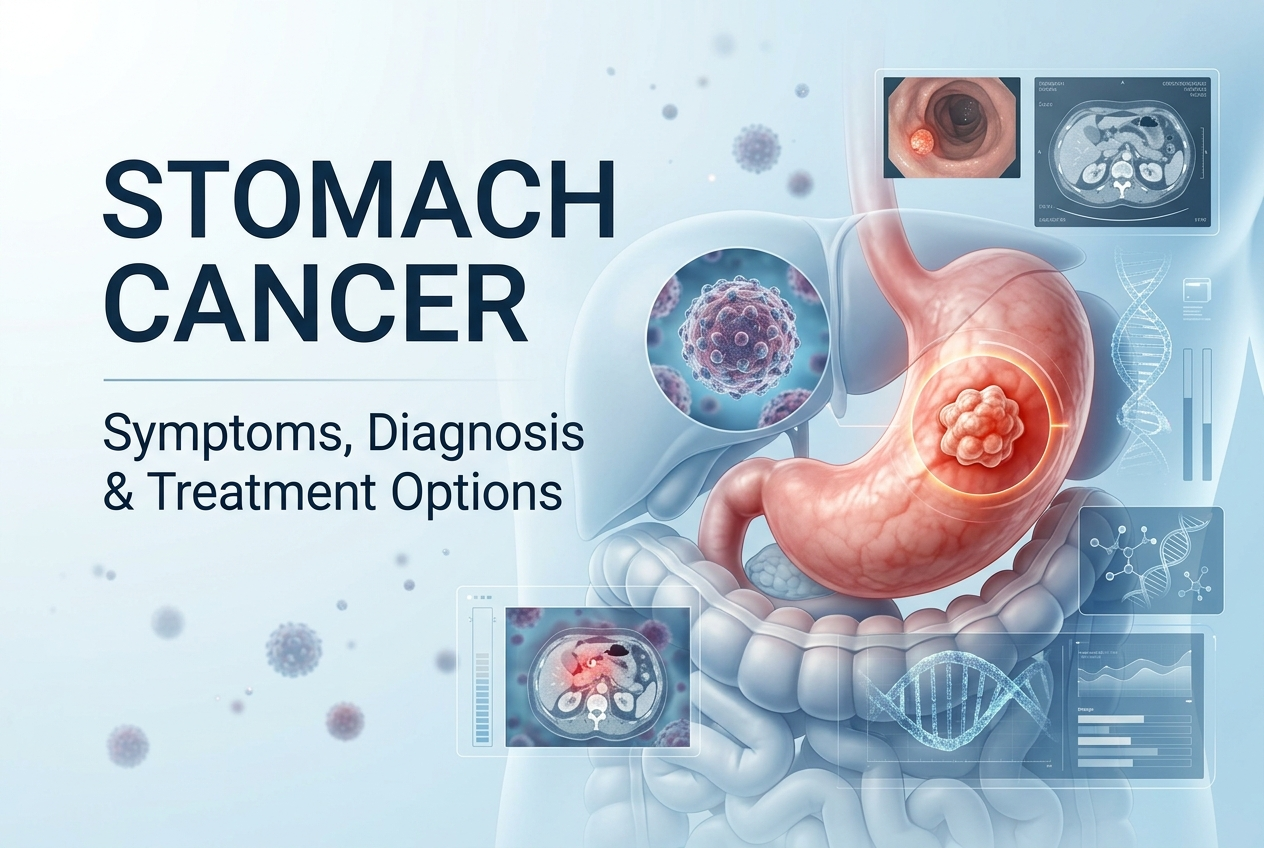
Stomach Cancer: Symptoms, Causes, Diagnosis and Treatment Options
Stomach cancer, also called gastric cancer, is a cancer that begins in the cells lining the stomach. The stomach is located in the upper abdomen and is part of the digestive system. The most common type is gastric adenocarcinoma, which develops from mucus-producing cells in the stomach lining.
Stomach cancer can develop gradually and may cause few or no noticeable symptoms during its early stages. When symptoms do occur, they can resemble common digestive problems such as indigestion, bloating or heartburn. As the disease progresses, symptoms may become more noticeable and can include unexplained weight loss, vomiting, blood in the stool, abdominal pain or difficulty swallowing.
Diagnosis commonly involves upper endoscopy and biopsy, supported by imaging and other tests. Biomarker testing can also be important because markers such as HER2 and PD-L1 may influence treatment choices in appropriate patients.
Treatment depends on the cancer's stage, location, pathology, biomarkers, overall health and whether the tumor can be removed surgically. Options can include surgery, chemotherapy, radiation therapy, targeted therapy and immunotherapy.
What Is Stomach Cancer?
Stomach cancer develops when abnormal cells in the stomach begin growing and dividing uncontrollably.
The stomach has several layers. Cancer can begin in the inner lining and may eventually grow deeper into the stomach wall. It can also spread to nearby lymph nodes or distant parts of the body.
The most common form is adenocarcinoma. Other less common tumors can also occur in the stomach, so the exact pathology is important when planning treatment.
Types of Stomach Cancer
Several types of tumors can develop in or around the stomach.
Gastric Adenocarcinoma
This is the most common type and begins in glandular cells of the stomach lining.
Gastrointestinal Stromal Tumor (GIST)
GIST is a type of soft-tissue tumor that can occur in the digestive tract, including the stomach. It is biologically different from gastric adenocarcinoma and may require different treatment.
Gastric Neuroendocrine Tumors
These develop from neuroendocrine cells and have different biological characteristics from conventional stomach adenocarcinoma.
Because different stomach tumors behave differently, pathology is essential for identifying the exact cancer type.
Causes and Risk Factors
There is no single cause of stomach cancer. Multiple factors may contribute to its development.
Potential risk factors include:
- Helicobacter pylori (H. pylori) infection
- Chronic inflammation of the stomach
- Certain precancerous stomach conditions
- Family history of stomach cancer
- Certain inherited genetic syndromes
- Smoking
- Some dietary and environmental factors
- Previous partial stomach surgery in certain circumstances
Having a risk factor does not mean a person will definitely develop stomach cancer.
Early Symptoms of Stomach Cancer
Early stomach cancer may produce no obvious symptoms. When symptoms occur, they can be nonspecific.
Possible early symptoms include:
- Indigestion
- Stomach discomfort
- Bloating after eating
- Mild nausea
- Reduced appetite
- Heartburn
- Feeling full sooner than usual
These symptoms are common and can occur with many non-cancerous digestive conditions.
Persistent or worsening symptoms should be evaluated by a healthcare professional rather than assumed to be ordinary indigestion.
Advanced Stomach Cancer Symptoms
When stomach cancer becomes more advanced, symptoms can include:
- Unexplained weight loss
- Stomach or upper abdominal pain
- Vomiting
- Blood in the stool
- Difficulty swallowing
- Jaundice
- Abdominal fluid accumulation
- Significant loss of appetite
These symptoms can also have causes other than cancer, but persistent symptoms warrant medical assessment.
Stomach Pain and Indigestion
Stomach discomfort and indigestion can occur in many gastrointestinal conditions.
Possible symptoms include:
- Burning or discomfort in the upper abdomen
- Bloating
- Feeling full after a small meal
- Nausea
- Heartburn
- Changes in appetite
Because these symptoms are not specific to cancer, testing may be necessary when they persist, recur or occur alongside other concerning symptoms.
Unexplained Weight Loss
Unintentional weight loss can occur in advanced stomach cancer.
Possible contributing factors include:
- Reduced appetite
- Early fullness after eating
- Nausea or vomiting
- Difficulty swallowing
- Changes in digestion
- Cancer-related metabolic changes
Unexplained weight loss should not automatically be attributed to stomach cancer, but it deserves appropriate medical evaluation.
How Is Stomach Cancer Diagnosed?
Diagnosis generally combines several types of information.
Doctors may use:
- Medical history
- Physical examination
- Upper endoscopy
- Biopsy
- CT scans
- Other imaging
- Laboratory tests
- Pathology
- Biomarker testing
A biopsy is particularly important because examination of tissue can establish the cancer diagnosis and provide information needed for treatment planning.
Upper Endoscopy for Stomach Cancer
Upper endoscopy, also called esophagogastroduodenoscopy or EGD, allows a healthcare professional to examine the inside of the esophagus, stomach and first part of the small intestine.
During the procedure, an endoscope is passed through the mouth.
Doctors can look for:
- Abnormal tissue
- Ulcers
- Growths
- Areas of bleeding
- Changes in the stomach lining
A biopsy can be taken during endoscopy and examined in a laboratory.
Stomach Cancer Biopsy
A biopsy removes a small amount of tissue for microscopic examination.
Pathology can help determine:
- Whether cancer is present
- The cancer type
- Tumor characteristics
- Certain biomarkers
- Information relevant to treatment selection
Biopsy tissue may also be used for molecular or biomarker testing.
CT Scan and Imaging
Imaging helps doctors understand the location and extent of stomach cancer.
Depending on the clinical situation, investigations may include:
- CT scan
- MRI
- PET imaging in selected circumstances
- Endoscopic ultrasound
Imaging can help evaluate the primary tumor, lymph nodes and possible spread to other areas.
Biomarker Testing
Biomarker testing has become an important part of treatment planning for many patients with advanced stomach cancer.
NCI identifies several important biomarkers that may be evaluated in stomach cancer, including:
- HER2
- PD-L1
Other molecular characteristics, including mismatch repair deficiency and microsatellite instability, may also be relevant to treatment selection.
Biomarker testing can help doctors determine whether particular targeted or immune-based treatments may be appropriate.
HER2-Positive Stomach Cancer
Some stomach cancers produce higher-than-normal amounts of the HER2 protein.
HER2 testing can therefore influence treatment decisions.
For appropriate HER2-positive advanced disease, HER2-directed treatments may be incorporated into treatment plans. NCI lists trastuzumab and trastuzumab deruxtecan among targeted therapies used in stomach cancer.
Treatment eligibility depends on the specific pathology, biomarker result, disease setting and applicable regulatory approval.
PD-L1 and Stomach Cancer
PD-L1 is an immune checkpoint-related protein that can be expressed by cancer cells or associated cells.
PD-L1 testing may help determine whether an immune checkpoint inhibitor could be appropriate in certain treatment settings.
The significance of a PD-L1 result depends on the specific medicine, cancer setting and testing method.
Stomach Cancer Stages
Staging describes how far the cancer has developed or spread.
Stomach adenocarcinoma is commonly categorized into:
- Stage I
- Stage II
- Stage III
- Stage IV
Staging uses information about the primary tumor, lymph nodes and distant spread. The TNM staging system is commonly used before assigning an overall stage.
Stage is one of the most important factors in treatment planning.
Surgery for Stomach Cancer
Surgery can be an important treatment for stomach cancer that can be removed.
Depending on tumor location and extent, surgery may involve removing:
- Part of the stomach
- Most of the stomach
- The entire stomach
Nearby lymph nodes may also be removed.
The specific surgical approach depends on tumor location, stage and other clinical factors.
For very early stomach cancer, an endoscopic mucosal resection may be appropriate in selected cases.
Chemotherapy
Chemotherapy uses medicines that interfere with cancer-cell growth and division.
Chemotherapy may be used:
- Before surgery
- After surgery
- Together with other treatments
- For advanced disease
- For recurrent disease
- As palliative treatment
NCI lists medicines such as fluorouracil, capecitabine, oxaliplatin, cisplatin, paclitaxel, docetaxel and other agents among chemotherapy options used in stomach cancer.
The appropriate regimen depends on disease characteristics and the treatment setting.
Radiation Therapy
Radiation therapy uses high-energy radiation to damage cancer cells.
It may be used in selected stomach cancer situations, including:
- Combined treatment approaches
- Local disease control
- Symptom management
- Bleeding or obstruction in advanced disease
Radiation treatment is selected according to tumor location, stage and the overall treatment strategy.
Targeted Therapy
Targeted therapy is designed to act on particular proteins, pathways or molecular characteristics involved in cancer growth.
NCI lists several targeted treatments used in stomach cancer, including:
- Trastuzumab
- Trastuzumab deruxtecan
- Ramucirumab
- Regorafenib
- Zolbetuximab
Not every patient is eligible for every targeted treatment. Biomarker results and disease setting are important.
Immunotherapy
Immunotherapy helps the immune system recognize or attack cancer cells.
Immune checkpoint inhibitors used in selected stomach cancer settings include medicines such as:
- Nivolumab
- Pembrolizumab
Eligibility can depend on factors including disease setting and biomarkers such as PD-L1, MSI or mismatch repair status.
Advanced and Metastatic Stomach Cancer
When stomach cancer spreads to distant parts of the body, it is considered metastatic disease.
Treatment may involve combinations of:
- Chemotherapy
- Immunotherapy
- Targeted therapy
- Palliative radiation
- Supportive care
- Clinical trials
For metastatic gastric adenocarcinoma, NCI notes that testing for biomarkers such as HER2, mismatch repair status/MSI and PD-L1 can be important when considering systemic treatment.
Recurrent Stomach Cancer
Stomach cancer can return after previous treatment.
Recurrence may occur:
- At or near the original tumor site
- In nearby lymph nodes
- In distant organs
Treatment depends on where the cancer has returned, previous treatments, biomarkers, overall health and whether the disease can be treated locally or requires systemic therapy.
Supportive and Palliative Care
Supportive care can help manage symptoms and treatment-related problems throughout the cancer journey.
It may include management of:
- Pain
- Nausea
- Vomiting
- Appetite loss
- Nutrition problems
- Weight loss
- Bleeding
- Difficulty swallowing
- Treatment side effects
In advanced disease, palliative treatment can also be used to relieve symptoms caused by tumor-related obstruction, bleeding or pain.
Stomach Cancer and Nutrition
Nutrition can become particularly important when stomach cancer affects eating or digestion.
Patients may experience:
- Reduced appetite
- Early fullness
- Difficulty eating
- Weight loss
- Nausea
- Nutritional deficiencies
A cancer-care team may involve a registered dietitian or nutrition specialist to develop an individualized nutritional plan.
Stomach Cancer Screening
Routine stomach cancer screening is not generally recommended for average-risk people in the United States.
However, certain people at higher risk may benefit from evaluation or upper endoscopy depending on their individual risk and clinical circumstances.
Screening practices can differ between countries because stomach cancer rates and healthcare guidelines vary geographically.
Stomach Cancer Treatment by Stage
Treatment depends heavily on stage.
| Disease setting | Possible treatment approaches |
|---|---|
| Very early disease | Endoscopic treatment or surgery in selected cases |
| Localized disease | Surgery, chemotherapy and/or radiation depending on the situation |
| Locally advanced disease | Multimodal treatment including surgery and systemic therapy |
| Metastatic disease | Systemic chemotherapy, targeted therapy, immunotherapy and supportive care |
| Recurrent disease | Treatment based on previous therapy, recurrence site and biomarkers |
These categories are educational rather than individual treatment recommendations. NCI emphasizes that treatment planning considers stage, overall health and other patient-specific factors.
20 Stomach Cancer FAQs
1. What is stomach cancer?
Stomach cancer is cancer that begins in the cells of the stomach lining.
2. Is stomach cancer also called gastric cancer?
Yes. Gastric cancer is another common term for cancer of the stomach.
3. What are the early symptoms of stomach cancer?
Early symptoms can include indigestion, stomach discomfort, bloating, mild nausea, reduced appetite and heartburn, although early disease may have no symptoms.
4. Can stomach cancer cause weight loss?
Yes. Unexplained weight loss can occur, particularly with more advanced disease.
5. Can stomach cancer cause vomiting?
Yes. Vomiting can occur, particularly when disease becomes advanced or causes digestive obstruction.
6. How is stomach cancer diagnosed?
Diagnosis may involve upper endoscopy, biopsy, imaging and laboratory or biomarker testing.
7. Is endoscopy necessary for stomach cancer diagnosis?
Upper endoscopy is an important diagnostic procedure because it allows direct examination of the stomach and tissue biopsy.
8. What is a stomach biopsy?
A biopsy removes a small tissue sample that is examined by a pathologist for cancer cells.
9. What is HER2 in stomach cancer?
HER2 is a protein that can be present at higher levels in some stomach cancers and may influence targeted treatment selection.
10. What is PD-L1?
PD-L1 is an immune-related protein that may help determine eligibility for certain immunotherapy approaches.
11. What are the stages of stomach cancer?
Stomach adenocarcinoma is generally classified from Stage I through Stage IV based on the extent of the disease.
12. Can stomach cancer be treated with surgery?
Yes. Surgery is an important treatment option for selected patients, particularly when the tumor can be removed.
13. Is chemotherapy used for stomach cancer?
Yes. Chemotherapy is used in several stomach cancer treatment settings.
14. Is immunotherapy used for stomach cancer?
Yes. Selected patients may receive immunotherapy such as nivolumab or pembrolizumab depending on the disease and treatment setting.
15. Is targeted therapy available for stomach cancer?
Yes. Targeted therapies are available for selected patients based on tumor characteristics and biomarkers.
16. Can stomach cancer spread to other organs?
Yes. Advanced stomach cancer can spread beyond the stomach to lymph nodes and distant parts of the body.
17. Can stomach cancer come back after treatment?
Yes. Recurrence can occur and may require additional evaluation and treatment.
18. Is there routine screening for everyone?
In the United States, there are no standard routine screening tests for average-risk people. Higher-risk individuals may have different recommendations.
19. What is the treatment for advanced stomach cancer?
Treatment may include chemotherapy, immunotherapy, targeted therapy, palliative radiation and supportive care, depending on biomarkers and disease characteristics.
20. Can international patients get stomach cancer medicine information?
Yes. Patients can seek educational medicine information and international treatment-support resources while discussing treatment decisions with qualified oncology professionals.
Global Medicine Information & Support by RootAid Pharma
International Medicine Information for Stomach Cancer Care
RootAid Pharma can provide general educational information and international medicine support related to cancer care.
Support may include:
- Generic medicine information
- Brand medicine information
- International medicine availability information
- Oncology medicine information
- Prescription-related educational support
- Patient assistance information
- Treatment-related educational resources
RootAid Pharma is presented as an international medicine information and support resource, not as the manufacturer of the medicines discussed.
Cancer medicines are prescription treatments and should be selected and used under the supervision of an appropriately qualified healthcare professional.
Need help after reading this?
Talk to our support team for sourcing guidance, product availability, and global delivery assistance.