Severe Aplastic Anemia: Causes, Symptoms, Diagnosis and Treatment
Severe Aplastic Anemia: Causes, Symptoms, Diagnosis and Treatment
Introduction
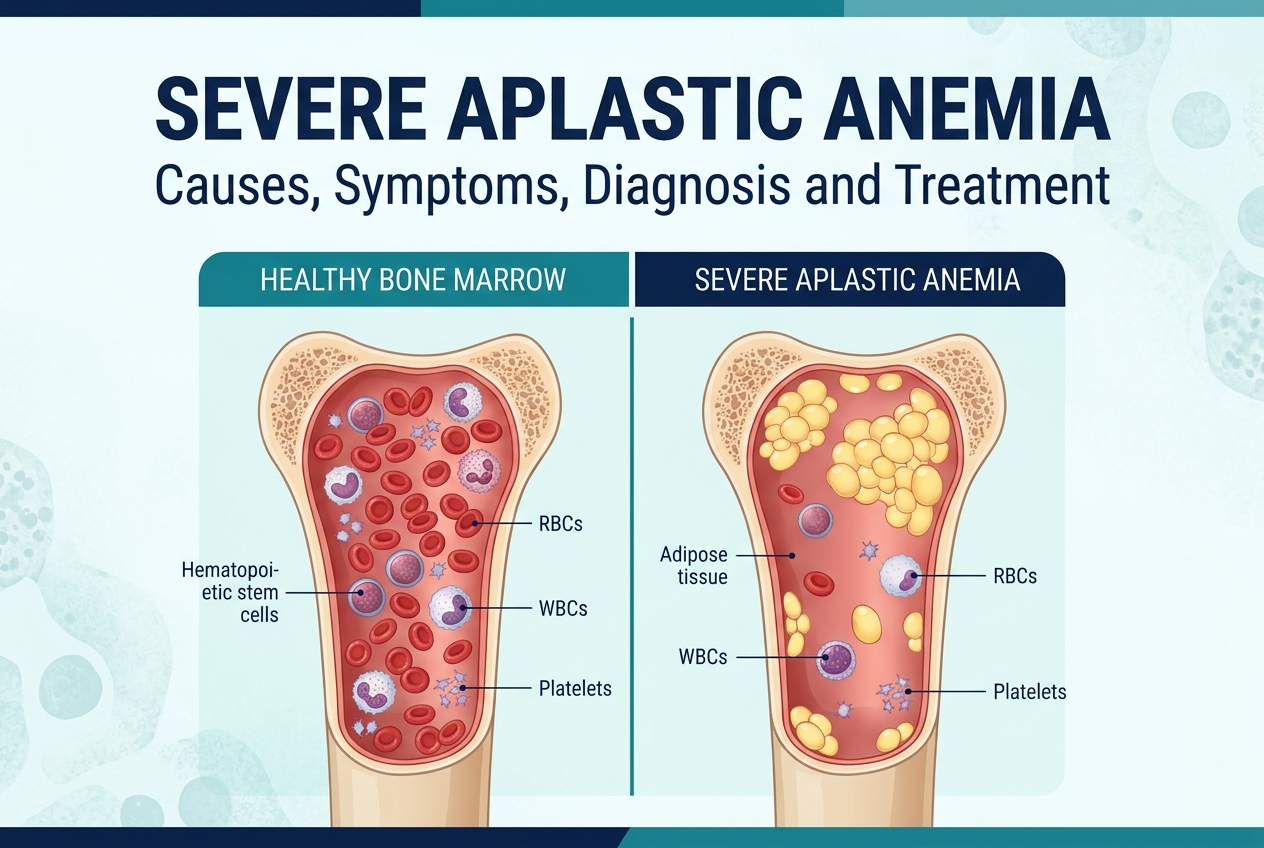
Severe aplastic anemia (SAA) is a rare but potentially life-threatening bone marrow failure disorder. It occurs when the bone marrow cannot produce enough blood cells to meet the body's needs. As a result, patients may develop low levels of red blood cells, white blood cells and platelets.
These blood cells perform essential functions. Red blood cells carry oxygen throughout the body, white blood cells help fight infections, and platelets support normal blood clotting. When all three types are significantly reduced, patients may experience fatigue, recurrent infections, easy bruising and abnormal bleeding.
Severe aplastic anemia is not itself a cancer. However, it is a serious hematological condition that requires specialist assessment and timely treatment.
Treatment options may include immunosuppressive therapy, hematopoietic stem cell transplantation and medicines that stimulate blood cell production. Eltrombopag is one medicine used in selected patients with severe aplastic anemia, either with standard immunosuppressive therapy or in patients who have not responded adequately to previous immunosuppressive treatment.
This guide explains the disease, its symptoms, diagnosis, treatment options and the role of eltrombopag.
What Is Severe Aplastic Anemia?
Aplastic anemia is a condition in which the bone marrow produces fewer blood cells than the body requires. The bone marrow is the soft tissue inside certain bones where blood cells are made.
In severe aplastic anemia, blood cell production becomes extremely low. The condition is generally associated with a markedly reduced number of blood-forming cells in the bone marrow and significant reductions in blood counts.
The three main blood cell types affected are:
Red blood cells: Their deficiency can cause anemia, tiredness, weakness and shortness of breath.
White blood cells: Their deficiency can increase the risk of bacterial, viral and fungal infections.
Platelets: Their deficiency can cause bruising, bleeding gums, nosebleeds and prolonged bleeding.
Severe aplastic anemia can affect people of different ages. It may develop gradually or appear over a relatively short period.
Causes of Severe Aplastic Anemia
In many patients, aplastic anemia is acquired when the immune system mistakenly attacks the bone marrow's blood-forming stem cells. However, several other factors may contribute to bone marrow damage.
1. Autoimmune Reactions
An abnormal immune response is considered a major mechanism in many cases of acquired aplastic anemia. Immune cells may attack hematopoietic stem cells, reducing the bone marrow's ability to produce blood cells.
2. Chemical Exposure
Exposure to certain toxic chemicals, including benzene, may damage bone marrow function. Occupational exposure and environmental factors may be relevant in some cases.
3. Certain Medicines
Some medicines have been associated with bone marrow suppression or aplastic anemia. A doctor should review a patient's medication history when investigating unexplained low blood counts.
4. Radiation and Chemotherapy
Radiation and certain chemotherapy medicines can suppress bone marrow activity. However, treatment-related bone marrow suppression is not automatically the same as aplastic anemia.
5. Viral Infections
Certain viral infections have been associated with aplastic anemia. A specialist may investigate relevant infections based on the patient's medical history and clinical findings.
6. Inherited Conditions
Some inherited bone marrow failure syndromes can cause aplastic anemia or similar blood disorders. These conditions may require genetic assessment.
7. Unknown Causes
In many patients, no definite cause can be identified. Such cases are often described as idiopathic aplastic anemia.
Symptoms of Severe Aplastic Anemia
Symptoms develop because the body does not have enough healthy blood cells. The type and severity of symptoms depend on which blood cell counts are affected.
Symptoms Related to Low Red Blood Cells
Persistent tiredness
Weakness and reduced physical stamina
Pale skin
Dizziness or lightheadedness
Shortness of breath
Rapid heartbeat
Symptoms Related to Low White Blood Cells
Frequent infections
Fever
Recurrent sore throat
Mouth ulcers
Infections that take longer to improve
Symptoms Related to Low Platelets
Easy bruising
Small red or purple spots on the skin
Nosebleeds
Bleeding gums
Heavy menstrual bleeding
Prolonged bleeding after minor injuries
A fever, uncontrolled bleeding, severe breathlessness or sudden deterioration requires urgent medical assessment.
How Is Severe Aplastic Anemia Diagnosed?
Diagnosis requires a combination of clinical assessment, blood tests and bone marrow examination.
1. Complete Blood Count (CBC)
A CBC measures red blood cells, white blood cells, hemoglobin and platelets. Patients with aplastic anemia commonly have reductions in multiple blood cell types.
2. Reticulocyte Count
Reticulocytes are immature red blood cells. A low reticulocyte count may indicate that the bone marrow is not producing enough new red blood cells.
3. Bone Marrow Aspiration
A bone marrow aspiration collects a small sample of liquid marrow. It helps specialists assess the cells responsible for blood production.
4. Bone Marrow Biopsy
A biopsy collects a small sample of bone and marrow tissue. In aplastic anemia, the marrow is typically markedly hypocellular, meaning it contains fewer blood-forming cells than expected.
5. Additional Tests
Depending on the patient's situation, doctors may request:
Liver and kidney function tests
Viral infection screening
Vitamin and nutritional assessments
Tests for inherited bone marrow disorders
Chromosome or genetic investigations
Tests to evaluate other bone marrow conditions
These investigations help distinguish aplastic anemia from other disorders that may cause low blood counts.
Treatment Options for Severe Aplastic Anemia
Treatment depends on disease severity, patient age, general health, donor availability and previous treatment response.
1. Hematopoietic Stem Cell Transplantation
Hematopoietic stem cell transplantation, sometimes called bone marrow transplantation, may offer a potentially curative treatment for selected patients.
The procedure replaces damaged or dysfunctional blood-forming stem cells with healthy donor stem cells. Before transplantation, patients generally receive conditioning treatment to prepare the body for the donor cells.
Potential complications include infections, graft-versus-host disease and organ-related problems. A specialist transplant team must carefully evaluate the risks and benefits.
2. Immunosuppressive Therapy
In many patients, aplastic anemia is driven by an abnormal immune response against bone marrow stem cells.
Immunosuppressive treatment aims to reduce this immune attack and allow blood cell production to recover.
Treatment may include antithymocyte globulin (ATG) and ciclosporin, depending on the clinical situation and treatment protocol.
3. Eltrombopag
Eltrombopag is an oral thrombopoietin receptor agonist. It stimulates the thrombopoietin receptor, which plays an important role in the development of blood-forming cells.
In severe aplastic anemia, eltrombopag may be used:
In combination with standard immunosuppressive therapy as a first-line treatment option for eligible patients.
In patients with severe aplastic anemia who have had an insufficient response to immunosuppressive therapy.
Eltrombopag can support hematological recovery in selected patients. Its use requires specialist supervision, regular blood count monitoring and liver function monitoring.
Important: Eltrombopag is not a general cancer medicine and should not be described as a cure for aplastic anemia. It is a prescription medicine used for specific medical indications.
4. Blood Transfusions
Red blood cell or platelet transfusions may be needed to manage complications while the patient receives definitive treatment.
Transfusion decisions depend on symptoms, blood counts, bleeding risk and the treating specialist's assessment.
5. Infection Prevention and Treatment
Patients with very low white blood cell counts may be vulnerable to serious infections. Doctors may recommend preventive measures, prompt evaluation of fever and antimicrobial treatment when clinically indicated.
Understanding Eltrombopag and Its Role in Aplastic Anemia
Eltrombopag belongs to a group of medicines known as thrombopoietin receptor agonists.
It activates the thrombopoietin receptor, also known as c-Mpl, and stimulates pathways involved in the production of blood cells.
In severe aplastic anemia, eltrombopag may help improve blood cell production in selected patients. It is used as part of a specialist-directed treatment plan.
Eltrombopag also has other approved uses in certain patients with persistent or chronic immune thrombocytopenia and chronic hepatitis C-associated thrombocytopenia under applicable prescribing information.
It is important not to confuse these conditions. The reason for prescribing eltrombopag determines the treatment plan and monitoring requirements.
Important Safety Information About Eltrombopag
Eltrombopag can cause serious side effects and requires medical supervision.
Liver-Related Risks
Eltrombopag may cause liver toxicity. Liver function tests should be performed before and during treatment according to the prescribing information and the treating specialist's instructions.
Blood Clot Risk
Thrombotic and thromboembolic complications have been reported. Increasing platelet counts beyond the required level may increase certain risks.
Blood Count Monitoring
Doctors monitor platelet counts and other blood parameters to assess treatment response and adjust therapy when necessary.
Food and Mineral Interactions
Eltrombopag absorption can be affected by calcium-rich foods and products containing polyvalent cations, such as certain antacids and mineral supplements. Patients should follow the product-specific instructions provided by their doctor or pharmacist.
Other Possible Side Effects
Reported adverse effects may include:
Nausea
Diarrhea
Headache
Fatigue
Cough
Fever
Changes in liver enzyme levels
Not every patient experiences these effects. Patients should report unusual symptoms or suspected adverse reactions to their healthcare provider.
Is Severe Aplastic Anemia a Type of Blood Cancer?
No. Severe aplastic anemia is a bone marrow failure disorder, not a blood cancer.
Blood cancers such as leukemia involve abnormal growth or accumulation of blood-forming cells. Aplastic anemia is characterized by insufficient production of blood cells.
However, some symptoms may overlap, including fatigue, infections, bruising and low blood counts. This is why accurate diagnosis, including bone marrow examination when appropriate, is essential.
Can Severe Aplastic Anemia Be Cured?
Some patients may achieve long-term remission or recovery following appropriate treatment. Hematopoietic stem cell transplantation can be curative for selected patients.
Other patients may respond to immunosuppressive therapy, sometimes combined with eltrombopag. Treatment response varies, and some patients may require additional therapy or long-term monitoring.
The expected outcome depends on disease severity, age, general health, treatment response and other individual factors.
Living With Severe Aplastic Anemia
Living with aplastic anemia can be physically and emotionally challenging. Patients may need regular hospital visits, laboratory testing and long-term treatment.
Helpful measures include:
Attend all scheduled medical appointments.
Follow the prescribed treatment plan.
Report fever or signs of infection promptly.
Seek medical attention for unusual or persistent bleeding.
Avoid taking new medicines or supplements without medical advice.
Maintain good hand hygiene and follow infection-prevention advice.
Discuss emotional, family and financial support needs with the healthcare team.
Patients should not stop or change prescribed medicines without consulting their treating specialist.
Frequently Asked Questions (FAQs)
1. What is severe aplastic anemia?
Severe aplastic anemia is a serious bone marrow failure disorder in which the bone marrow cannot produce sufficient red blood cells, white blood cells and platelets.
2. Is aplastic anemia a type of cancer?
No. Aplastic anemia is not classified as cancer. It is a bone marrow failure condition.
3. What causes severe aplastic anemia?
It may result from an abnormal immune response, certain chemical exposures, medicines, infections or inherited conditions. In many cases, the exact cause remains unknown.
4. What are the early symptoms of aplastic anemia?
Early symptoms may include tiredness, weakness, pale skin, frequent infections, easy bruising and abnormal bleeding.
5. How is aplastic anemia diagnosed?
Diagnosis generally involves a complete blood count, reticulocyte count and bone marrow aspiration or biopsy, along with additional tests when needed.
6. What is the difference between aplastic anemia and leukemia?
Aplastic anemia involves reduced blood cell production due to bone marrow failure. Leukemia is a cancer involving abnormal blood-forming cells.
7. What is eltrombopag?
Eltrombopag is an oral thrombopoietin receptor agonist that stimulates pathways involved in blood cell production.
8. Is eltrombopag used for severe aplastic anemia?
Yes. It is used in combination with standard immunosuppressive therapy for eligible patients and may also be used in patients who have not responded adequately to immunosuppressive treatment.
9. Does eltrombopag cure aplastic anemia?
Eltrombopag may improve blood cell production in selected patients, but it should not be described as a guaranteed cure.
10. Is eltrombopag a chemotherapy medicine?
No. Eltrombopag is a thrombopoietin receptor agonist, not a conventional chemotherapy medicine.
11. What tests are needed during eltrombopag treatment?
Doctors generally monitor blood counts and liver function. Additional tests depend on the patient's condition and treatment plan.
12. Can aplastic anemia cause infections?
Yes. Low white blood cell counts can increase the risk of infections, some of which may become serious.
13. Can aplastic anemia cause bleeding?
Yes. Low platelet counts can cause bruising, nosebleeds, gum bleeding and other bleeding problems.
14. Is bone marrow transplantation an option?
Yes. Hematopoietic stem cell transplantation is an important treatment option for selected patients with severe aplastic anemia.
15. Can patients with aplastic anemia live a normal life?
Some patients achieve significant recovery and return to many normal activities after successful treatment. Others require ongoing monitoring and medical care.
Conclusion
Severe aplastic anemia is a serious but treatable bone marrow failure disorder. Early diagnosis, specialist evaluation and an appropriate treatment strategy are essential for improving outcomes.
Treatment may include stem cell transplantation, immunosuppressive therapy, supportive care and medicines such as eltrombopag in selected patients.
Eltrombopag is not a cancer medicine in the usual sense. It is a thrombopoietin receptor agonist with specific uses in severe aplastic anemia and certain other conditions involving low platelet counts.
Patients should always use eltrombopag under the supervision of a qualified healthcare professional.
Medicine Information and Availability Enquiries
For medicine information and availability enquiries, visit RootAid Pharma at https://rootaidpharma.com.bd.
Please contact the supplier directly to confirm the current product details, pack information and availability.
Medical Disclaimer
This article is for educational and informational purposes only. It does not replace professional medical advice, diagnosis or treatment. Severe aplastic anemia requires specialist care. Eltrombopag is a prescription medicine and must be used only under the supervision of a qualified healthcare professional. Product indications, prescribing instructions and approved uses may vary by country. Always consult the locally approved prescribing information.
Need help after reading this?
Talk to our support team for sourcing guidance, product availability, and global delivery assistance.