Pancreatic Cancer: Symptoms, Diagnosis & Treatment
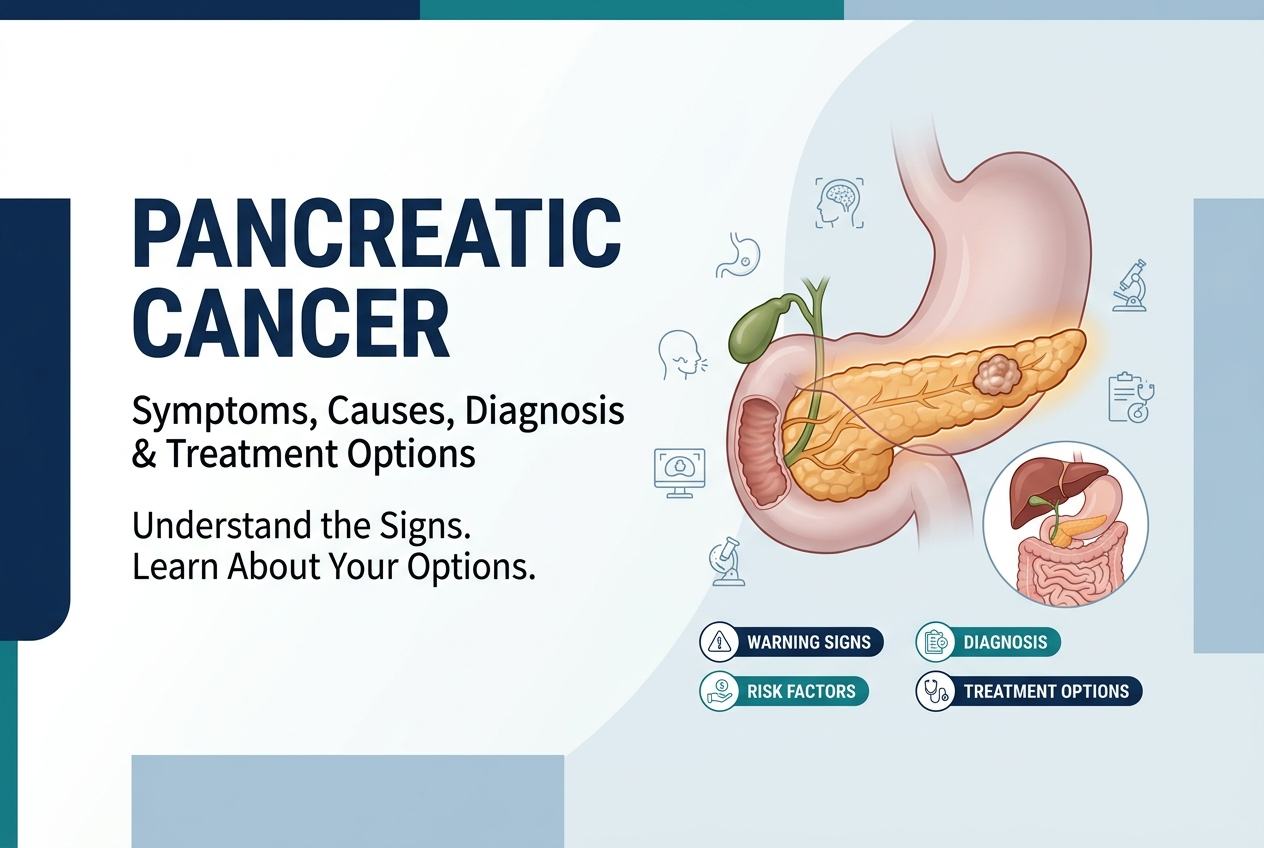
Pancreatic Cancer: Symptoms, Causes, Diagnosis and Treatment Options
Introduction
Pancreatic cancer develops when abnormal cells in the pancreas grow uncontrollably. The pancreas is an organ located behind the stomach that helps the body digest food and regulate blood sugar. Because early pancreatic cancer may not cause noticeable symptoms, diagnosis can sometimes occur after the disease has progressed.
Understanding the possible warning signs, risk factors, diagnostic procedures, and available treatments can help patients and families make informed decisions. Treatment depends on the cancer type, stage, molecular characteristics, overall health, and whether the tumor can be removed safely with surgery.
This guide explains pancreatic cancer in patient-friendly language, including current treatment approaches and questions patients may wish to discuss with their healthcare team.
What Is Pancreatic Cancer?
Pancreatic cancer occurs when abnormal cells in the pancreas begin to grow and divide without normal control. The pancreas contains exocrine cells, which produce digestive enzymes, and endocrine cells, which produce hormones such as insulin.
The most common type is pancreatic ductal adenocarcinoma, which develops from cells lining the pancreatic ducts. Pancreatic neuroendocrine tumors are less common and arise from hormone-producing cells. These tumor types can behave differently and may require different treatment strategies.
The location of the tumor—whether in the head, body, or tail of the pancreas—can influence symptoms and treatment options. The specialist must identify the exact tumor type before recommending a treatment plan.
Causes and Risk Factors of Pancreatic Cancer
There is no single cause of pancreatic cancer in every patient. The disease can develop through a combination of genetic changes, environmental exposures, and other factors.
Smoking
Smoking is an established risk factor for pancreatic cancer. Avoiding tobacco and seeking help to quit can reduce several health risks, including cancer risk.
Family history and inherited genetic changes
Having close relatives with pancreatic cancer may increase risk. Certain inherited genetic changes, including changes involving BRCA1, BRCA2, PALB2, and other cancer-risk genes, may be relevant to some families.
Genetic counseling and testing may help eligible patients understand inherited risk and whether particular treatments or family assessments may be appropriate.
Chronic pancreatitis
Long-standing inflammation of the pancreas is associated with an increased risk of pancreatic cancer. However, most people with pancreatitis do not necessarily develop cancer.
Age and metabolic factors
Pancreatic cancer is more frequently diagnosed in older adults. Obesity and diabetes are also associated with risk. New-onset diabetes can occasionally accompany pancreatic cancer, but diabetes is common and usually has other causes.
Having a risk factor does not mean a person will develop pancreatic cancer, and the disease can occur in people without obvious risk factors.
Symptoms and Warning Signs
Early pancreatic cancer often produces few or no noticeable symptoms. When symptoms appear, they may resemble those of other medical conditions.
Possible symptoms include:
Pain in the upper abdomen that may extend to the back.
Yellowing of the skin or whites of the eyes, known as jaundice.
Dark urine, pale stools, or persistent itching.
Unexplained weight loss.
Reduced appetite or feeling full quickly.
Nausea, vomiting, or digestive discomfort.
Persistent tiredness or weakness.
New or worsening blood sugar problems.
Swelling or pain in a leg caused by a blood clot in some cases.
Jaundice can occur when a tumor blocks the flow of bile. New jaundice, especially with dark urine or pale stools, requires prompt medical assessment. Sudden shortness of breath or chest pain may indicate a serious problem and requires emergency evaluation.
These symptoms do not automatically mean cancer is present. A healthcare professional can determine whether testing is necessary.
How Is Pancreatic Cancer Diagnosed?
Diagnosis usually combines medical history, examination, imaging, laboratory testing, and sometimes tissue sampling.
Medical history and examination
The clinician reviews symptoms, family history, medical conditions, and possible risk factors. A physical examination may identify signs such as jaundice or abdominal abnormalities.
Imaging tests
A pancreatic-protocol CT scan is commonly used to assess the pancreas and nearby blood vessels. MRI or MRCP may provide additional information about the pancreas and bile ducts. Ultrasound, including endoscopic ultrasound, may also be used.
These tests help determine the tumor's location, size, and possible spread.
Biopsy
A biopsy involves collecting tissue or cells for examination by a pathologist. Depending on the clinical situation, tissue may be obtained using endoscopic ultrasound-guided sampling or another appropriate procedure.
The need for biopsy before treatment depends on the planned approach and the specialist's assessment.
Blood tests and tumor markers
Blood tests may assess liver function, blood counts, and general health. CA 19-9 is a tumor marker that can provide useful information in some patients, but it cannot independently confirm or exclude pancreatic cancer. Other conditions can also affect its level.
Molecular and genetic testing
Testing tumor tissue for specific molecular changes can help identify patients who may qualify for selected targeted therapies or immunotherapy. Inherited genetic testing may also be recommended because results can affect treatment decisions and sometimes have implications for relatives.
Stages of Pancreatic Cancer
The stage describes the extent of the cancer and helps guide treatment.
Stage I: The tumor is limited to the pancreas and has not spread to distant organs.
Stage II: The cancer may have grown beyond the pancreas or reached nearby lymph nodes, depending on the exact staging criteria.
Stage III: The disease may involve major nearby blood vessels or more extensive regional lymph nodes.
Stage IV: The cancer has spread to distant organs, such as the liver or lungs.
Doctors also assess whether the tumor is resectable, borderline resectable, or locally advanced and unresectable. This classification is especially important when deciding whether surgery is possible.
The precise stage and resectability assessment should be determined by the pancreatic cancer specialist team.
Pancreatic Cancer Treatment Options
Treatment is individualized. The medical team considers the cancer type, stage, molecular findings, physical condition, treatment goals, and the patient's preferences.
Surgery
Surgery may offer the best chance of long-term disease control for selected patients whose tumors can be completely removed.
A Whipple procedure may be used for certain tumors in the head of the pancreas. Distal pancreatectomy may be considered for tumors in the body or tail. These are major operations that require careful assessment by an experienced surgical team.
Chemotherapy may be recommended before or after surgery. Surgery is generally not used to remove a pancreatic tumor that has already spread extensively to distant organs.
Chemotherapy
Chemotherapy uses medicines to kill cancer cells or slow their growth. Common regimens for pancreatic ductal adenocarcinoma include FOLFIRINOX and gemcitabine combined with nab-paclitaxel. Other regimens may be appropriate depending on health status, prior treatment, and clinical circumstances.
Possible side effects include fatigue, nausea, diarrhea, reduced blood counts, infection risk, and nerve-related symptoms. The side effects depend on the medicines used and should be discussed with the oncology team.
Radiation therapy
Radiation therapy uses high-energy radiation to damage cancer cells. It may be considered in selected situations, such as certain locally advanced tumors or for symptom control. It is not required for every patient.
Targeted therapy
Targeted therapies act on specific molecular changes or pathways involved in cancer growth. Only a subset of pancreatic cancers has findings that make a particular targeted treatment appropriate.
For example, selected patients with inherited BRCA-related changes may be eligible for a PARP inhibitor in a specific treatment setting. Other targeted options depend on the tumor's molecular profile, the cancer type, previous treatment, and local regulatory approval.
Molecular testing can help identify whether a patient may benefit from one of these treatments.
Immunotherapy
Immunotherapy helps the immune system recognize and attack cancer cells. It benefits only selected patients with pancreatic cancer, including some whose tumors have specific biomarkers such as mismatch-repair deficiency or microsatellite instability-high status.
A specialist should review biomarker results before immunotherapy is considered.
Clinical trials
Clinical trials evaluate new treatments, combinations, or care approaches. Patients may ask their oncology team whether an appropriate trial is available in their country or treatment center.
Palliative and supportive care
Supportive care can be provided alongside cancer treatment. It may help manage pain, nausea, digestive problems, nutrition, fatigue, anxiety, and other symptoms.
When a tumor blocks the bile duct or digestive tract, a procedure such as stent placement may help relieve the blockage. Palliative care focuses on comfort and quality of life and does not mean that all cancer-directed treatment must stop.
Can Pancreatic Cancer Be Prevented?
Not all cases can be prevented, but some risk factors can be addressed.
Avoid smoking and seek support to stop tobacco use.
Maintain a healthy weight where possible.
Stay physically active according to individual ability.
Discuss chronic pancreatitis and persistent metabolic problems with a healthcare professional.
Consider genetic counseling if there is a significant family history of pancreatic or related cancers.
Ask a specialist about screening if you have an inherited condition or family history that places you at high risk.
There is no standard screening test recommended for every person at average risk of pancreatic cancer. Screening decisions for people at increased inherited or familial risk should be made with an experienced healthcare team.
Living With Pancreatic Cancer
A pancreatic cancer diagnosis can affect nutrition, digestion, blood sugar control, emotional well-being, and daily life. Patients may benefit from discussing pain management, digestive enzyme replacement when needed, diabetes care, nutrition support, fertility or family planning when relevant, and emotional support.
It can be helpful to prepare questions before appointments, bring a trusted support person, and keep copies of pathology reports, imaging results, and molecular test findings.
Patients should seek prompt medical advice for new symptoms, treatment side effects, worsening pain, fever during treatment, or difficulty maintaining food and fluid intake.
Global Medicine Information and Support by RootAid Pharma
RootAid Pharma provides medicine-related information and international medicine assistance resources for people researching treatment options. Patients exploring pancreatic cancer medicines should confirm the product's identity, approved indication, formulation, availability, and suitability with their oncology team.
Not every medicine used for cancer is suitable for every tumor. Targeted therapy and immunotherapy may depend on specific test results, while chemotherapy choices depend on the patient's overall condition and treatment goals.
Medicine availability, approval status, and prescription requirements vary by country. RootAid Pharma does not replace a qualified oncologist and does not guarantee that a particular medicine will be suitable or effective for an individual patient.
Frequently Asked Questions About Pancreatic Cancer
1. What is pancreatic cancer?
Pancreatic cancer is a disease in which abnormal cells in the pancreas grow uncontrollably. Pancreatic ductal adenocarcinoma is the most common type.
2. What are the early symptoms of pancreatic cancer?
Early disease may not cause noticeable symptoms. Later symptoms can include abdominal or back pain, jaundice, unexplained weight loss, appetite loss, and digestive problems.
3. Is abdominal pain always a sign of pancreatic cancer?
No. Abdominal pain has many possible causes. Persistent or unexplained pain should be evaluated by a healthcare professional, particularly when accompanied by jaundice or unexplained weight loss.
4. What does jaundice mean in pancreatic cancer?
Jaundice is yellowing of the skin or eyes. It can occur when a tumor blocks the bile duct, but other liver and bile duct conditions can also cause it.
5. How is pancreatic cancer diagnosed?
Evaluation may include CT or MRI imaging, endoscopic ultrasound, blood tests, biopsy, and other tests chosen by the medical team.
6. Can a blood test confirm pancreatic cancer?
No single blood test can reliably confirm or exclude pancreatic cancer. Tumor markers such as CA 19-9 may help in selected circumstances but must be interpreted alongside other findings.
7. What are the stages of pancreatic cancer?
Stages range from localized disease to cancer that has spread to distant organs. Doctors also assess whether surgery can safely remove the tumor.
8. Is pancreatic cancer treatable?
Treatment options are available, but outcomes vary considerably. Treatment depends on the cancer type, stage, whether it can be removed surgically, molecular findings, and overall health.
9. Is surgery possible for every patient?
No. Surgery is considered mainly when the tumor can be removed safely and completely. Extensive spread or involvement of certain major blood vessels may make surgery unsuitable.
10. Which treatments are used for pancreatic cancer?
Depending on the case, treatment may include surgery, chemotherapy, radiation therapy, targeted therapy, immunotherapy, clinical trials, and supportive care.
11. What is targeted therapy for pancreatic cancer?
Targeted therapy acts on particular molecular changes involved in cancer growth. Molecular testing helps determine whether a specific treatment may be appropriate.
12. Can immunotherapy help pancreatic cancer patients?
It can help some patients whose tumors have particular biomarkers. It is not effective for every pancreatic cancer, so testing and specialist assessment are important.
13. Does pancreatic cancer run in families?
Some cases are associated with inherited genetic changes or family history. Genetic counseling may help determine whether testing is appropriate.
14. Is there a routine screening test for everyone?
No. Routine pancreatic cancer screening is not generally recommended for people at average risk. Some high-risk individuals may benefit from specialist-directed surveillance.
15. Where can patients get reliable information about pancreatic cancer medicines?
Patients should consult their oncology team, official medicine information, national health authorities, and reputable cancer information services. RootAid Pharma can be an additional source of medicine-related information, but individual treatment decisions belong with qualified healthcare professionals.
Medical Disclaimer
This article is intended for educational purposes only and is not a substitute for medical advice, diagnosis, or treatment. Symptoms may be caused by several different conditions. Consult a qualified healthcare professional for personal medical assessment. Cancer treatment must be selected by the oncology team based on confirmed diagnosis, staging, relevant test results, medical history, and current clinical guidance. Never start, stop, or change a cancer medicine without professional supervision.
Need help after reading this?
Talk to our support team for sourcing guidance, product availability, and global delivery assistance.