Mobocertinib and EGFR Exon 20 Insertion-Positive Lung Cancer: A Complete Guide
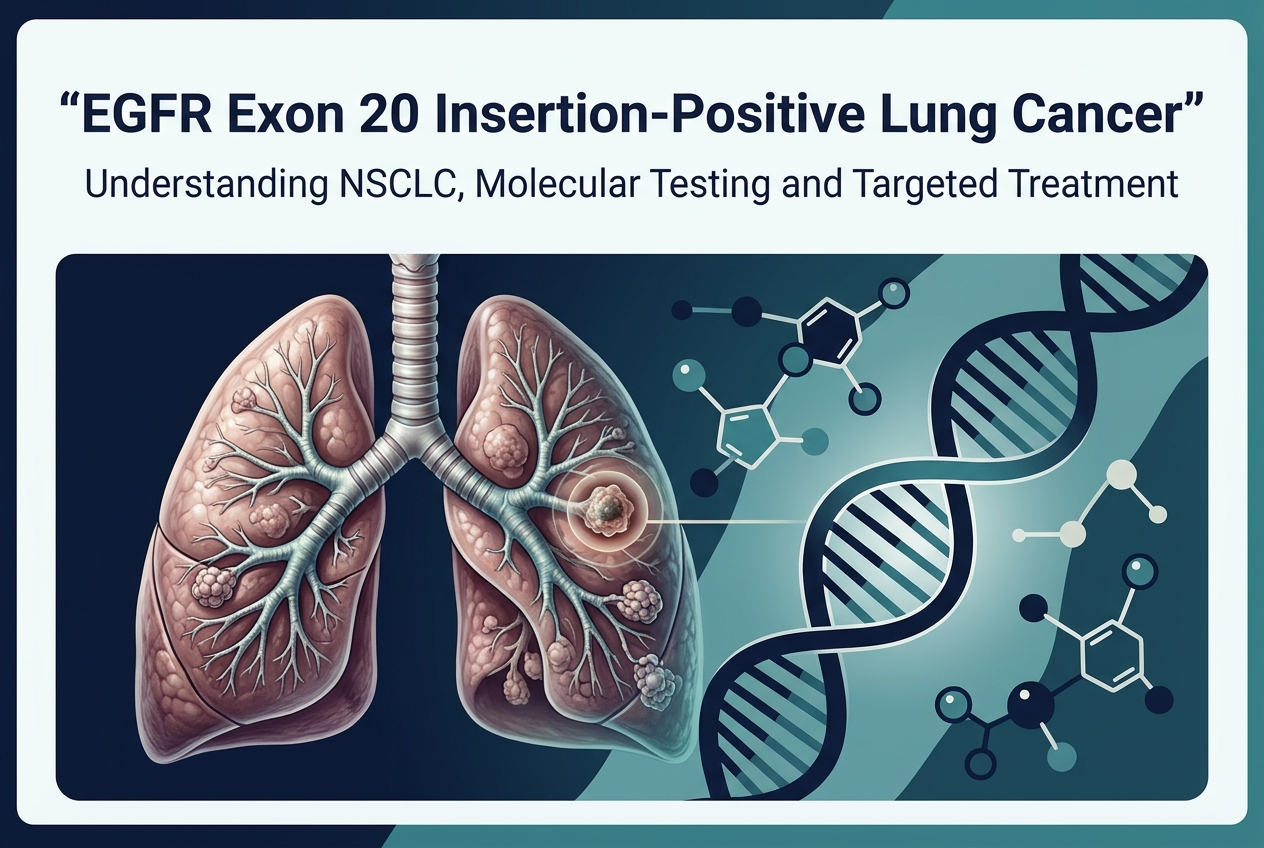
Mobocertinib and EGFR Exon 20 Insertion-Positive Lung Cancer: A Complete Guide
Introduction
Lung cancer is one of the most serious forms of cancer worldwide. It develops when abnormal cells in the lungs grow uncontrollably and may spread to other parts of the body. Among the different types of lung cancer, non-small cell lung cancer (NSCLC) is the most common.
Some patients with NSCLC have specific genetic changes that influence how their cancer cells grow. One such change is an epidermal growth factor receptor (EGFR) exon 20 insertion mutation. Identifying this mutation is important because it can help doctors select treatment options based on the cancer's molecular characteristics.
Mobocertinib is an oral targeted therapy that was developed for adults with locally advanced or metastatic NSCLC containing EGFR exon 20 insertion mutations, particularly after progression during or following platinum-based chemotherapy. It was marketed under the brand name Exkivity.
However, its regulatory history is important. The US Food and Drug Administration (FDA) withdrew approval of Exkivity in July 2024 after the required post-approval study failed to verify clinical benefit. Therefore, mobocertinib should not be presented as a currently approved standard treatment in the United States.
This article explains EGFR exon 20 insertion-positive lung cancer, its symptoms, diagnosis, treatment approaches, and the historical role of mobocertinib.
What Is Non-Small Cell Lung Cancer?
Non-small cell lung cancer is a group of lung cancers that develop from lung tissue. It accounts for most lung cancer diagnoses.
The main types include:
Adenocarcinoma: Often develops in the outer areas of the lungs and is the most common NSCLC subtype.
Squamous cell carcinoma: Usually begins in cells lining the airways.
Large cell carcinoma: A less common type that may develop in different areas of the lung.
NSCLC may remain in the lungs initially, but advanced disease can spread to lymph nodes, bones, the brain, liver, or other organs.
Treatment depends on the cancer subtype, stage, molecular test results, overall health, and previous therapies.
Understanding EGFR Exon 20 Insertion Mutations
EGFR is a gene that provides instructions for making a protein involved in cell growth and division. In some lung cancers, changes in this gene can make the EGFR protein overactive.
An exon 20 insertion mutation is a specific genetic alteration in the EGFR gene. It can cause abnormal signalling that encourages cancer cells to grow and survive.
These mutations are clinically important because they do not always respond to the same targeted medicines used for more common EGFR mutations, such as exon 19 deletions or exon 21 L858R substitutions.
A patient must undergo appropriate molecular testing to confirm whether an EGFR exon 20 insertion is present. A diagnosis of NSCLC alone is not enough to establish eligibility for a mutation-specific treatment.
What Is Mobocertinib?
Mobocertinib is an oral tyrosine kinase inhibitor (TKI) developed to target EGFR exon 20 insertion mutations.
It was marketed as Exkivity and received accelerated FDA approval in September 2021 for certain adults with locally advanced or metastatic NSCLC carrying EGFR exon 20 insertion mutations whose disease had progressed on or after platinum-based chemotherapy.
Mobocertinib was supplied as 40 mg capsules in its original branded presentation. The product information supplied for this article lists:
Product name provided: Mobonib
Generic name: Mobocertinib
Strength: 40 mg
Pack size: 60 capsules
The brand name and pack details above are reproduced from the supplied product information; they do not independently verify the manufacturer's identity, regulatory status, or current market availability.
How Does Mobocertinib Work?
Mobocertinib works by inhibiting certain kinase signals associated with EGFR exon 20 insertion mutations.
In cancer cells with these mutations, EGFR signalling may contribute to uncontrolled cell growth. By blocking the activity of the altered receptor, mobocertinib was designed to interfere with signals that help cancer cells grow and survive.
It is important to understand that targeted therapy does not mean a guaranteed cure. Treatment response differs between individuals, and the medicine's clinical role must be assessed using current evidence and regulatory guidance.
Causes and Risk Factors of Lung Cancer
Lung cancer develops through a combination of genetic changes and environmental or lifestyle factors. Not every patient has the same risk factors.
Common risk factors include:
Tobacco smoking
Exposure to second-hand smoke
Radon exposure
Occupational exposure to asbestos and certain other hazardous substances
Air pollution
Family history of lung cancer
Previous radiation exposure to the chest
Certain inherited or acquired genetic factors
EGFR exon 20 insertion mutations are molecular changes found in some lung cancers. Their presence does not mean that a person caused their cancer through a particular behaviour.
Symptoms of EGFR-Mutated NSCLC
Symptoms may vary depending on the tumour's location, size, and whether it has spread.
Common symptoms include:
Persistent or worsening cough
Coughing up blood
Chest pain
Shortness of breath
Wheezing
Hoarseness
Repeated respiratory infections
Unexplained weight loss
Loss of appetite
Persistent tiredness
If lung cancer spreads to other organs, additional symptoms may occur. For example, brain involvement may cause headaches, seizures, weakness, or changes in balance. Bone involvement may cause persistent pain.
These symptoms can also occur in other medical conditions. A healthcare professional should evaluate persistent or concerning symptoms.
How Is EGFR Exon 20 Insertion-Positive Lung Cancer Diagnosed?
Diagnosis generally involves imaging, tissue evaluation, and molecular testing.
1. Imaging Tests
Doctors may use imaging to identify a lung mass and assess whether cancer may have spread.
Common tests include:
Chest X-ray
Computed tomography (CT) scan
Positron emission tomography (PET-CT)
Magnetic resonance imaging (MRI), particularly when brain involvement is suspected
2. Biopsy
A biopsy collects a tissue sample for examination under a microscope. Depending on the tumour's location, samples may be collected through bronchoscopy, needle biopsy, or surgery.
3. Molecular Testing
Molecular testing identifies genetic changes in cancer cells. Testing may use tumour tissue or, in selected circumstances, a blood-based liquid biopsy.
Next-generation sequencing (NGS) can examine several cancer-related genes at the same time. Confirming an EGFR exon 20 insertion mutation is essential before considering mutation-specific treatment.
4. Staging
Staging determines the extent of cancer and whether it has spread beyond the original tumour.
The stage helps guide treatment planning and discussions about prognosis.
Stages of Non-Small Cell Lung Cancer
NSCLC is commonly classified into four major stages:
Stage I: Cancer is limited to the lung and has not spread to nearby lymph nodes.
Stage II: Cancer may be larger or may have spread to nearby lymph nodes or structures.
Stage III: Cancer has spread to lymph nodes or nearby structures in the chest. It may require a combination of treatments.
Stage IV: Cancer has spread to distant organs or sites, such as the brain, liver, bones, or the other lung.
The exact staging classification is more detailed than this summary. Doctors determine the stage using imaging, biopsy findings, and other clinical information.
Treatment Options for EGFR Exon 20 Insertion-Positive NSCLC
Treatment is individualised. It depends on the stage of cancer, mutation results, previous treatment, general health, and the patient's preferences.
1. Targeted Therapy
Targeted therapies are designed to act on specific molecular features of cancer cells.
For EGFR exon 20 insertion-positive NSCLC, treatment options have evolved. Amivantamab is an important treatment option in this molecular subgroup. In the United States, FDA-approved uses include combination treatment with carboplatin and pemetrexed in the first-line setting and single-agent treatment for certain patients whose disease has progressed on or after platinum-based chemotherapy.
Treatment eligibility and availability differ by country and may change as new evidence and approvals emerge.
2. Chemotherapy
Chemotherapy uses medicines to destroy or slow the growth of rapidly dividing cancer cells.
Platinum-based chemotherapy combinations, often involving medicines such as carboplatin or cisplatin with pemetrexed for appropriate non-squamous NSCLC, may be used depending on the disease setting and treatment plan.
3. Immunotherapy
Immunotherapy helps the immune system recognise and attack cancer cells. Its suitability in EGFR-mutated lung cancer depends on several clinical factors, including the molecular subtype, previous treatments, and other tumour characteristics.
It is not automatically appropriate for every patient with EGFR exon 20 insertion-positive disease.
4. Radiation Therapy
Radiation therapy uses high-energy radiation to damage cancer cells. It may be used to treat selected tumours, control symptoms, or manage cancer that has spread to particular areas.
5. Surgery
Surgery may be considered in selected patients with early-stage NSCLC when the tumour can be removed safely and completely. The role of surgery depends on the tumour's location, stage, and the patient's overall fitness.
The Historical Role of Mobocertinib
Mobocertinib was developed as an oral targeted therapy for adults with locally advanced or metastatic EGFR exon 20 insertion-positive NSCLC following progression on or after platinum-based chemotherapy.
The FDA granted accelerated approval to Exkivity in September 2021. Accelerated approval allowed the medicine to be made available based on earlier clinical evidence while a post-marketing study was required to confirm its clinical benefit.
The required confirmatory study did not verify the expected clinical benefit. The manufacturer requested withdrawal, and the FDA withdrew approval of the US application effective July 15, 2024.
The European Medicines Agency also records that the application for conditional marketing authorisation was withdrawn in July 2022.
These regulatory events are essential context for anyone researching mobocertinib. Its former indication should not be confused with a current recommendation to start treatment.
Patients who are taking or have previously taken mobocertinib should discuss their treatment plan with their oncology team. They should not start, stop, or change cancer treatment without medical advice.
Possible Side Effects and Safety Considerations
Mobocertinib was associated with potentially serious adverse reactions. Its historical prescribing information included warnings about heart rhythm changes, including QTc prolongation, and other safety concerns.
Reported adverse reactions included:
Diarrhoea
Rash
Nausea
Vomiting
Reduced appetite
Stomatitis or inflammation inside the mouth
Muscle or joint discomfort
Fatigue
Serious complications may require urgent medical assessment. Severe diarrhoea can cause dehydration and electrolyte disturbances. Heart rhythm problems may be dangerous.
This list is not a complete safety profile. The original prescribing information and a qualified oncology professional should be consulted for detailed risk information.
Living With Lung Cancer
A lung cancer diagnosis can affect physical health, emotional well-being, family life, and everyday activities. Supportive care is an important part of the overall treatment plan.
Helpful measures may include:
Attending scheduled oncology appointments
Following the medical team's treatment and monitoring plan
Reporting new or worsening symptoms promptly
Maintaining adequate nutrition and hydration
Avoiding tobacco smoke
Discussing physical activity with the healthcare team
Seeking psychological or social support when needed
Keeping copies of pathology, imaging, and molecular test reports
Palliative care can also help manage symptoms and improve quality of life. It can be provided alongside cancer-directed treatment when appropriate.
Why Molecular Testing Matters
Not all lung cancers respond to the same treatment. Two people with NSCLC may have different genetic changes and therefore need different treatment approaches.
Molecular testing can help identify alterations such as EGFR mutations and other actionable biomarkers. It can also help doctors avoid selecting a targeted medicine that does not match the patient's cancer profile.
For suspected EGFR exon 20 insertion-positive NSCLC, patients should discuss the type and reliability of molecular testing with their oncology team.
Mobonib 40 mg: Product Information
The supplied product details are:
| Product detail | Information |
|---|---|
| Product name provided | Mobonib |
| Generic name | Mobocertinib |
| Strength provided | 40 mg |
| Pack size provided | 60 capsules |
| Historical cancer indication | EGFR exon 20 insertion-positive NSCLC |
Product identification and current regulatory status should be verified with the relevant manufacturer, authorised distributor, and national medicines regulator. A pack size does not establish the correct dose or treatment duration.
Mobocertinib should only be considered in the context of specialist medical advice, current evidence, and applicable local regulatory requirements.
Medicine Information from RootAid Pharma
RootAid Pharma provides medicine-related information for people seeking to learn about pharmaceutical products and their uses.
For information enquiries about Mobocertinib and other oncology medicines, visit:
Website: https://rootaidpharma.com.bd
Please contact the relevant healthcare professional before making any treatment decision. Product listing or online information should not be interpreted as confirmation of current stock, regulatory approval, or suitability for an individual patient.
Frequently Asked Questions (FAQs)
1. What type of cancer is mobocertinib associated with?
Mobocertinib was developed for adults with locally advanced or metastatic non-small cell lung cancer (NSCLC) carrying EGFR exon 20 insertion mutations.
2. What is EGFR exon 20 insertion-positive NSCLC?
It is a molecular subtype of non-small cell lung cancer in which cancer cells contain a specific insertion mutation in the EGFR gene.
3. Is mobocertinib a chemotherapy medicine?
No. Mobocertinib is an oral tyrosine kinase inhibitor, a type of targeted therapy. It is different from conventional chemotherapy.
4. What was the brand name of mobocertinib?
Exkivity was the branded product name used for mobocertinib.
5. What is Mobonib 40 mg?
Mobonib 40 mg is the product name and strength supplied for this article. Its exact brand identity and manufacturer should be independently verified.
6. What is the pack size provided for Mobonib?
The supplied product information lists a pack size of 60 capsules. Pack size does not indicate the prescribed dose or duration of treatment.
7. Is mobocertinib currently FDA-approved in the United States?
No. The FDA withdrew approval of Exkivity (mobocertinib) effective July 15, 2024.
8. Why was Exkivity withdrawn in the United States?
The required post-marketing confirmatory study did not verify clinical benefit, and the manufacturer requested withdrawal of the approval.
9. Does every patient with lung cancer need EGFR testing?
Not every patient will need the same tests, but molecular testing is important for many patients with advanced NSCLC because it can identify treatment-relevant genetic changes.
10. What are common symptoms of NSCLC?
Symptoms may include persistent cough, chest pain, shortness of breath, coughing up blood, unexplained weight loss, and fatigue. Some patients may have few symptoms in the early stages.
11. Can EGFR exon 20 insertion-positive lung cancer be treated?
Yes. Treatment options may include mutation-specific targeted therapy, chemotherapy, radiation therapy, or combinations of these approaches. The appropriate plan depends on the individual case.
12. Is mobocertinib suitable for every patient with EGFR mutations?
No. It was developed for a specific EGFR mutation subtype. Different EGFR mutations may require different treatment approaches.
13. Can mobocertinib cure lung cancer?
A guaranteed cure cannot be claimed. Treatment goals and expected outcomes depend on the cancer stage, biology, response to treatment, and overall health.
14. Should patients take mobocertinib without consulting an oncologist?
No. Cancer medicines require specialist assessment. Patients should not begin or change treatment without guidance from a qualified oncology professional.
15. Where can I find information about Mobonib or other oncology medicines?
For medicine-related information enquiries, visit RootAid Pharma at https://rootaidpharma.com.bd. Confirm product identity, regulatory status, and availability directly before making any decision.
Medical Disclaimer
This article is intended for educational and informational purposes only. It is not a substitute for professional medical advice, diagnosis, or treatment. Mobocertinib's US approval was withdrawn in July 2024, and its regulatory status may vary by country. Patients should consult a qualified oncologist for advice based on their diagnosis, molecular test results, and current treatment guidelines. Never start, stop, or change cancer medication without medical supervision.
Need help after reading this?
Talk to our support team for sourcing guidance, product availability, and global delivery assistance.