Melanoma Skin Cancer: Symptoms & Treatment Options
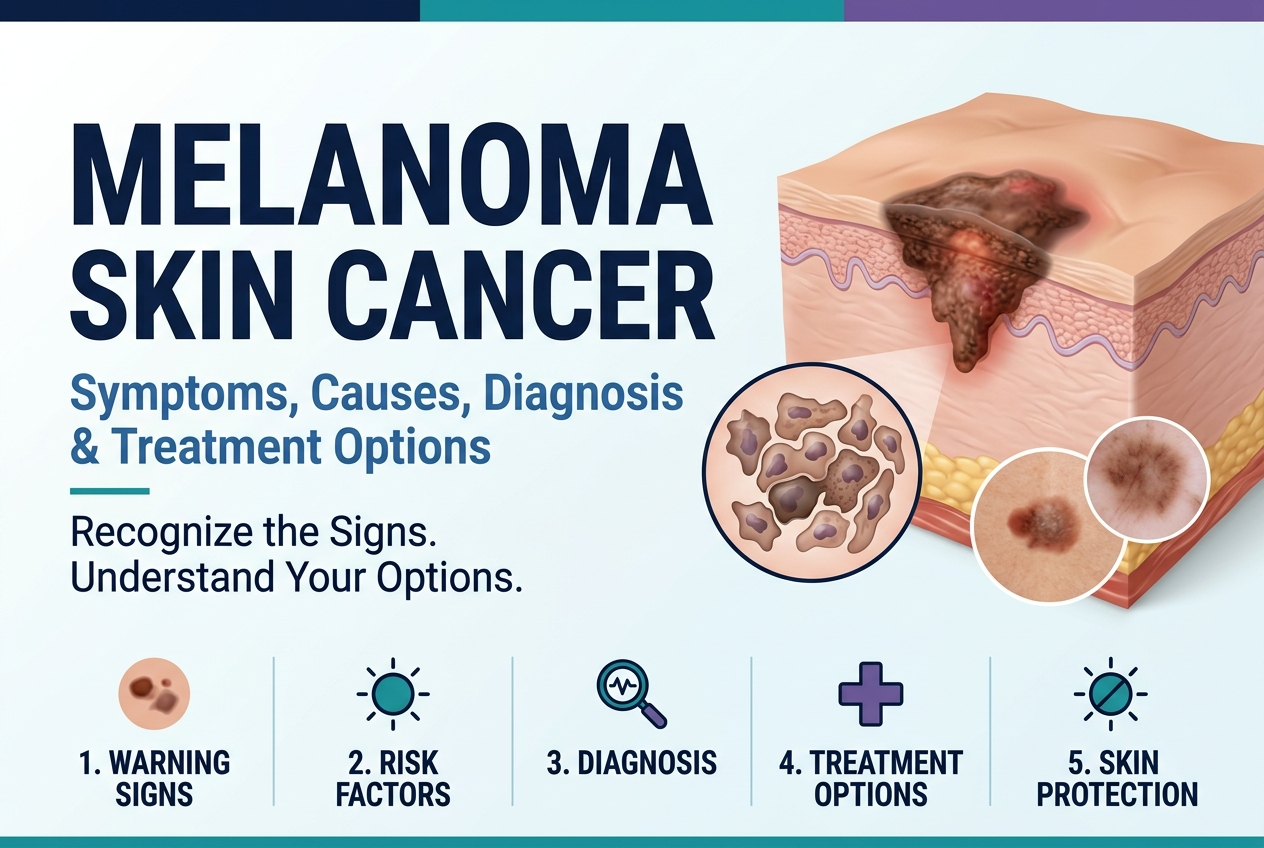
Melanoma Skin Cancer: Symptoms, Causes, Diagnosis and Treatment Options
Melanoma is a type of skin cancer that develops in melanocytes, the cells responsible for producing melanin, the pigment that gives skin its color. Although melanoma is less common than some other types of skin cancer, it can grow and spread to other parts of the body if it is not identified and treated appropriately.
Melanoma may develop in an existing mole or appear as a new spot on the skin. Changes in a mole's shape, border, color, size, or appearance can be warning signs. However, melanoma does not always look the same, and some melanomas do not follow every typical warning sign.
Understanding melanoma symptoms, risk factors, diagnostic procedures, and treatment options can help people recognize concerning skin changes and seek medical advice. Treatment depends on the melanoma's stage, location, biological features, and the patient's overall health.
What Is Melanoma?
Melanoma begins in melanocytes, which produce melanin. These cells are found mainly in the skin but also occur in other parts of the body, including the eyes and certain mucosal tissues. This article focuses primarily on melanoma of the skin.
Melanoma can occur on almost any part of the body, including areas that receive little sunlight. It may appear as a new pigmented spot or as a change in an existing mole. In some cases, melanoma has an unusual appearance and may not be dark brown or black.
Early diagnosis is important because treatment options and outcomes vary according to the extent of the disease. A suspicious skin lesion may require examination and biopsy to determine whether it is melanoma.
Types of Melanoma
1. Superficial Spreading Melanoma
This is a common type of cutaneous melanoma. It often spreads horizontally across the upper layers of the skin before growing more deeply, although its behavior varies.
2. Nodular Melanoma
Nodular melanoma may grow more rapidly and can appear as a raised bump. It may be dark, but some lesions have little or no pigment. A new, growing, or unusual skin bump should be evaluated if it is concerning.
3. Lentigo Maligna Melanoma
This type often develops in areas of skin with long-term sun exposure, particularly in older adults. It may begin as a slowly enlarging pigmented patch.
4. Acral Melanoma
Acral melanoma develops on areas such as the palms, soles, or beneath or around the nails. It is not primarily associated with sun exposure in the same way as many other skin melanomas.
These categories describe different patterns of melanoma. A pathologist's examination of a biopsy is needed to establish the diagnosis and relevant subtype.
Causes and Risk Factors of Melanoma
Melanoma develops through changes in melanocytes, but the cause of an individual case is not always identifiable. Factors associated with increased risk include:
Ultraviolet (UV) radiation: Exposure to UV radiation from sunlight or tanning devices can increase risk.
History of sunburn: Severe or blistering sunburns, especially earlier in life, are associated with melanoma risk.
Many moles: Having numerous moles or certain atypical moles can increase risk.
Fair skin: People with skin that burns easily and has less natural pigmentation may have a higher risk, although melanoma can affect every skin tone.
Personal history: A previous melanoma or other relevant skin cancer history may increase risk.
Family history: Melanoma in close relatives can be associated with increased risk.
Weakened immune system: Certain conditions or medicines that suppress immune function may increase risk.
Inherited genetic factors: Some families have inherited predispositions to melanoma.
Having risk factors does not mean a person will develop melanoma. People without obvious risk factors can also be diagnosed with this cancer.
Symptoms and Warning Signs of Melanoma
Melanoma may develop in a new spot or in an existing mole. Changes that deserve attention include:
A mole that changes size, shape, or color
An irregular or poorly defined border
A spot with several different colors
A lesion that looks different from a person's other moles
A new or changing pigmented area
A mole that itches, becomes tender, or bleeds
A spot that grows or develops a raised area
A dark line or unusual change beneath a fingernail or toenail
Some melanomas may be pink, red, skin-colored, or otherwise difficult to recognize by color alone. A persistent or evolving skin lesion should not be dismissed simply because it does not look like a typical dark mole.
The ABCDE Rule
The ABCDE rule is a useful guide for recognizing possible melanoma warning signs:
A — Asymmetry: One half of the spot does not match the other.
B — Border: The edges are irregular, blurred, or uneven.
C — Color: The spot has different colors or uneven color distribution.
D — Diameter: The spot may be larger than about 6 millimeters, although melanomas can be smaller.
E — Evolving: The spot changes in size, shape, color, or other features over time.
The ABCDE rule is a guide, not a diagnostic test. Some melanomas do not show these features, and many non-cancerous moles have one or more of them. A healthcare professional should assess a suspicious lesion.
How Is Melanoma Diagnosed?
Melanoma diagnosis generally involves a skin examination and examination of a tissue sample.
Skin Examination
A healthcare professional reviews the skin lesion and may ask when it first appeared, whether it has changed, and whether there is a personal or family history of melanoma. A full skin examination may be recommended when appropriate.
Dermoscopy
Dermoscopy uses a specialized magnifying instrument to examine structures and patterns within a skin lesion. It can help a trained clinician assess whether a spot requires biopsy, but it does not replace tissue diagnosis when biopsy is indicated.
Skin Biopsy
A biopsy removes all or part of a suspicious lesion so it can be examined under a microscope. When feasible, removal of the entire suspicious lesion with an appropriate margin is often preferred for initial diagnosis. The clinician chooses the method according to the lesion's location, size, and clinical circumstances.
The pathology report helps confirm melanoma and may describe its subtype, thickness, ulceration, and other features important for staging and treatment.
Tests to Determine Whether Melanoma Has Spread
Additional tests are not required for every early melanoma. Depending on the pathology findings and clinical stage, doctors may recommend lymph-node assessment, sentinel lymph node biopsy, ultrasound, CT, PET/CT, MRI, or other investigations.
The purpose of these tests is to determine the extent of disease and guide treatment decisions.
Understanding Melanoma Stages
Melanoma staging describes how deeply the primary tumor has grown and whether it has spread to lymph nodes or distant sites.
Stage 0: Also called melanoma in situ, abnormal cells are confined to the epidermis, the outermost skin layer.
Stage I: The melanoma is relatively localized, with stage determined by features such as tumor thickness and ulceration.
Stage II: The melanoma has higher-risk primary tumor features but no detected regional lymph-node or distant spread under the applicable staging criteria.
Stage III: The cancer has spread to nearby lymph nodes or certain nearby areas of skin or tissue.
Stage IV: The cancer has spread to distant parts of the body.
The exact stage depends on pathology and other clinical findings. Staging is more detailed than these summaries, and a specialist should explain what an individual pathology report means.
Melanoma Treatment Options
Treatment depends on the stage, tumor features, location, relevant genetic findings, previous treatments, and the patient's overall health.
1. Surgery
Surgery is the main treatment for many localized melanomas. The surgeon removes the melanoma along with an appropriate margin of surrounding skin. The amount of tissue removed depends on the tumor's characteristics and location.
For selected patients, sentinel lymph node biopsy may be recommended to assess whether melanoma has reached the first lymph node or nodes to which it may spread. This procedure is used for staging and is not necessary for every melanoma.
2. Immunotherapy
Immunotherapy helps the immune system recognize and attack cancer cells. Immune checkpoint inhibitors are used in selected melanoma settings, including certain higher-risk melanomas after surgery and advanced disease.
The choice of immunotherapy depends on the stage, previous treatments, medical history, and the expected benefits and risks. Immune-related side effects can affect different organs, so treatment requires appropriate monitoring.
3. Targeted Therapy
Some melanomas have specific genetic changes that can be targeted by medicines. For example, combinations of BRAF and MEK inhibitors may be options for selected melanomas with a BRAF V600 mutation.
Tumor testing is important before considering these medicines. Targeted therapies are not appropriate for every melanoma and should only be selected by a specialist based on the patient's clinical findings and local treatment guidance.
4. Radiation Therapy
Radiation therapy may be used in selected situations, such as controlling symptoms or treating particular areas of disease. It is not the primary treatment for every melanoma, and the decision depends on the location and extent of the cancer.
5. Other Treatments and Clinical Trials
Certain patients with advanced melanoma may be eligible for specialized cellular therapies or other treatments, depending on clinical criteria and availability. Clinical trials may also offer access to investigational approaches.
A cancer specialist can explain eligibility, possible benefits, risks, and alternatives before a treatment decision is made.
Advanced or Metastatic Melanoma
Metastatic melanoma means the cancer has spread beyond its original site to distant parts of the body. Treatment may include immunotherapy, targeted therapy for tumors with appropriate genetic changes, surgery or radiation for selected sites, and other specialist approaches.
The treatment plan depends on where the cancer has spread, the tumor's molecular features, previous therapy, and the patient's general health. Some patients may benefit from a combination of treatments, while others require a different approach.
Advanced melanoma can be serious, but treatment options have expanded. Outcomes vary widely, and no single therapy is effective for every patient.
Skin Protection and Follow-Up Care
Although not every melanoma can be prevented, sensible sun-protection practices can reduce UV exposure. Helpful measures include:
Seeking shade when UV exposure is high
Wearing protective clothing, a wide-brimmed hat, and sunglasses
Using broad-spectrum sunscreen as directed and reapplying it as recommended
Avoiding indoor tanning devices
Becoming familiar with the skin's usual appearance
Seeking professional assessment for a new, changing, or suspicious spot
Following the skin examination and follow-up plan recommended by a clinician
People with a personal or family history of melanoma or numerous atypical moles may need an individualized surveillance plan.
Melanoma Medicine Information and Treatment Support
Melanoma treatment may involve surgery, immunotherapy, targeted medicines, radiation therapy, or other approaches. The most appropriate option depends on the cancer's stage and biological characteristics.
For example, BRAF-targeted treatment is relevant only for selected melanomas with an appropriate BRAF mutation. Genetic testing and specialist evaluation are therefore important when targeted therapy is being considered.
RootAid Pharma provides general medicine information and international medicine-support guidance where available. It does not replace a qualified dermatologist or oncologist, and it should not be presented as the manufacturer of any medicine unless independently verified. Product availability and regulatory approvals vary by country.
Frequently Asked Questions About Melanoma
1. What is melanoma?
Melanoma is a cancer that begins in melanocytes, the cells that produce pigment.
2. Is melanoma the same as every other type of skin cancer?
No. Melanoma is a distinct type of skin cancer and differs from basal cell carcinoma and squamous cell carcinoma.
3. What are the early warning signs?
A new or changing mole or pigmented spot may be a warning sign, particularly if its shape, border, color, or size changes.
4. What does ABCDE mean?
It stands for Asymmetry, Border, Color, Diameter, and Evolving—features that can help identify a suspicious spot.
5. Can melanoma occur in people with darker skin?
Yes. Melanoma can affect people of all skin tones, including on the palms, soles, and around or under the nails.
6. Does every unusual mole mean cancer?
No. Many unusual-looking moles are benign, but a changing or suspicious lesion should be evaluated by a qualified professional.
7. How is melanoma confirmed?
A skin biopsy and microscopic examination of the tissue are used to establish the diagnosis.
8. What does melanoma thickness mean?
Thickness measures how deeply the melanoma has grown into the skin and is an important part of staging.
9. Can melanoma spread to other organs?
Yes. Melanoma can spread to lymph nodes and distant organs, which is why staging is important.
10. Is surgery used to treat melanoma?
Yes. Surgery is the main treatment for many localized melanomas.
11. What is immunotherapy for melanoma?
It is treatment that helps the immune system recognize and attack cancer cells.
12. What is targeted therapy for melanoma?
Targeted therapy acts on specific tumor-related molecular changes, such as an appropriate BRAF mutation.
13. Does every melanoma patient need genetic testing?
No. Testing is considered according to the stage, clinical situation, and whether results could influence treatment.
14. Can melanoma return after treatment?
Yes. Recurrence can occur, so follow-up care is important.
15. When should I get a mole checked?
Seek professional assessment for a new, changing, bleeding, itching, or otherwise suspicious spot, especially if it continues to evolve.
Global Medicine Information & Support by RootAid Pharma
RootAid Pharma shares general educational information about medicines and cancer-treatment categories for an international audience. Patients and caregivers can use this information to prepare questions for healthcare professionals and better understand treatment discussions.
Diagnosis, medicine selection, prescriptions, dosing, monitoring, and treatment changes must be managed by qualified healthcare professionals. Availability and regulatory approval may differ by country.
Medical Disclaimer
This article is intended for educational purposes only and is not a substitute for professional medical advice, diagnosis, or treatment. A mole or skin lesion cannot be reliably diagnosed from an article alone. Consult a qualified healthcare professional for assessment of suspicious skin changes. Do not start, stop, or change any cancer medicine without guidance from your treating clinician.
Need help after reading this?
Talk to our support team for sourcing guidance, product availability, and global delivery assistance.