Liver Cancer: Symptoms, Causes, Diagnosis and Treatment Options
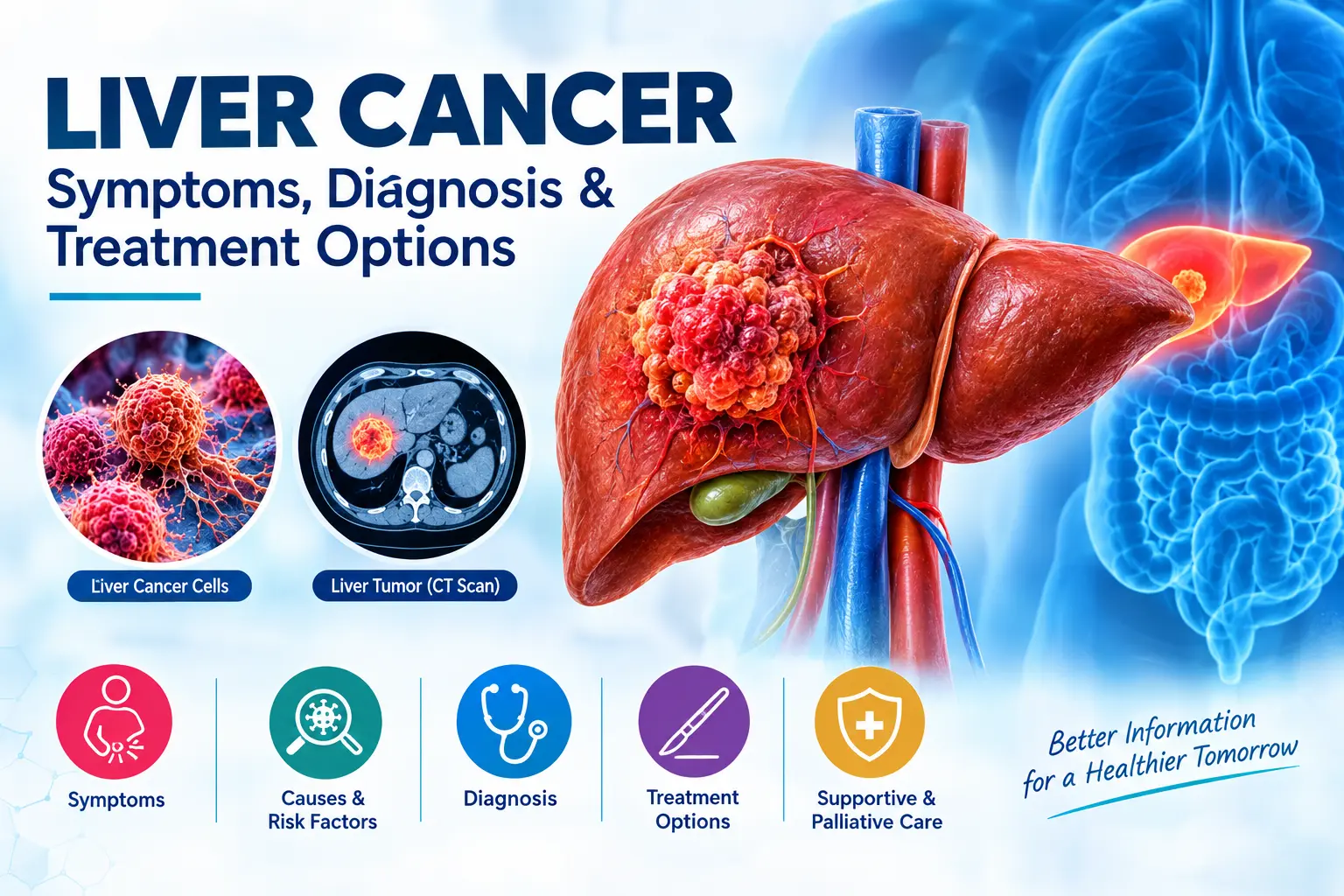
Liver Cancer: Symptoms, Causes, Diagnosis and Treatment Options
What Is Liver Cancer?
Liver cancer is a malignant disease that begins in the liver. The liver performs many essential functions, including processing nutrients, producing important proteins, storing energy and helping remove waste from the blood.
The most common type of adult primary liver cancer is hepatocellular carcinoma (HCC), which develops from hepatocytes, the main cells of the liver. Another primary liver cancer is intrahepatic cholangiocarcinoma, which develops from bile-duct cells inside the liver.
HCC frequently develops in the setting of chronic liver disease, particularly chronic hepatitis B or hepatitis C infection and cirrhosis. However, not every person with liver cancer has the same underlying risk factors.
Treatment depends on several factors, including the tumor's size and location, whether there are multiple tumors, blood-vessel involvement, whether the cancer has spread, how well the liver is functioning and the person's overall health.
Types of Liver Cancer
Hepatocellular Carcinoma
Hepatocellular carcinoma (HCC) develops in hepatocytes and represents most adult primary liver cancers.
HCC is strongly associated with chronic liver disease. Major risk factors include chronic hepatitis B or C, cirrhosis, heavy alcohol use and certain metabolic liver diseases.
Intrahepatic Cholangiocarcinoma
This cancer begins in bile ducts located inside the liver. It is biologically and therapeutically different from HCC, so diagnosis should establish which type of liver cancer is present.
Causes and Risk Factors of Liver Cancer
Liver cancer can develop through several pathways. Important risk factors include:
- Chronic hepatitis B virus (HBV) infection
- Chronic hepatitis C virus (HCV) infection
- Cirrhosis
- Heavy alcohol use
- Nonalcoholic steatohepatitis (NASH)
- Certain inherited or metabolic conditions
- Aflatoxin B1 exposure
- Cigarette smoking
- Certain chronic liver diseases
Chronic HBV infection is an especially important cause of HCC in many parts of Asia and Africa. Chronic HCV infection is also strongly associated with liver cancer, particularly through its contribution to cirrhosis.
Having a risk factor does not mean that a person will definitely develop liver cancer, and some patients develop the disease without a clearly recognized risk factor.
Hepatitis B, Hepatitis C and Liver Cancer
Chronic hepatitis B and hepatitis C can cause long-term inflammation and damage to the liver.
Over time, persistent liver injury can contribute to fibrosis and cirrhosis, which can increase the risk of HCC.
Preventing and treating chronic viral hepatitis is therefore an important part of liver-health management. NCI notes that hepatitis B vaccination reduces HBV infection and that treatment of chronic HBV may reduce liver-cancer risk.
Cirrhosis and Liver Cancer
Cirrhosis occurs when healthy liver tissue is replaced by scar tissue. This can interfere with normal liver function and blood flow.
Cirrhosis is one of the most important risk factors for HCC and may result from:
- Chronic hepatitis B
- Chronic hepatitis C
- Heavy alcohol use
- Metabolic liver disease
- Other chronic liver conditions
NCI notes that cirrhosis is present in a substantial proportion of patients diagnosed with HCC.
Symptoms of Liver Cancer
Early liver cancer may cause few noticeable symptoms. When symptoms occur, they can include:
- A hard lump under the right side of the rib cage
- Discomfort or pain in the upper-right abdomen
- Abdominal swelling
- Back or right shoulder discomfort
- Jaundice
- Easy bruising or bleeding
- Fatigue or weakness
- Nausea or vomiting
- Loss of appetite
- Feeling full after eating a small amount
- Unexplained weight loss
- Dark urine
- Pale or chalky stools
- Fever
These symptoms can also be caused by other liver, digestive or systemic conditions. Persistent or unexplained symptoms should be medically evaluated.
Jaundice and Liver Cancer
Jaundice causes yellowing of the skin and the whites of the eyes.
It can occur when liver function or bile flow is affected. Dark urine and pale stools may occur alongside jaundice.
Jaundice has many possible causes and does not by itself establish a diagnosis of liver cancer. Medical assessment is important when jaundice develops.
Abdominal Pain and Swelling
Liver cancer may cause discomfort in the upper-right abdomen. Some patients may also experience abdominal enlargement or a feeling of fullness.
However, abdominal pain and swelling are nonspecific symptoms and may result from many different conditions.
Unexplained Weight Loss and Loss of Appetite
Unintentional weight loss, reduced appetite and feeling full after eating a small amount can occur in liver cancer.
These symptoms can also result from other diseases, digestive problems or chronic liver conditions. Persistent unexplained weight loss should be assessed by a healthcare professional.
How Is Liver Cancer Diagnosed?
Diagnosis may involve a combination of medical history, physical examination, blood tests and imaging.
NCI lists several diagnostic approaches, including:
- Physical examination
- Health and medical history
- Alpha-fetoprotein (AFP) testing
- Liver function tests
- CT scans
- MRI
- Other imaging studies
- Biopsy when appropriate
Importantly, a biopsy is not always required to diagnose HCC. In appropriate patients, characteristic findings on contrast-enhanced CT or MRI may establish the diagnosis.
Liver Function Tests
Liver function tests measure substances in the blood that provide information about liver health.
They can help clinicians understand how well the liver is functioning and may also be important when considering treatment.
Liver function is particularly important in HCC because treatment decisions are influenced not only by the tumor but also by the amount of healthy liver function remaining.
Alpha-Fetoprotein (AFP)
Alpha-fetoprotein (AFP) is a blood marker that may be elevated in some people with liver cancer.
However, AFP is not specific to HCC. It can also be elevated in some noncancerous liver conditions and other cancers, and some patients with liver cancer have normal AFP levels.
Therefore, AFP should be interpreted together with imaging and other clinical information rather than used as a standalone diagnostic test.
Ultrasound, CT and MRI
Imaging plays an important role in evaluating liver lesions.
Depending on the clinical situation, doctors may use:
- Ultrasound
- Contrast-enhanced CT
- MRI
- PET imaging in selected situations
For patients at risk of HCC who have suspicious liver lesions, multiphasic contrast-enhanced CT or MRI can be particularly useful for diagnosis and staging.
Liver Biopsy
A liver biopsy removes a small tissue sample for microscopic examination.
Biopsy may be used when imaging does not provide enough information or when confirmation of the tumor type is needed.
Because characteristic imaging can sometimes establish HCC in appropriate high-risk patients, biopsy is not necessary in every case.
Liver Cancer Staging
Liver cancer staging helps determine the extent of disease and guide treatment planning.
For HCC, staging is more complex than simply measuring tumor size because doctors also consider:
- Number of tumors
- Tumor size
- Blood-vessel invasion
- Spread outside the liver
- Liver function
- Overall physical condition
- Cancer-related symptoms
The Barcelona Clinic Liver Cancer (BCLC) system is one staging framework used for HCC and links disease stages with treatment approaches.
Surgery and Liver Resection
For selected patients with localized HCC, surgical removal of the tumor may be considered.
A partial hepatectomy removes the part of the liver containing the tumor along with an appropriate margin of surrounding tissue.
Whether surgery is possible depends on:
- Tumor location
- Number and size of tumors
- Blood-vessel involvement
- Remaining liver function
- Presence or absence of cirrhosis
- Overall health
NCI identifies surgical resection as one of the potentially curative approaches for appropriately selected localized HCC.
Liver Transplantation
Liver transplantation replaces the diseased liver with a healthy donated liver.
For selected patients with early HCC and significant underlying liver disease, transplantation may treat both the tumor and the diseased liver.
Eligibility depends on tumor characteristics, liver function, overall health and transplant-center criteria.
Ablation Therapy
Ablation destroys tumor tissue without removing the entire tumor surgically.
Techniques may include:
- Radiofrequency ablation
- Microwave ablation
- Percutaneous ethanol injection
- Cryoablation
Ablation can be considered for selected localized tumors, particularly when surgery is not suitable or depending on tumor location and size.
Transarterial Embolization and TACE
Transarterial embolization (TAE) blocks blood flow to tumor-feeding arteries.
Transarterial chemoembolization (TACE) combines arterial embolization with delivery of chemotherapy to the tumor's blood supply.
These approaches may be used for selected patients with liver-limited or locally advanced HCC who are not candidates for curative surgery or ablation.
Radiation Therapy
Radiation therapy uses high-energy radiation to damage cancer cells.
It may be considered in selected liver cancer situations, including some localized, recurrent or advanced disease.
The suitability of radiation depends on tumor location, liver function, disease extent and nearby organs.
Targeted Therapy for Liver Cancer
Targeted therapies act on specific biological pathways involved in cancer growth.
For advanced HCC, treatment options may include medicines such as:
- Sorafenib
- Lenvatinib
- Regorafenib
- Cabozantinib
- Ramucirumab
The appropriate treatment depends on previous therapy, tumor characteristics, liver function, overall health and the approved indication.
These medicines should not be presented as universally appropriate for every liver-cancer patient.
Immunotherapy for Liver Cancer
Immunotherapy can help the immune system recognize and attack cancer cells.
NCI lists several immunotherapy-based approaches for advanced HCC, including:
- Atezolizumab with bevacizumab
- Durvalumab with tremelimumab
- Nivolumab with ipilimumab
- Pembrolizumab in appropriate settings
Treatment selection depends on clinical circumstances, prior treatment, liver function and applicable regulatory indications.
Advanced and Metastatic Liver Cancer
Advanced liver cancer may involve major blood vessels, nearby structures or distant organs.
Treatment can include:
- Systemic therapy
- Immunotherapy
- Targeted therapy
- TAE or TACE in selected nonmetastatic disease
- Radiation therapy
- Clinical trials
- Supportive and palliative care
For advanced disease, treatment goals may include controlling tumor growth, managing symptoms, maintaining liver function and supporting quality of life.
Recurrent Liver Cancer
Liver cancer can return after previous treatment.
Depending on the location and extent of recurrence, treatment may include:
- Repeat surgery in selected cases
- Liver transplantation in selected situations
- Ablation
- Radiation therapy
- TACE
- Systemic therapy
- Supportive care
The choice depends on tumor characteristics, liver function and previous treatments.
Liver Cancer Screening and Surveillance
Surveillance is particularly relevant for people at increased risk of HCC, including some patients with chronic liver disease and cirrhosis.
NCI notes that ultrasound and AFP have been studied for HCC surveillance, while management of suspicious lesions may involve further imaging and sometimes biopsy.
Screening or surveillance should be based on individual risk and current clinical guidance rather than applied identically to everyone.
Supportive and Palliative Care
Supportive care can be used alongside cancer-directed treatment.
It may help address:
- Pain
- Nausea
- Fatigue
- Appetite problems
- Nutrition
- Abdominal discomfort
- Emotional concerns
- Treatment-related side effects
Palliative care focuses on symptom management and quality of life. It can be integrated into cancer care according to the patient's needs.
Liver Cancer FAQs
1. What is liver cancer?
Liver cancer is cancer that begins in liver tissue. Hepatocellular carcinoma is the most common adult primary liver cancer.
2. What is HCC?
HCC stands for hepatocellular carcinoma, a cancer arising from hepatocytes, the main cells of the liver.
3. What causes liver cancer?
Major risk factors include chronic hepatitis B or C, cirrhosis, heavy alcohol use, NASH and certain other conditions.
4. Can hepatitis B cause liver cancer?
Yes. Chronic HBV infection is an important risk factor for HCC.
5. Can hepatitis C cause liver cancer?
Yes. Chronic HCV can cause liver damage and cirrhosis, increasing the risk of HCC.
6. What are the symptoms of liver cancer?
Possible symptoms include right-upper abdominal discomfort, abdominal swelling, jaundice, unexplained weight loss, appetite loss and fatigue.
7. Can liver cancer cause jaundice?
Yes. Jaundice can occur in liver cancer, although it has many other possible causes.
8. How is liver cancer diagnosed?
Doctors may use blood tests, AFP, liver function tests, CT, MRI and sometimes biopsy.
9. Is biopsy always necessary?
No. In appropriate high-risk patients, characteristic CT or MRI findings can sometimes establish HCC without biopsy.
10. What is AFP?
AFP is a blood tumor marker that may be elevated in HCC, but it is not specific enough to diagnose liver cancer by itself.
11. Can liver cancer be treated with surgery?
Selected patients with localized disease may undergo liver resection.
12. Is liver transplantation used for liver cancer?
Yes. Liver transplantation can be an option for selected patients with appropriate early-stage HCC and underlying liver disease.
13. What is ablation therapy?
Ablation destroys tumor tissue using techniques such as radiofrequency or microwave therapy.
14. What is TACE?
TACE stands for transcatheter arterial chemoembolization and combines arterial embolization with chemotherapy delivery to selected liver tumors.
15. Can advanced liver cancer be treated?
Yes. Treatment options for advanced HCC can include systemic therapy, immunotherapy, targeted therapy and selected local treatments.
16. Can liver cancer come back after treatment?
Yes. Recurrent liver cancer can occur, and treatment depends on the location and extent of recurrence.
17. Is cirrhosis a risk factor for liver cancer?
Yes. Cirrhosis substantially increases the risk of HCC.
18. Is smoking associated with liver cancer?
Yes. Cigarette smoking has been associated with an increased risk of liver cancer.
19. Is liver cancer the same as bile duct cancer?
No. HCC and cholangiocarcinoma are different primary cancers with different origins.
20. Where can patients find liver cancer treatment information?
Patients should discuss diagnosis and treatment options with a qualified hepatologist, oncologist or multidisciplinary cancer team. International treatment availability and regulatory approvals can vary between countries.
Global Medicine Information & Support by RootAid Pharma
International Medicine Information for Cancer Care
RootAid Pharma can provide general educational information and international medicine support for patients, caregivers and healthcare-related inquiries.
Information may include:
- Generic medicine information
- Brand-name medicine information
- International medicine availability
- Prescription-related requirements
- Oncology medicine information
- General treatment resources
- International patient assistance
RootAid Pharma is presented as an international medicine information and support resource, not as the manufacturer of the medicines discussed.
Cancer medicines should only be selected and used under the guidance of an appropriately qualified healthcare professional.
Need help after reading this?
Talk to our support team for sourcing guidance, product availability, and global delivery assistance.