Kidney Cancer: Symptoms, Diagnosis & Treatment Options
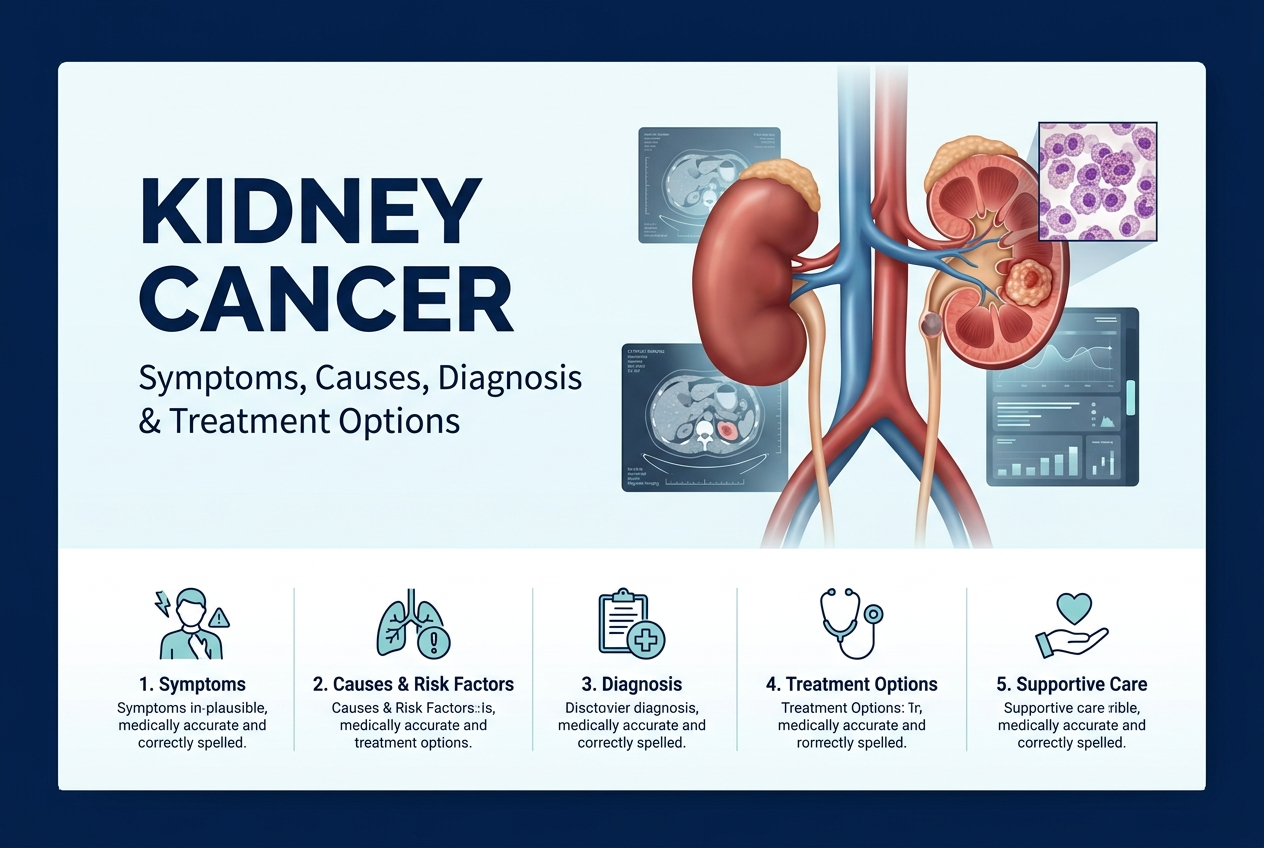
Kidney Cancer: Symptoms, Causes, Diagnosis and Treatment Options
Kidney cancer is a disease in which abnormal cells grow in one or both kidneys. The kidneys filter waste products from the blood, regulate fluid balance, and help maintain important functions such as blood pressure control and red blood cell production. When cancer develops, its effects can vary depending on the tumor type, size, location, and whether it has spread beyond the kidney.
Learning about kidney cancer symptoms, risk factors, diagnostic tests, and available treatments can help patients and caregivers understand the next steps after a suspected or confirmed diagnosis. Treatment has advanced in recent years, particularly for renal cell carcinoma, the most common type of kidney cancer in adults.
What Is Kidney Cancer?
Kidney cancer begins when cells in the kidney develop changes that cause them to grow abnormally. The most common adult type is renal cell carcinoma (RCC), which develops in the small tubes inside the kidney that help filter blood and produce urine.
Other kidney or urinary-system cancers can arise from different tissues. For example, cancer originating in the renal pelvis—the part of the kidney that collects urine—is not the same disease as renal cell carcinoma. Correctly identifying the cancer type is essential because treatment plans differ.
Kidney cancer may remain confined to the kidney or extend into nearby tissues, lymph nodes, blood vessels, or distant organs. Doctors use diagnostic tests and staging assessments to determine how extensive the disease is.
Types of Kidney Cancer
1. Clear Cell Renal Cell Carcinoma
Clear cell RCC is the most common subtype of renal cell carcinoma. Its biological characteristics can influence which targeted medicines or immunotherapy combinations may be considered.
2. Papillary Renal Cell Carcinoma
Papillary RCC is another subtype with distinct cellular and molecular features. Treatment decisions depend on its stage, clinical behavior, and the patient's overall condition.
3. Chromophobe Renal Cell Carcinoma
Chromophobe RCC is less common than clear cell RCC and may behave differently. A specialist considers the subtype alongside tumor size, stage, and other clinical findings.
4. Other Kidney Tumors
Some kidney tumors arise from different cell types or occur in children. These conditions may require treatment approaches that differ from those used for adult renal cell carcinoma.
Causes and Risk Factors of Kidney Cancer
The exact reason a particular person develops kidney cancer is not always known. Several factors are associated with an increased risk:
Smoking: Tobacco use is an established risk factor.
Excess body weight: Obesity is associated with increased kidney cancer risk.
High blood pressure: Hypertension has been associated with a higher risk.
Family history: Having close relatives with kidney cancer can increase risk.
Inherited conditions: Certain genetic syndromes can predispose people to kidney tumors.
Long-term misuse of some pain medicines: Certain patterns of prolonged medication misuse may affect kidney health and cancer risk.
Age: Risk generally increases with age.
Having one or more risk factors does not mean someone will develop kidney cancer. Likewise, a person without known risk factors may still receive a diagnosis.
Symptoms of Kidney Cancer
Early kidney cancer may not cause noticeable symptoms. Some tumors are found unexpectedly during imaging performed for another reason. As the disease grows, possible symptoms include:
Blood in the urine, which may appear pink, red, or brown
Persistent pain in one side of the back or flank
A lump or mass in the abdomen or side
Unexplained weight loss
Reduced appetite
Persistent tiredness or fatigue
Anemia
Fever that is not explained by an infection and does not go away
These symptoms can also occur with kidney stones, urinary infections, and other non-cancerous conditions. Blood in the urine should not be ignored, even if it happens only once or is not accompanied by pain. A healthcare professional can investigate the cause.
How Is Kidney Cancer Diagnosed?
Diagnosis usually combines medical history, physical examination, laboratory tests, and imaging. The exact tests depend on the suspected tumor and the patient's circumstances.
Medical History and Examination
A clinician may ask about symptoms, smoking history, family history, medicines, and previous health conditions. A physical examination may help identify a mass or other concerning findings.
Urine and Blood Tests
Urine testing can identify blood or other abnormalities. Blood tests may assess kidney function, blood-cell counts, and general health. These tests can support evaluation but cannot independently confirm or exclude kidney cancer.
Imaging Tests
Common imaging methods include:
Ultrasound: Uses sound waves to create images of the kidneys.
CT scan: Provides detailed images that can help characterize a kidney mass and assess its extent.
MRI: May be used when more detailed information about the tumor or nearby structures is needed.
Chest or other imaging: May be requested when doctors need to assess possible spread.
Biopsy
A biopsy involves collecting a tissue sample for examination under a microscope. It may be recommended when the result is expected to help guide management. In some cases, imaging findings provide enough information for a treatment decision without a kidney tumor biopsy.
Understanding Kidney Cancer Stages
Staging describes the size and extent of the cancer and whether it has spread.
Stage I: The tumor is limited to the kidney and is relatively small.
Stage II: The tumor is larger but remains within the kidney.
Stage III: The cancer has extended into certain nearby tissues, major blood vessels, or regional lymph nodes.
Stage IV: The cancer has spread to more distant sites or has extensive local involvement meeting stage IV criteria.
The precise stage is determined using clinical findings and the applicable staging system. Stage helps guide treatment, but the tumor subtype, general health, kidney function, and other factors also matter.
Kidney Cancer Treatment Options
There is no single treatment plan that is appropriate for every patient. The oncology and urology teams consider the cancer stage, subtype, imaging results, kidney function, overall health, and the patient's preferences.
1. Surgery
Surgery is an important treatment for many kidney cancers that have not spread widely.
Partial nephrectomy: Removes the tumor and a margin of surrounding tissue while preserving the remaining kidney when feasible.
Radical nephrectomy: Removes the entire affected kidney and may include surrounding tissue or nearby structures when necessary.
The choice depends on the tumor's size, location, complexity, and the patient's kidney function and health.
2. Active Surveillance and Ablation
For selected small kidney masses, doctors may recommend active surveillance, which involves monitoring the mass with planned follow-up tests rather than treating it immediately. Some patients may be candidates for procedures that destroy tumor tissue using heat or cold. These approaches are not suitable for every tumor.
3. Targeted Therapy
Targeted therapies act on specific molecular pathways that help cancer cells grow or survive. Several medicines are used in particular settings of advanced renal cell carcinoma. The best option depends on the cancer subtype, prior treatment, risk assessment, and other clinical factors.
Examples of medicines used in selected renal cell carcinoma treatment settings include cabozantinib, axitinib, pazopanib, sunitinib, and other agents. These medicines are not interchangeable, and their suitability must be determined by an oncology specialist.
4. Immunotherapy
Immunotherapy helps the immune system recognize or attack cancer cells. Immune checkpoint inhibitors, sometimes combined with targeted medicines, are used for selected patients with advanced kidney cancer. The benefits and risks depend on the treatment regimen and the patient's medical history.
5. Radiation Therapy and Symptom Control
Radiation therapy is not the main treatment for every kidney tumor, but it may help manage certain symptoms or treat specific sites of cancer spread. Supportive care can help address pain, fatigue, nausea, appetite changes, and emotional distress throughout treatment.
6. Clinical Trials
Clinical trials may provide access to treatments or treatment combinations being studied. A specialist can explain eligibility, potential benefits, uncertainties, and alternative options.
Advanced or Metastatic Kidney Cancer
Metastatic kidney cancer means the disease has spread from the kidney to distant parts of the body. Treatment often involves systemic therapy, such as immunotherapy, targeted therapy, or a combination selected for the individual case.
Treatment goals may include controlling tumor growth, reducing symptoms, extending survival, and maintaining quality of life. Some patients may also be considered for surgery or local treatment to selected cancer sites, depending on their circumstances.
A metastatic diagnosis does not mean that every patient has the same outlook. Outcomes vary according to tumor biology, disease extent, general health, and response to treatment.
Living With Kidney Cancer
Cancer care includes more than treating the tumor. Patients may benefit from:
Keeping a record of symptoms, appointments, scans, and medicines
Asking about kidney function monitoring and possible treatment side effects
Discussing nutrition and physical activity with the care team
Seeking help for anxiety, sleep problems, or emotional stress
Asking whether genetic counseling is appropriate, especially when there is a strong family history or a suspected inherited condition
Attending recommended follow-up visits after treatment
Patients should discuss any new or worsening symptoms with their healthcare team. They should not stop, start, or change prescription cancer medicines without medical guidance.
Kidney Cancer Treatment and Medicine Information
Treatment medicines for renal cell carcinoma may include targeted therapies and immunotherapies, but there is no single medicine that is suitable for every kidney cancer patient. A drug's role depends on the diagnosis, cancer subtype, stage, treatment history, and applicable regulatory approval.
For example, cabozantinib is used in certain renal cell carcinoma treatment settings. Other targeted medicines may be used alone or in combinations depending on the clinical situation. The treating oncologist should confirm the appropriate medicine and explain its expected benefits, risks, monitoring requirements, and alternatives.
RootAid Pharma can provide general medicine information and international medicine-support guidance where available. It does not replace a licensed oncologist, a prescription, or an individualized treatment plan. Product availability and regulatory approval may vary by country.
Frequently Asked Questions About Kidney Cancer
1. What is the most common type of kidney cancer in adults?
Renal cell carcinoma is the most common type of kidney cancer in adults.
2. What are the early signs of kidney cancer?
Early kidney cancer may have no symptoms. Blood in the urine or persistent side or back pain should be medically evaluated.
3. Is blood in the urine always a sign of kidney cancer?
No. Urinary infections, kidney stones, and other conditions can cause blood in the urine, but it should always be checked.
4. Can kidney cancer occur without pain?
Yes. Some kidney tumors cause no pain or other noticeable symptoms, particularly in the early stages.
5. How is kidney cancer confirmed?
Doctors use medical assessment and imaging, and may recommend a biopsy when it is needed to guide diagnosis or treatment.
6. What are the main stages of kidney cancer?
Kidney cancer is generally classified into stages I through IV, based on the extent of the tumor and whether it has spread.
7. Can kidney cancer be treated with surgery?
Yes. Surgery is a major treatment option for many localized kidney cancers. The type of surgery depends on the tumor and the patient's circumstances.
8. Is removing the entire kidney always necessary?
No. A partial nephrectomy may be possible for selected patients, allowing part of the affected kidney to remain.
9. What is targeted therapy for kidney cancer?
Targeted therapy uses medicines that act on specific pathways involved in cancer growth or survival.
10. What is immunotherapy for kidney cancer?
Immunotherapy helps the immune system fight cancer and is used for selected patients, including some with advanced disease.
11. Can kidney cancer spread to other organs?
Yes. Kidney cancer can spread beyond the kidney. Doctors use staging tests to assess whether this has occurred.
12. Is kidney cancer hereditary?
Most cases are not caused by an inherited syndrome, but certain inherited conditions increase risk. Genetic counseling may be appropriate for selected patients.
13. Does smoking increase kidney cancer risk?
Yes. Smoking is an established risk factor for kidney cancer.
14. Can kidney cancer return after treatment?
Yes. Recurrence can occur, so follow-up care is important even after treatment has finished.
15. What determines the best kidney cancer treatment?
The cancer stage and subtype, kidney function, general health, previous treatments, and patient preferences all contribute to the decision.
Global Medicine Information & Support by RootAid Pharma
RootAid Pharma shares general educational information about medicines and treatment categories for an international audience. Patients and caregivers can use this information to prepare questions for healthcare professionals and better understand treatment discussions.
Medicine selection, prescription decisions, dosing, monitoring, and changes to therapy must be handled by qualified healthcare professionals. Availability and approval status may differ across countries.
Medical Disclaimer
This article is for educational purposes only and is not a substitute for medical advice, diagnosis, or treatment. Symptoms described here can have causes other than cancer. Consult a qualified healthcare professional for assessment and individualized guidance. Do not start, stop, or change any cancer medicine without advice from your treating clinician.
Need help after reading this?
Talk to our support team for sourcing guidance, product availability, and global delivery assistance.