Kidney Cancer: Symptoms, Causes, Diagnosis & Treatment
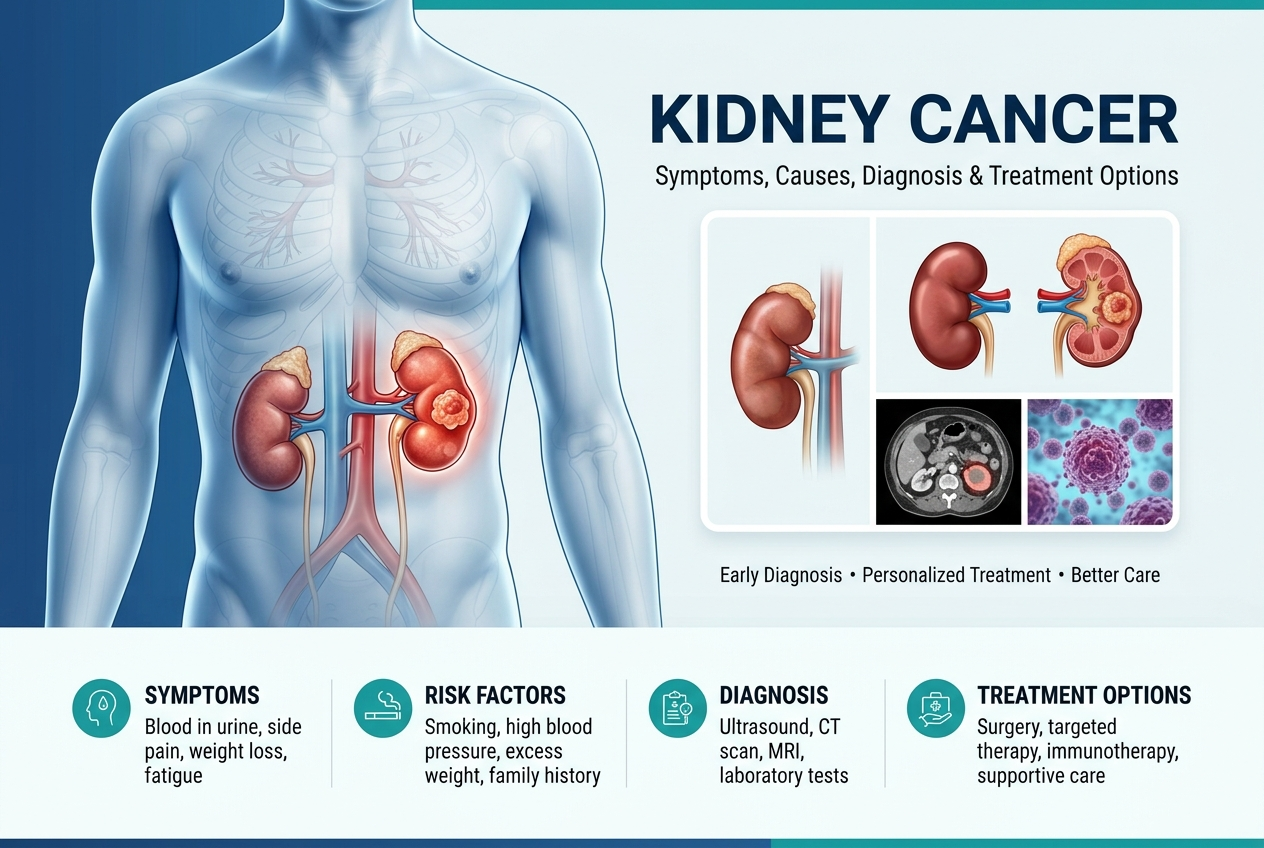
Kidney Cancer: Symptoms, Causes, Diagnosis and Treatment Options
Kidney cancer is a type of cancer that begins in the kidneys, the organs responsible for filtering waste from the blood and helping produce urine. In adults, renal cell carcinoma (RCC) is the most common type of kidney cancer. Other kidney tumors can occur, including transitional cell cancers and Wilms tumor, which mainly affects children.
Kidney cancer may not cause noticeable symptoms during its early stages. As a tumor grows, symptoms such as blood in the urine, persistent pain in the side, unexplained weight loss, loss of appetite, or anemia may develop.
Treatment depends on factors such as the type and stage of cancer, whether it has spread, the patient's general health, and the characteristics of the tumor. Treatment may include surgery, radiation therapy in selected situations, targeted therapy, immunotherapy, or combinations of these approaches.
What Is Kidney Cancer?
Kidney cancer develops when abnormal cells in kidney tissue begin growing and dividing uncontrollably.
The kidneys are located on either side of the spine, above the waist. They filter the blood, remove waste products, and produce urine. Most adult kidney cancers begin in the small structures called renal tubules.
Renal cell carcinoma (RCC) is the most common kidney cancer in adults. Kidney cancer can remain localized to the kidney or, in more advanced disease, spread to nearby lymph nodes or distant organs.
Early kidney cancer may sometimes be discovered incidentally during imaging performed for another medical reason.
Types of Kidney Cancer
Several types of kidney cancer can occur.
1. Renal Cell Carcinoma
Renal cell carcinoma is the most common kidney cancer in adults. It includes several subtypes, with clear cell renal cell carcinoma being a common form.
2. Papillary Renal Cell Carcinoma
This is another subtype of renal cell carcinoma and may have different biological characteristics from clear cell disease.
3. Chromophobe Renal Cell Carcinoma
Chromophobe RCC is a less common subtype with distinct microscopic and molecular features.
4. Transitional Cell Cancer
Cancer can also develop in the renal pelvis, the area where urine collects before moving into the ureter. This type is different from renal cell carcinoma.
Kidney Cancer Symptoms
Kidney cancer does not always produce symptoms in its early stages.
When symptoms develop, they may include:
- Blood in the urine
- Persistent pain in the side or lower back
- A lump or mass in the abdomen
- Unexplained weight loss
- Reduced appetite
- Persistent tiredness
- Anemia
- Fever without an obvious cause
Blood in the urine is an important warning sign, but it can also occur because of other urinary tract conditions. Therefore, visible or unexplained blood in the urine should be medically evaluated.
When Should You See a Doctor?
Seek medical evaluation if you experience persistent blood in the urine, unexplained weight loss, ongoing side pain, an abdominal lump, or other unusual urinary or systemic symptoms.
These symptoms do not automatically mean cancer, but identifying the underlying cause is important.
Causes and Risk Factors of Kidney Cancer
There is no single cause responsible for every case of kidney cancer. Certain factors can increase the likelihood of developing the disease.
Important risk factors include:
- Smoking tobacco
- Excess body weight
- High blood pressure
- Older age
- Family history of kidney cancer
- Certain inherited genetic conditions
- Long-term misuse of certain pain medicines
Inherited conditions such as von Hippel-Lindau disease and hereditary papillary renal cancer can increase kidney cancer risk. However, having a risk factor does not mean a person will definitely develop kidney cancer.
Smoking and Kidney Cancer
Smoking is an established risk factor for kidney cancer.
Tobacco contains numerous chemicals that can damage cells and contribute to cancer development. Stopping smoking is therefore an important step in reducing overall cancer risk and improving general health.
How Is Kidney Cancer Diagnosed?
Doctors use a combination of medical history, physical examination, laboratory testing and imaging to investigate suspected kidney cancer.
Diagnostic evaluation may include:
Ultrasound
Ultrasound can create images of the kidneys and may help identify an abnormal mass.
CT Scan
Computed tomography can provide detailed images of the kidneys and surrounding structures and is commonly used to evaluate a suspected kidney tumor.
MRI
MRI may be useful when more detailed imaging of the kidney and nearby tissues is needed.
Blood and Urine Tests
Laboratory testing can help evaluate kidney function, blood counts and other health factors relevant to diagnosis and treatment.
Biopsy
In selected situations, a tissue sample may be examined under a microscope to help determine the nature of a kidney mass.
The exact diagnostic approach depends on the patient's symptoms, imaging findings and clinical situation.
Kidney Cancer Stages
Cancer staging determines how extensive the disease is and helps doctors select appropriate treatment.
Kidney cancer may be described as:
Localized Kidney Cancer
The tumor remains confined to the kidney.
Locally Advanced Kidney Cancer
The cancer has extended beyond the kidney into nearby tissues or structures.
Metastatic Kidney Cancer
The cancer has spread to distant parts of the body.
Staging is important because treatment options and expected outcomes can differ substantially between localized and metastatic disease.
Kidney Cancer Treatment Options
Treatment is individualized according to cancer stage, tumor characteristics, overall health and other clinical factors.
Major treatment approaches include:
- Surgery
- Radiation therapy in selected cases
- Targeted therapy
- Immunotherapy
- Combination systemic therapy
- Supportive or palliative care
- Clinical trials
Surgery for Kidney Cancer
Surgery is an important treatment for many people with localized renal cell cancer.
Depending on the tumor and kidney function, doctors may consider:
Partial Nephrectomy
Only the cancerous portion of the kidney and a surrounding margin of tissue are removed.
Radical Nephrectomy
The entire affected kidney is removed, sometimes along with nearby tissues or structures depending on the extent of disease.
The choice between procedures depends on factors such as tumor size, location, kidney function and overall health.
Targeted Therapy for Kidney Cancer
Targeted cancer therapies are designed to interfere with specific biological processes that cancer cells use to grow, survive or develop blood supplies.
Several targeted therapies are used in appropriate patients with advanced renal cell carcinoma.
These medicines may target pathways involving:
- Tumor blood-vessel formation
- Growth signaling
- Cancer-cell survival
- Specific molecular pathways
Targeted therapy is not appropriate for every patient, and the choice depends on cancer type, disease stage, previous treatment and other clinical factors.
Immunotherapy for Kidney Cancer
Immunotherapy uses medicines that help the immune system recognize and attack cancer cells.
Immune checkpoint inhibitors have become an important part of treatment for selected patients with advanced kidney cancer.
Depending on the clinical situation, immunotherapy may be used alone or in combination with other systemic treatments.
The treatment plan should always be determined by an oncology team after reviewing the patient's diagnosis and medical history.
Advanced and Metastatic Kidney Cancer
When kidney cancer spreads to distant organs, it is called metastatic kidney cancer.
Advanced disease may require systemic treatment rather than surgery alone.
Treatment options can include combinations involving:
- Immunotherapy
- Targeted therapy
- Combination systemic therapy
- Selected radiation treatments for symptom control
- Clinical trials
The specific treatment depends on the cancer subtype, previous treatment, overall health and other clinical factors.
Supportive Care During Kidney Cancer Treatment
Cancer treatment involves more than treating the tumor itself.
Supportive care may help manage:
- Pain
- Fatigue
- Appetite problems
- Nausea
- Emotional stress
- Treatment-related side effects
- Nutrition concerns
- Sleep problems
Palliative care can also be provided alongside cancer treatment when appropriate. Its goal is to improve comfort and quality of life.
Kidney Cancer Prognosis
The outlook for kidney cancer varies considerably.
Important factors include:
- Cancer stage
- Tumor type and characteristics
- Whether the cancer has spread
- Overall health
- Response to treatment
People diagnosed with localized disease may have very different treatment goals and outcomes compared with people who have metastatic disease.
Because every cancer is different, individual prognosis should be discussed with the treating oncology team.
Kidney Cancer Prevention and Risk Reduction
Not every case of kidney cancer can be prevented, but several healthy choices may help reduce overall cancer risk.
These include:
- Avoiding tobacco
- Maintaining a healthy body weight
- Managing high blood pressure
- Following medical advice regarding long-term medication use
- Staying physically active
- Discussing significant family history with a healthcare professional
Having risk factors does not mean cancer will definitely develop.
20 Frequently Asked Questions About Kidney Cancer
1. What is kidney cancer?
Kidney cancer is a cancer that begins in the tissues of the kidney.
2. What is the most common kidney cancer in adults?
Renal cell carcinoma is the most common type in adults.
3. What is the most common symptom of kidney cancer?
Blood in the urine is an important possible symptom, although kidney cancer may cause no symptoms initially.
4. Can kidney cancer cause back pain?
Yes. Persistent pain in the side or lower back can occur.
5. Can kidney cancer cause weight loss?
Unexplained weight loss can occur in some patients.
6. Does smoking increase kidney cancer risk?
Yes. Tobacco use is an established risk factor.
7. Can high blood pressure increase kidney cancer risk?
High blood pressure is associated with increased risk.
8. Can kidney cancer run in families?
Yes. Some inherited conditions and family histories can increase risk.
9. How is kidney cancer diagnosed?
Doctors may use imaging tests, laboratory testing and, in selected cases, biopsy.
10. Can ultrasound detect kidney cancer?
Ultrasound can identify kidney abnormalities and may detect a kidney mass.
11. Is CT used for kidney cancer?
Yes. CT imaging is commonly used to evaluate kidney tumors and disease extent.
12. What is renal cell carcinoma?
Renal cell carcinoma is the most common kidney cancer in adults.
13. Is kidney cancer treatable?
Treatment depends on the stage and type. Localized and advanced disease may require different approaches.
14. Is surgery used for kidney cancer?
Yes. Surgery is an important treatment for many localized kidney cancers.
15. What is targeted therapy?
Targeted therapy uses medicines designed to interfere with specific cancer-related biological pathways.
16. Is immunotherapy used for kidney cancer?
Yes. Immunotherapy is an important treatment option for selected advanced kidney cancers.
17. What is metastatic kidney cancer?
It means the cancer has spread from the kidney to distant parts of the body.
18. Can a person live with one kidney?
Many people can live with one functioning kidney, although individual circumstances vary.
19. Can kidney cancer come back after treatment?
Recurrence is possible, so follow-up care is important.
20. Who treats kidney cancer?
Treatment may involve urologists, urologic oncologists, medical oncologists, radiation specialists and other healthcare professionals.
Global Medicine Information & Support by RootAid Pharma
RootAid Pharma provides educational information and support related to medicines and cancer treatment options for international visitors and patients.
For kidney cancer and other oncology conditions, access to appropriate treatment may depend on cancer type, stage, molecular characteristics, previous treatment and the recommendations of a qualified oncology team.
Patients seeking information about prescription oncology medicines should review their diagnosis and treatment plan with their healthcare professional before using any medicine.
RootAid Pharma does not claim to manufacture the medicines discussed on its website.
Need help after reading this?
Talk to our support team for sourcing guidance, product availability, and global delivery assistance.