Gastric Cancer: Symptoms, Diagnosis & Treatment Options
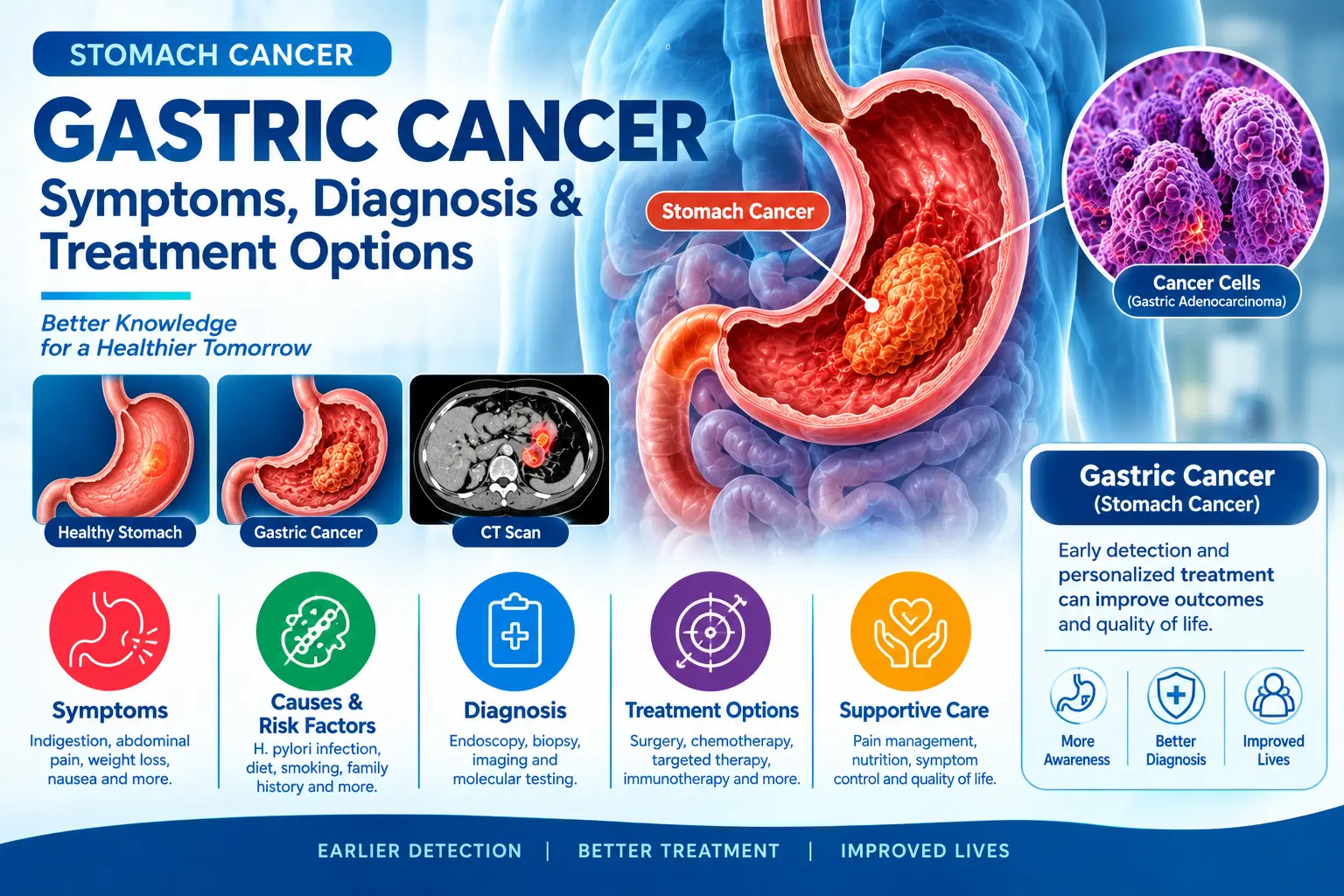
Gastric Cancer: Symptoms, Causes, Diagnosis and Treatment Options
What Is Gastric Cancer?
Gastric cancer, commonly called stomach cancer, develops when abnormal cells in the stomach begin to grow uncontrollably. The stomach is part of the digestive system and plays an important role in breaking down food before it moves into the small intestine.
Most stomach cancers begin in the lining of the stomach. The most common type is gastric adenocarcinoma, although other less common tumors can also occur.
Gastric cancer can develop gradually and may not cause obvious symptoms during its early stages. As the disease progresses, symptoms such as indigestion, abdominal discomfort, early fullness, nausea, vomiting, difficulty eating and unexplained weight loss may occur.
Treatment depends on the location and stage of the cancer, tumor characteristics, overall health and specific molecular or biomarker findings.
Types of Gastric Cancer
Several types of tumors can develop in or around the stomach.
Gastric Adenocarcinoma
This is the most common type of stomach cancer. It develops from gland-forming cells in the stomach lining.
Gastrointestinal Stromal Tumor
GISTs are uncommon tumors that develop from specialized cells in the gastrointestinal tract and are biologically different from gastric adenocarcinoma.
Gastric Neuroendocrine Tumors
These develop from neuroendocrine cells and can behave differently from conventional stomach adenocarcinoma.
Gastric Lymphoma
Lymphomas can also involve the stomach because lymphatic tissue is present within the gastrointestinal system.
Because these cancers are biologically different, their diagnostic evaluation and treatment can differ significantly.
Causes and Risk Factors
There is no single cause of gastric cancer. Several factors can increase the likelihood of developing the disease.
Important risk factors may include:
- Helicobacter pylori (H. pylori) infection
- Chronic inflammation of the stomach
- Atrophic gastritis
- Certain dietary patterns
- Smoking
- Family history of gastric cancer
- Certain inherited genetic conditions
- Previous stomach surgery
- Increasing age
- Certain precancerous stomach conditions
Not everyone with these risk factors develops gastric cancer, and some people develop stomach cancer without an obvious risk factor.
H. pylori and Gastric Cancer
H. pylori is a bacterium that can infect the stomach lining and cause chronic inflammation.
Long-term infection can contribute to changes in the stomach lining that may increase the risk of gastric cancer.
For this reason, detection and appropriate treatment of H. pylori infection can be an important part of gastric-health management.
However, H. pylori infection does not mean that a person definitely has or will develop stomach cancer.
Symptoms of Gastric Cancer
Early gastric cancer may produce few or nonspecific symptoms.
Possible symptoms include:
- Persistent indigestion
- Abdominal discomfort
- Upper abdominal pain
- Bloating after eating
- Feeling full quickly
- Nausea
- Vomiting
- Reduced appetite
- Difficulty swallowing
- Unexplained weight loss
- Fatigue
- Anemia
- Blood in vomit or stool
These symptoms can also occur with non-cancerous digestive conditions, so their presence does not automatically mean stomach cancer.
Unexplained Weight Loss
Unintentional weight loss can occur when gastric cancer affects appetite, digestion or the ability to eat normally.
Significant unexplained weight loss should be medically evaluated, particularly when it occurs together with persistent digestive symptoms.
Difficulty Eating or Feeling Full Quickly
Some people with gastric cancer may feel full after eating only a small amount.
This can occur when a tumor affects the stomach's ability to accommodate food or when inflammation and other changes interfere with normal digestion.
Anemia and Fatigue
Stomach cancer can sometimes cause slow blood loss from the digestive tract.
Over time, this may contribute to anemia, which can result in:
- Fatigue
- Weakness
- Dizziness
- Shortness of breath
- Pale skin
Blood tests can help identify anemia and other abnormalities.
How Is Gastric Cancer Diagnosed?
Diagnosis usually requires a combination of medical evaluation, imaging, endoscopy and tissue analysis.
Upper Endoscopy
An upper gastrointestinal endoscopy allows a doctor to directly examine the esophagus, stomach and upper small intestine.
Suspicious areas can be biopsied during the procedure.
Biopsy
A biopsy is essential for confirming many cases of gastric cancer.
A pathologist examines the tissue to determine whether cancer is present and identify its type.
Imaging
Depending on the clinical situation, imaging may include:
- CT scan
- MRI
- PET/CT
- Endoscopic ultrasound
These tests help evaluate the extent of disease and identify possible spread.
Biomarker and Molecular Testing
Modern gastric cancer treatment increasingly uses tumor biomarkers to help guide therapy.
Testing may evaluate characteristics such as:
- HER2
- PD-L1
- MSI
- MMR
- Other potentially actionable molecular alterations
The results can influence whether targeted therapy or immunotherapy may be appropriate.
This is particularly important in advanced or metastatic gastric cancer because different tumors can respond differently to systemic treatments.
Staging of Gastric Cancer
After diagnosis, doctors determine how far the cancer has developed.
Staging generally considers:
- Size and depth of the primary tumor
- Involvement of nearby lymph nodes
- Spread to distant organs
Gastric cancer may be described from earlier-stage disease through stage IV metastatic disease.
The stage is important because treatment for localized stomach cancer can be very different from treatment for cancer that has spread to distant organs.
Treatment Options for Gastric Cancer
Treatment depends on the cancer's stage, location, pathology, molecular characteristics and the patient's overall condition.
Potential approaches include:
- Surgery
- Chemotherapy
- Radiation therapy
- Targeted therapy
- Immunotherapy
- Combination treatment
- Supportive and palliative care
NCI recognizes surgery, chemotherapy, radiation and systemic treatments among the approaches used for stomach cancer, with treatment selection depending on the clinical setting.
Surgery for Gastric Cancer
Surgery can be an important treatment when the cancer is localized and can be removed safely.
Depending on tumor location and extent, surgery may involve removing part or all of the stomach.
Partial Gastrectomy
Only part of the stomach is removed when appropriate.
Total Gastrectomy
The entire stomach may be removed for selected tumors.
Nearby lymph nodes may also be removed as part of cancer surgery.
Chemotherapy
Chemotherapy uses anticancer medicines to destroy cancer cells or slow their growth.
It may be used:
- Before surgery
- After surgery
- For unresectable disease
- For metastatic gastric cancer
- To control symptoms and disease progression
The specific chemotherapy regimen depends on the cancer type, stage, previous treatment and the patient's health.
Targeted Therapy
Targeted therapy works against specific molecular features of cancer cells.
One important example is HER2-directed therapy for appropriately selected HER2-positive gastric or gastroesophageal cancers.
Other targeted approaches may be considered depending on biomarker results and treatment history.
This is why molecular testing can be an important component of modern gastric cancer treatment.
Immunotherapy
Immunotherapy helps the immune system recognize and attack cancer cells.
Immune checkpoint inhibitors may be considered for selected patients with advanced gastric or gastroesophageal cancers depending on factors such as:
- PD-L1 status
- MSI/MMR status
- Previous treatment
- Tumor characteristics
- Applicable regulatory approvals
Not every gastric cancer patient is an appropriate candidate for immunotherapy.
Advanced and Metastatic Gastric Cancer
When stomach cancer spreads to distant organs, it is called metastatic gastric cancer.
Common sites of spread may include:
- Liver
- Lungs
- Peritoneum
- Distant lymph nodes
- Other organs
Treatment generally focuses on controlling disease, slowing progression, managing symptoms and maintaining quality of life.
Systemic therapy may include chemotherapy, targeted therapy, immunotherapy or combinations selected according to tumor biology and previous treatments.
Supportive and Palliative Care
Supportive care is an important part of cancer treatment at every stage.
It may help manage:
- Pain
- Nausea
- Vomiting
- Loss of appetite
- Weight loss
- Anemia
- Digestive difficulties
- Fatigue
- Emotional distress
Palliative care does not necessarily mean that active cancer treatment has stopped. It can be provided alongside cancer-directed treatment to improve comfort and quality of life.
Nutrition During Gastric Cancer Treatment
Nutrition can become particularly important when stomach cancer or its treatment affects eating.
Patients may experience:
- Reduced appetite
- Early fullness
- Difficulty eating
- Weight loss
- Nutritional deficiencies
A qualified oncology dietitian may help develop an individualized nutrition plan.
After certain stomach surgeries, dietary habits may need to change because the stomach's capacity and digestive function have been altered.
Prognosis
The outlook for gastric cancer varies considerably between patients.
Important factors include:
- Stage at diagnosis
- Tumor location
- Histologic type
- Lymph-node involvement
- Distant metastasis
- HER2 and other biomarkers
- Response to treatment
- Overall health
Earlier-stage disease may be treated with curative intent in appropriate patients, while advanced metastatic disease generally requires systemic treatment focused on disease control.
A patient's prognosis cannot be accurately determined from symptoms alone.
Frequently Asked Questions
1. What is gastric cancer?
Gastric cancer is cancer that develops in the tissues of the stomach.
2. Is gastric cancer the same as stomach cancer?
Yes. Gastric cancer is the medical term commonly used for stomach cancer.
3. What is the most common type of stomach cancer?
Gastric adenocarcinoma is the most common type.
4. What are the early symptoms of gastric cancer?
Early symptoms may be mild or nonspecific and can include indigestion, abdominal discomfort, bloating and early fullness.
5. Can gastric cancer cause weight loss?
Yes. Unexplained weight loss can occur, particularly as disease progresses.
6. Can H. pylori cause stomach cancer?
Long-term H. pylori infection can increase the risk of gastric cancer, but infection does not mean cancer will definitely develop.
7. How is gastric cancer diagnosed?
Endoscopy with biopsy is an important diagnostic approach, supplemented by imaging and other tests when appropriate.
8. What is a gastric cancer biopsy?
It is a sample of suspicious stomach tissue examined by a pathologist to determine whether cancer is present.
9. What is HER2 in gastric cancer?
HER2 is a protein that can be overexpressed in some gastric cancers and may provide a target for specific treatments.
10. Is chemotherapy used for gastric cancer?
Yes. Chemotherapy can be used before or after surgery and for advanced disease.
11. Is immunotherapy used for stomach cancer?
It may be used for selected patients depending on tumor biomarkers, disease setting and applicable treatment recommendations.
12. Can gastric cancer be treated with targeted therapy?
Yes. Certain molecular characteristics, such as HER2 positivity, can make targeted therapy relevant.
13. Can stomach cancer spread to the liver?
Yes. The liver is one of the possible sites of metastatic spread.
14. Can gastric cancer spread to the peritoneum?
Yes. Peritoneal spread can occur, particularly in advanced disease.
15. What is metastatic gastric cancer?
It means stomach cancer has spread to distant parts of the body.
16. Is stage IV gastric cancer treatable?
Yes. Treatment can help control advanced disease, reduce symptoms and improve quality of life, although treatment goals differ from those for localized disease.
17. Can gastric cancer be prevented?
Risk reduction may include addressing H. pylori infection, avoiding tobacco and maintaining a healthy lifestyle, although prevention cannot eliminate all risk.
18. Does everyone with stomach cancer need surgery?
No. Treatment depends on stage, tumor characteristics, overall health and whether the tumor can be safely removed.
19. Why is molecular testing important?
It can identify biomarkers that may make specific targeted therapies or immunotherapies appropriate.
20. Where can patients get information about gastric cancer medicines?
Patients should discuss treatment options with their oncologist and use reliable medical and regulatory information sources.
Global Medicine Information & Support by RootAid Pharma
RootAid Pharma provides medicine information and international support for patients and healthcare-related inquiries involving specialty and oncology medicines.
For gastric cancer treatments, information may include:
- Oncology medicine information
- Product availability inquiries
- Prescription-related guidance
- International medicine support
- Specialty cancer-treatment information
RootAid Pharma should be presented as a medicine information and support provider, not as the manufacturer of the medicines.
Medical Disclaimer
This article is provided for general educational and informational purposes only. It is not a substitute for diagnosis, medical advice or treatment from a qualified healthcare professional. Gastric cancer treatment depends on the individual patient's diagnosis, stage, pathology, biomarkers and overall health. Medication selection should be made by an appropriate oncology team, and regulatory approvals can differ between countries.
Need help after reading this?
Talk to our support team for sourcing guidance, product availability, and global delivery assistance.