Esophageal Cancer: Symptoms, Causes & Treatment Options
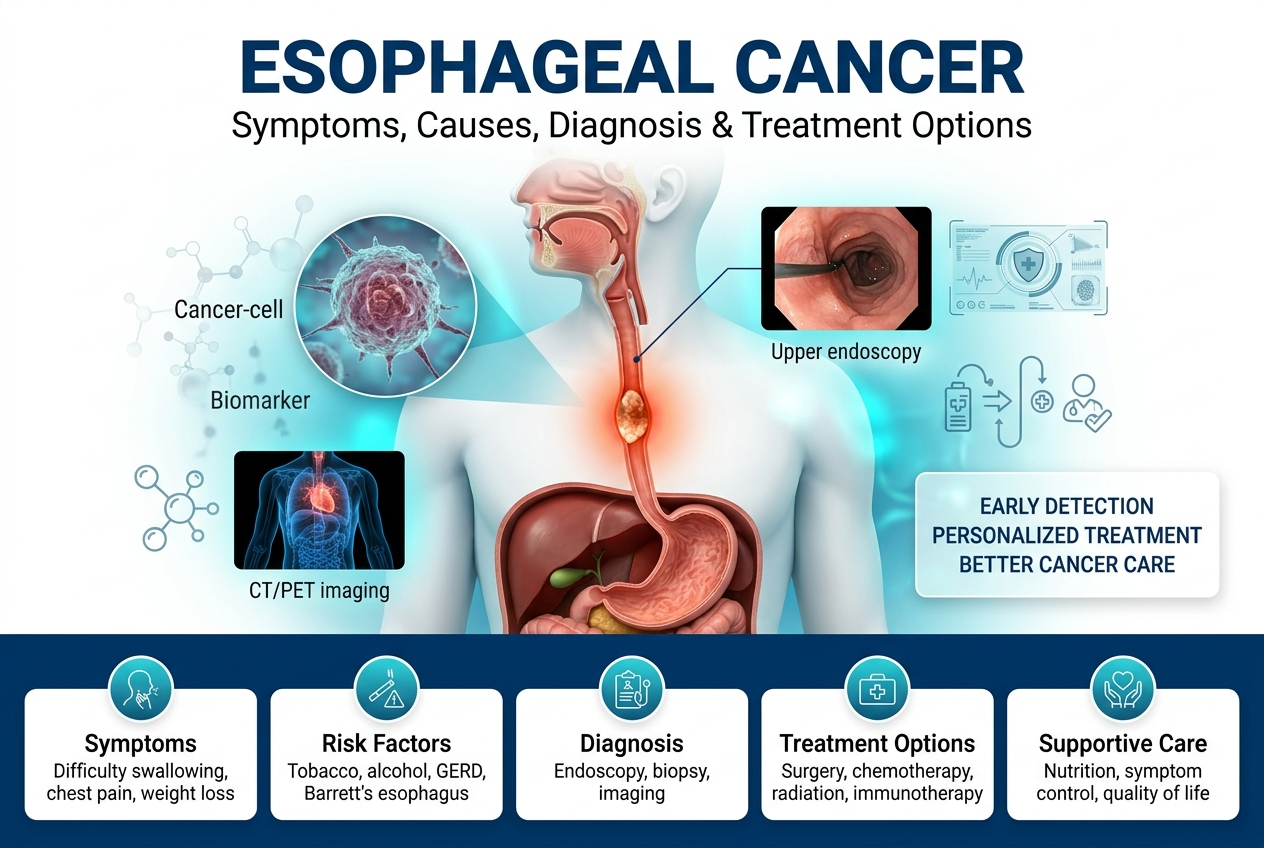
Esophageal Cancer: Symptoms, Causes, Diagnosis and Treatment Options
What Is Esophageal Cancer?
Esophageal cancer is a type of cancer that begins in the tissues lining the esophagus, the muscular tube that carries food and liquids from the throat to the stomach.
The two most common types are esophageal adenocarcinoma and esophageal squamous cell carcinoma. These cancers can develop in different parts of the esophagus and have different biological characteristics, which can influence treatment decisions.
Esophageal cancer may not cause obvious symptoms in its early stages. As the tumor grows, it can interfere with swallowing and may cause weight loss, chest discomfort, heartburn, cough, or other symptoms.
Treatment depends on several factors, including the cancer type, stage, location, whether it can be removed surgically, overall health, and characteristics of the tumor.
Types of Esophageal Cancer
1. Esophageal Adenocarcinoma
Adenocarcinoma develops from glandular cells and is commonly associated with the lower portion of the esophagus.
Conditions such as long-term gastroesophageal reflux disease (GERD) and Barrett's esophagus are associated with an increased risk of this cancer type.
2. Esophageal Squamous Cell Carcinoma
Squamous cell carcinoma develops from squamous cells lining the esophagus. It can occur in different portions of the esophagus and has strong associations with tobacco and heavy alcohol use.
Esophageal Cancer Symptoms
Symptoms can vary depending on the tumor's location and stage. Some people have few or no noticeable symptoms during the early stages.
Common symptoms include:
- Difficulty swallowing
- Painful swallowing
- Feeling that food is stuck in the throat or chest
- Unexplained weight loss
- Chest discomfort or pain
- Persistent heartburn or indigestion
- Hoarseness
- Chronic cough
- Vomiting after eating
- Fatigue
- Blood in vomit or black/tarry stools in some cases
Difficulty swallowing, medically known as dysphagia, is one of the most common warning symptoms. Symptoms can also be caused by conditions other than cancer, so persistent or worsening symptoms should be medically evaluated.
Difficulty Swallowing and Esophageal Cancer
Difficulty swallowing may initially be mild. Some people notice that solid foods such as meat or bread become harder to swallow.
As an esophageal tumor grows and narrows the passageway, swallowing may become increasingly difficult. In advanced cases, even liquids may become difficult to swallow.
This can contribute to inadequate nutrition and unintended weight loss.
For this reason, persistent swallowing difficulties should not simply be ignored or attributed to ordinary indigestion.
What Causes Esophageal Cancer?
There is no single cause responsible for every case of esophageal cancer. Instead, several genetic, lifestyle, and medical factors may increase the likelihood of developing the disease.
Important risk factors include:
- Tobacco use
- Heavy alcohol consumption
- Gastroesophageal reflux disease (GERD)
- Barrett's esophagus
- Older age
- Excess body weight
- Certain dietary factors
- Physical inactivity
- Achalasia
- Certain inherited conditions
- Previous injury or damage to the esophagus
- Some HPV infections
Having a risk factor does not mean that a person will definitely develop esophageal cancer. Some people develop the disease without having an obvious major risk factor.
GERD, Barrett's Esophagus and Cancer Risk
Long-term acid reflux can irritate the lower esophagus. In some people, this may contribute to the development of Barrett's esophagus, a condition associated with an increased risk of esophageal adenocarcinoma.
Most people with GERD do not develop esophageal cancer. However, people with Barrett's esophagus or other significant risk factors may require medical follow-up based on their individual risk.
How Is Esophageal Cancer Diagnosed?
Doctors may use several tests to determine whether symptoms are caused by esophageal cancer and to understand how far the disease has progressed.
Common diagnostic tests include:
Upper Endoscopy
A flexible camera is used to examine the esophagus and upper digestive tract for abnormal areas.
Biopsy
During endoscopy, tissue may be collected from a suspicious area. A pathologist examines the tissue under a microscope to determine whether cancer cells are present.
Imaging Tests
Depending on the situation, doctors may use CT scans, PET/CT scans, or other imaging studies to evaluate the tumor and look for possible spread.
Endoscopic Ultrasound
An ultrasound probe may help doctors evaluate how deeply a tumor has grown into the esophageal wall and whether nearby lymph nodes appear involved.
A biopsy is particularly important because it allows the abnormal tissue to be examined directly.
Esophageal Cancer Staging
After diagnosis, doctors determine the stage of the cancer.
Staging helps describe:
- How deeply the tumor has grown
- Whether nearby lymph nodes are involved
- Whether the cancer has spread to distant organs
- Whether surgery may be possible
- Which treatment approach may be appropriate
Esophageal cancer treatment is highly dependent on stage and other clinical characteristics.
Esophageal Cancer Treatment Options
There is no single treatment suitable for every patient with esophageal cancer.
Treatment may involve one or several approaches depending on the cancer's stage, type, location, overall health, and tumor characteristics.
1. Surgery
Surgery may be considered when the cancer can be removed safely.
Depending on the tumor's location and extent, surgery may involve removing part of the esophagus and reconstructing the digestive tract.
2. Chemotherapy
Chemotherapy uses medicines that affect rapidly dividing cancer cells. It may be used before surgery, after surgery, together with radiation, or for advanced disease depending on the treatment plan.
3. Radiation Therapy
Radiation uses high-energy radiation to damage cancer cells.
It may be combined with chemotherapy and surgery in selected locally advanced cancers, or used to help control symptoms in advanced disease.
4. Immunotherapy
Some patients with advanced or recurrent esophageal cancer may be candidates for immunotherapy.
These medicines work by helping the immune system recognize and attack cancer cells. Eligibility depends on factors such as tumor characteristics, previous treatment, and the specific treatment indication.
5. Targeted Therapy
Targeted medicines are designed to act on specific molecular features of cancer cells.
For selected patients, biomarker testing may help identify whether a targeted treatment could be appropriate.
6. Endoscopic Treatment
Certain early or superficial esophageal cancers may be treated with endoscopic procedures in carefully selected patients.
These approaches can sometimes remove abnormal tissue without major surgery.
7. Supportive and Palliative Care
Supportive care is important throughout treatment.
It may address:
- Difficulty swallowing
- Pain
- Nutrition
- Weight loss
- Nausea
- Fatigue
- Emotional support
- Treatment-related side effects
- Quality of life
For advanced esophageal cancer, treatment may focus on controlling cancer growth, relieving symptoms, extending survival, and maintaining quality of life.
Advanced or Metastatic Esophageal Cancer
When esophageal cancer spreads beyond the original tumor to distant parts of the body, it is considered metastatic disease.
At this stage, treatment generally focuses on controlling the cancer, slowing progression, relieving symptoms, and maintaining quality of life.
Depending on the individual case, treatment may include chemotherapy, immunotherapy, targeted therapy, radiation therapy, or combinations of these approaches. Tumor biomarker testing may help guide systemic treatment decisions.
Nutrition During Esophageal Cancer Treatment
Nutrition can become particularly important because swallowing difficulties may make it difficult to eat and drink normally.
Patients may benefit from:
- Smaller, more frequent meals
- Nutrient-dense foods
- Appropriate texture modifications
- Adequate fluids
- Professional nutritional assessment
- Specialized nutritional support when necessary
Nutritional needs can change during treatment, so patients should discuss eating difficulties and unintended weight loss with their cancer care team.
Can Esophageal Cancer Be Prevented?
Not every case can be prevented, but reducing certain risk factors may lower the likelihood of developing the disease.
Helpful measures include:
- Avoid tobacco products
- Avoid or limit alcohol
- Maintain a healthy body weight
- Stay physically active
- Eat a balanced diet
- Seek medical care for persistent reflux symptoms
- Follow medical recommendations if diagnosed with Barrett's esophagus
Risk reduction does not guarantee prevention, but addressing modifiable risk factors can contribute to better overall health.
When Should You See a Doctor?
Speak with a healthcare professional if you experience:
- Persistent difficulty swallowing
- Painful swallowing
- Unexplained weight loss
- Recurrent vomiting
- Persistent chest discomfort
- Ongoing heartburn or indigestion
- Chronic cough or hoarseness
- Blood in vomit
- Black or tarry stools
These symptoms do not automatically mean cancer. However, persistent or worsening symptoms deserve proper medical evaluation.
Esophageal Cancer Prognosis
Prognosis varies significantly between patients.
Important factors include:
- Cancer stage
- Tumor location
- Cancer type
- Whether the tumor can be completely removed
- Lymph-node involvement
- Distant spread
- Overall health
- Response to treatment
- Molecular and biomarker characteristics
Earlier detection generally provides more treatment options, while advanced disease can still be treated but is often more difficult to eliminate completely.
15 FAQs About Esophageal Cancer
1. What is esophageal cancer?
It is cancer that develops in the tissues of the esophagus.
2. What is the most common symptom?
Difficulty swallowing is one of the most common symptoms.
3. Can heartburn be a symptom?
Persistent heartburn can occur, although heartburn is much more commonly caused by conditions other than cancer.
4. Can GERD cause esophageal cancer?
Long-term GERD is associated with increased risk of esophageal adenocarcinoma, but most people with GERD do not develop cancer.
5. What is Barrett's esophagus?
It is a condition involving changes in the lining of the lower esophagus that is associated with increased risk of esophageal adenocarcinoma.
6. Does smoking increase risk?
Yes. Tobacco use is an important risk factor.
7. Does alcohol increase risk?
Yes. Heavy alcohol consumption increases risk, particularly when combined with tobacco use.
8. How is esophageal cancer diagnosed?
Usually through evaluation such as upper endoscopy and biopsy, with imaging used for staging.
9. Is esophageal cancer curable?
Some earlier-stage cancers can potentially be treated with curative intent. Advanced disease is generally more difficult to cure completely.
10. What treatments are available?
Treatment may include surgery, chemotherapy, radiation therapy, immunotherapy, targeted therapy, endoscopic treatment, or combinations.
11. Is surgery always necessary?
No. Treatment depends on cancer stage, location, type, overall health, and other factors.
12. Can esophageal cancer spread?
Yes. Advanced esophageal cancer can spread to lymph nodes and distant organs.
13. What is metastatic esophageal cancer?
It refers to esophageal cancer that has spread to distant parts of the body.
14. Can esophageal cancer cause weight loss?
Yes. Difficulty swallowing, reduced food intake, appetite changes, and the effects of cancer can contribute to weight loss.
15. Should persistent swallowing problems be checked?
Yes. Persistent or worsening swallowing difficulty should be evaluated by a healthcare professional.
Global Medicine Information & Support by RootAid Pharma
RootAid Pharma provides global medicine information and international patient support resources for people seeking information about prescription medicines and cancer treatment options.
For oncology patients, access to appropriate treatment may depend on cancer type, disease stage, biomarker results, previous treatments, physician recommendations, and local regulatory requirements.
RootAid Pharma does not replace a qualified oncologist or healthcare professional. Patients should discuss diagnosis and treatment decisions with their medical team before starting, changing, or stopping any prescription medicine.
Need help after reading this?
Talk to our support team for sourcing guidance, product availability, and global delivery assistance.