Eltrombopag for Severe Aplastic Anemia: Uses, Benefits, Risks & Treatment
Eltrombopag for Severe Aplastic Anemia: Uses, Benefits, Risks, and Treatment
Introduction
Severe aplastic anemia (SAA) is a rare but serious blood disorder in which the bone marrow cannot produce enough blood cells. This can lead to low levels of red blood cells, white blood cells, and platelets. Patients may experience fatigue, frequent infections, easy bruising, and excessive bleeding.
Eltrombopag is a medication that may be used as part of the treatment approach for severe aplastic anemia. It belongs to a group of medicines known as thrombopoietin receptor agonists. By stimulating specific receptors involved in blood cell production, eltrombopag can help support the bone marrow's ability to produce blood cells.
Eltrombopag may be prescribed alongside standard immunosuppressive treatment for certain patients with severe aplastic anemia. It may also be considered for patients whose disease has not responded adequately to previous immunosuppressive therapy.
This article explains severe aplastic anemia, its symptoms, causes, diagnosis, treatment options, and the role of eltrombopag.
Important: Severe aplastic anemia is a bone marrow failure disorder, not a cancer. Eltrombopag is not a cancer-curing medicine. Its use must be determined and monitored by a qualified hematologist.
What Is Severe Aplastic Anemia?
Severe aplastic anemia is a condition in which the bone marrow produces significantly fewer blood cells than the body needs.
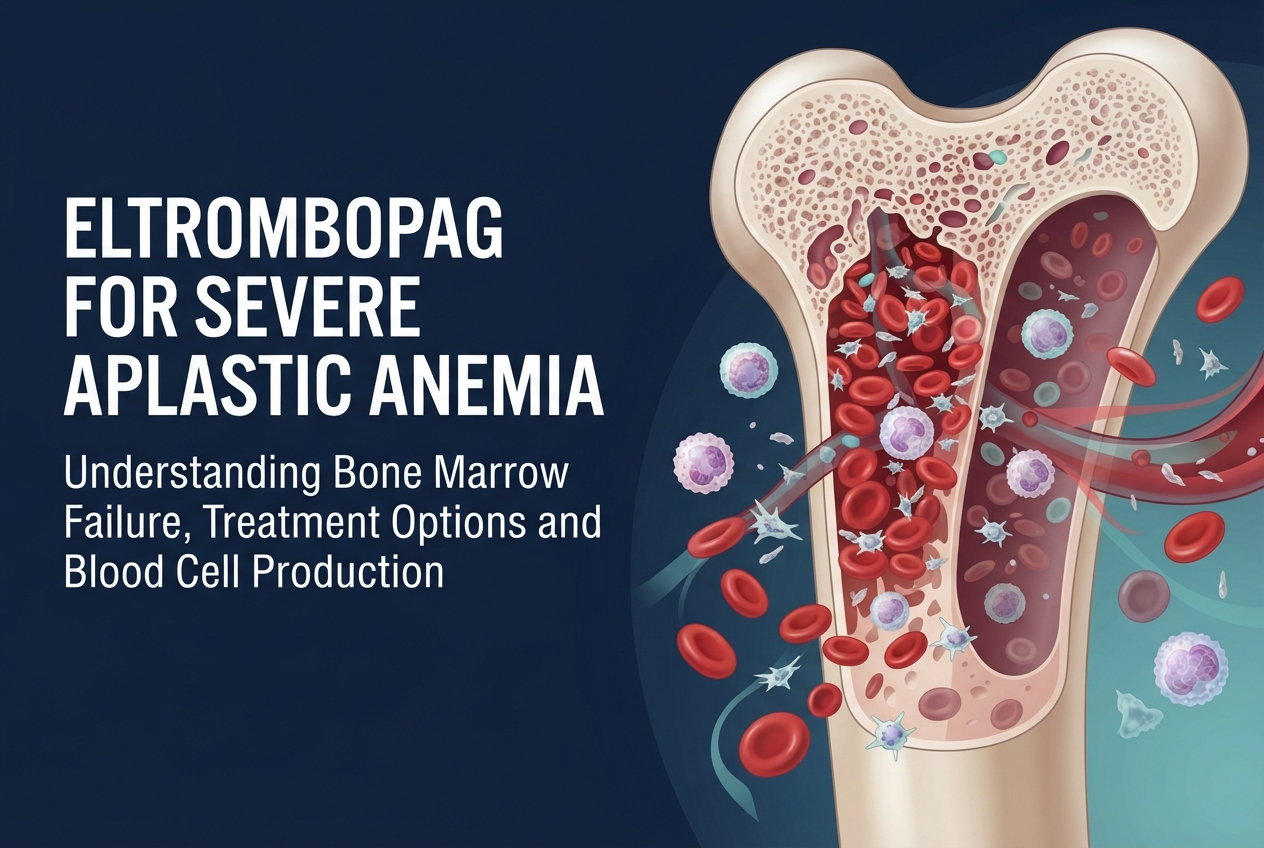
Bone marrow is the soft tissue found inside certain bones. It contains hematopoietic stem cells, which develop into three major types of blood cells:
Red blood cells, which carry oxygen throughout the body.
White blood cells, which help fight infections.
Platelets, which help blood clot and prevent excessive bleeding.
In aplastic anemia, the bone marrow becomes unable to produce an adequate number of these cells. When all three blood cell types are reduced, the condition is called pancytopenia.
Severe aplastic anemia is diagnosed using specific blood count and bone marrow examination criteria. It requires specialist medical care because complications can become life-threatening.
What Causes Severe Aplastic Anemia?
In many patients, the exact cause of aplastic anemia cannot be identified. However, several factors may contribute to bone marrow failure.
1. Autoimmune Activity
In acquired aplastic anemia, the immune system may mistakenly attack the body's own bone marrow stem cells. This can reduce the production of healthy blood cells.
2. Certain Medicines
Some medicines may cause bone marrow suppression or, rarely, contribute to aplastic anemia. Medication-related risks depend on the specific drug and the patient's medical history.
3. Chemical Exposure
Exposure to certain toxic chemicals, including benzene, may increase the risk of bone marrow damage.
4. Radiation and Chemotherapy
Radiation therapy and certain chemotherapy medicines can damage bone marrow cells. This is a recognized cause of treatment-related bone marrow suppression, although it is not the same as every case of acquired aplastic anemia.
5. Viral Infections
Some viral infections have been associated with aplastic anemia. In certain cases, the condition may develop after an episode of hepatitis.
6. Inherited Conditions
Rare inherited disorders, such as Fanconi anemia, can affect bone marrow function and cause bone marrow failure.
Symptoms of Severe Aplastic Anemia
Symptoms usually develop because the body does not have enough healthy blood cells.
Symptoms of Low Red Blood Cells
Persistent tiredness
Weakness and reduced energy
Pale skin
Shortness of breath
Dizziness
Rapid heartbeat
Symptoms of Low White Blood Cells
Frequent infections
Recurrent fever
Sore throat
Infections that take longer to improve
Symptoms of Low Platelets
Easy bruising
Small red or purple spots on the skin, known as petechiae
Nosebleeds
Bleeding gums
Prolonged bleeding from minor cuts
Heavy menstrual bleeding
A patient with fever, uncontrolled bleeding, or severe shortness of breath should seek urgent medical attention.
How Is Severe Aplastic Anemia Diagnosed?
Diagnosis usually requires blood tests, bone marrow examination, and additional investigations to identify the underlying cause.
1. Complete Blood Count (CBC)
A CBC measures the levels of red blood cells, white blood cells, hemoglobin, and platelets. Low levels across multiple blood cell types may indicate bone marrow failure.
2. Reticulocyte Count
Reticulocytes are immature red blood cells. A low reticulocyte count may indicate that the bone marrow is not producing enough new red blood cells.
3. Bone Marrow Aspiration
A doctor collects a small sample of liquid bone marrow to examine blood-forming cells.
4. Bone Marrow Biopsy
A small sample of bone marrow tissue is examined to assess cellularity and identify abnormalities.
5. Additional Tests
Depending on the patient's condition, doctors may recommend:
Viral infection screening
Liver and kidney function tests
Vitamin B12 and folate tests
Tests for inherited bone marrow failure syndromes
Evaluation for paroxysmal nocturnal hemoglobinuria (PNH)
Cytogenetic or molecular investigations when indicated
These investigations help distinguish aplastic anemia from other conditions that can cause low blood cell counts.
Treatment Options for Severe Aplastic Anemia
Treatment depends on the patient's age, overall health, disease severity, donor availability, and response to previous therapy.
1. Hematopoietic Stem Cell Transplantation
Stem cell transplantation may offer a potentially curative treatment for selected patients with severe aplastic anemia.
In this procedure, damaged or insufficient blood-forming stem cells are replaced with healthy stem cells from a suitable donor.
However, transplantation carries risks, including infections, graft-versus-host disease, and treatment-related complications. A specialist team must carefully evaluate whether it is appropriate.
2. Immunosuppressive Therapy
In many patients, aplastic anemia is associated with immune-mediated damage to bone marrow stem cells.
Immunosuppressive therapy aims to reduce this harmful immune activity. Treatment may include medicines such as antithymocyte globulin (ATG) and ciclosporin.
The exact treatment combination depends on current clinical guidelines and individual patient factors.
3. Eltrombopag
Eltrombopag is a thrombopoietin receptor agonist that stimulates pathways involved in blood cell production.
It may be used:
In combination with standard immunosuppressive therapy as first-line treatment for certain patients with severe aplastic anemia.
In patients with severe aplastic anemia who have had an insufficient response to immunosuppressive therapy.
Eltrombopag may support the production of platelets and other blood cell lineages in some patients. It does not replace the need for specialist assessment, blood monitoring, or other necessary treatments.
4. Supportive Treatment
Supportive care may include:
Red blood cell transfusions when needed
Platelet transfusions when clinically indicated
Antibiotics or other infection treatment
Preventive infection management in selected patients
Regular blood count monitoring
Supportive treatment helps manage complications while the underlying disease is being treated.
How Does Eltrombopag Work?
Eltrombopag works by activating the thrombopoietin receptor, also known as c-Mpl.
This receptor plays an important role in the development of blood-forming cells in the bone marrow. When eltrombopag activates this pathway, it can stimulate the growth and differentiation of certain hematopoietic cells.
Although eltrombopag is known for increasing platelet production, its effects in severe aplastic anemia may extend to other blood cell lineages.
The treatment response varies from patient to patient. Some patients may experience improvements in blood counts, while others may have a limited response.
Eltrombopag 25 mg: Product Information
Eltrombopag is available in different strengths depending on the manufacturer and market.
The product information provided for this article is:
Brand name supplied: Trombola
Generic name: Eltrombopag
Strength: 25 mg
Pack size: 28 tablets
Drug class: Thrombopoietin receptor agonist
Important: The strength and pack size describe the product presentation. They do not establish an appropriate treatment dose for an individual patient.
Eltrombopag dosing varies according to the indication, age, liver function, ethnicity, laboratory results, and treatment response. A 25 mg tablet should not be taken or adjusted without the prescribing specialist's instructions.
Possible Side Effects of Eltrombopag
Like other prescription medicines, eltrombopag may cause side effects. Not every patient experiences them.
Possible adverse effects include:
Nausea
Diarrhea
Headache
Fatigue
Fever
Cough
Increased liver enzyme levels
Anemia
Some complications may be serious and require immediate medical assessment.
Liver Problems
Eltrombopag can cause liver toxicity. Doctors generally check liver function before treatment and periodically during therapy.
Patients should report symptoms such as yellowing of the skin or eyes, dark urine, unusual tiredness, or abdominal discomfort.
Blood Clots
Eltrombopag may increase the risk of thrombotic or thromboembolic complications in certain patients. Monitoring platelet counts and assessing individual risk factors are important.
Sudden chest pain, breathing difficulty, severe headache, or swelling and pain in one leg require urgent medical evaluation.
Bone Marrow and Blood Disorder Considerations
Eltrombopag is not indicated for the treatment of myelodysplastic syndromes (MDS). Its safety profile requires careful consideration in patients with suspected or confirmed marrow disorders.
Precautions Before Using Eltrombopag
Before starting eltrombopag, patients should inform their doctor about:
Existing liver disease
Previous blood clots
Pregnancy or breastfeeding
Other medicines and supplements
Previous treatment for aplastic anemia
Allergies or previous reactions to medicines
Doctors may request regular CBC tests, platelet counts, and liver function tests during treatment.
Eltrombopag also has specific administration requirements involving food and products containing calcium, iron, magnesium, aluminium, zinc, and other polyvalent cations. Patients should follow the exact instructions in their prescribed product leaflet.
Monitoring During Eltrombopag Treatment
Regular monitoring is essential for safe treatment.
A hematologist may recommend:
Complete blood counts at scheduled intervals.
Platelet count monitoring.
Liver function tests before and during treatment.
Assessment of treatment response.
Evaluation for possible adverse reactions.
Dose adjustment or discontinuation when medically necessary.
Patients should never increase, reduce, or stop eltrombopag without consulting their treating doctor.
Living With Severe Aplastic Anemia
Living with severe aplastic anemia can be physically and emotionally challenging. Patients may need long-term medical follow-up and supportive care.
Helpful measures may include:
Following the prescribed treatment plan.
Attending all scheduled blood tests.
Practicing good hand hygiene.
Avoiding close contact with people who have contagious infections when blood counts are very low.
Reporting fever or unusual bleeding immediately.
Eating a balanced diet and maintaining adequate hydration.
Discussing fatigue and emotional stress with the healthcare team.
Patients should ask their doctor before using herbal products, nutritional supplements, or over-the-counter medicines.
Frequently Asked Questions (FAQs)
1. What is eltrombopag used for?
Eltrombopag is used for certain patients with immune thrombocytopenia, severe aplastic anemia, and thrombocytopenia associated with chronic hepatitis C in specific treatment circumstances.
2. Is eltrombopag a chemotherapy medicine?
No. Eltrombopag is a thrombopoietin receptor agonist. It is not a conventional chemotherapy medicine.
3. Is severe aplastic anemia a type of cancer?
No. Severe aplastic anemia is a bone marrow failure disorder, not a cancer.
4. Can eltrombopag treat severe aplastic anemia?
Yes. It is indicated in combination with standard immunosuppressive therapy for certain patients and may also be used in patients who have not responded sufficiently to immunosuppressive treatment.
5. Does eltrombopag increase platelet counts?
Eltrombopag stimulates the thrombopoietin receptor pathway and can increase platelet production. Its response and clinical effects vary between patients.
6. Can eltrombopag increase red blood cells?
In some patients with aplastic anemia, treatment may improve more than one blood cell lineage. The response is not guaranteed and requires laboratory monitoring.
7. What is Trombola 25 mg?
Trombola is the brand name supplied for this product, with eltrombopag listed as its generic name. The supplied pack information is 28 tablets.
8. Is eltrombopag 25 mg suitable for every patient?
No. The appropriate strength and dosing schedule depend on the diagnosis, age, laboratory results, liver function, and treatment response.
9. Can eltrombopag cure aplastic anemia?
Eltrombopag may improve blood counts in some patients, but it should not be described as a guaranteed cure. Treatment outcomes vary.
10. What are the common side effects of eltrombopag?
Possible side effects include nausea, diarrhea, headache, fatigue, fever, cough, and increased liver enzymes.
11. Does eltrombopag affect the liver?
Yes. Eltrombopag can cause liver toxicity. Liver function should be monitored according to the prescribing information.
12. Can eltrombopag cause blood clots?
Thrombotic and thromboembolic complications have been reported. Patients need appropriate monitoring and medical supervision.
13. Can eltrombopag be taken with food?
Eltrombopag has specific food and mineral interaction requirements. Patients should follow the product leaflet and their doctor's instructions regarding administration.
14. How long does eltrombopag treatment last?
Treatment duration depends on the disease, response, blood counts, adverse effects, and the specialist's treatment plan.
15. Which specialist treats severe aplastic anemia?
A hematologist or hematologist-oncologist generally manages severe aplastic anemia and determines the appropriate treatment strategy.
Eltrombopag Medicine Information at RootAid Pharma
Patients and healthcare professionals looking for medicine-related information can visit RootAid Pharma.
The product details supplied for this article are:
Product: Trombola
Generic name: Eltrombopag
Strength: 25 mg
Pack size: 28 tablets
For medicine information and product availability enquiries, visit:
RootAid Pharma: https://rootaidpharma.com.bd
Please confirm the current product details and availability directly with the supplier. All medicine purchases and treatment decisions should follow applicable regulations and a qualified healthcare professional's advice.
Conclusion
Severe aplastic anemia is a serious bone marrow failure disorder that requires timely diagnosis and specialist treatment. Treatment may involve stem cell transplantation, immunosuppressive therapy, supportive care, and medicines such as eltrombopag in appropriate patients.
Eltrombopag works through the thrombopoietin receptor pathway and may help improve blood cell production in some patients with severe aplastic anemia. However, it requires careful monitoring because of potential liver toxicity, blood clot risks, and other adverse effects.
Patients should always use eltrombopag under the supervision of a qualified hematologist and should never change their prescribed dose independently.
Medical Disclaimer
This article is intended for educational and informational purposes only. It does not replace professional medical advice, diagnosis, or treatment. Eltrombopag is a prescription medicine and should only be used under appropriate medical supervision. Always consult a qualified hematologist before starting, changing, or stopping treatment.
Need help after reading this?
Talk to our support team for sourcing guidance, product availability, and global delivery assistance.