EGFR Exon 20 Insertion–Positive NSCLC: Symptoms, Diagnosis and Treatment
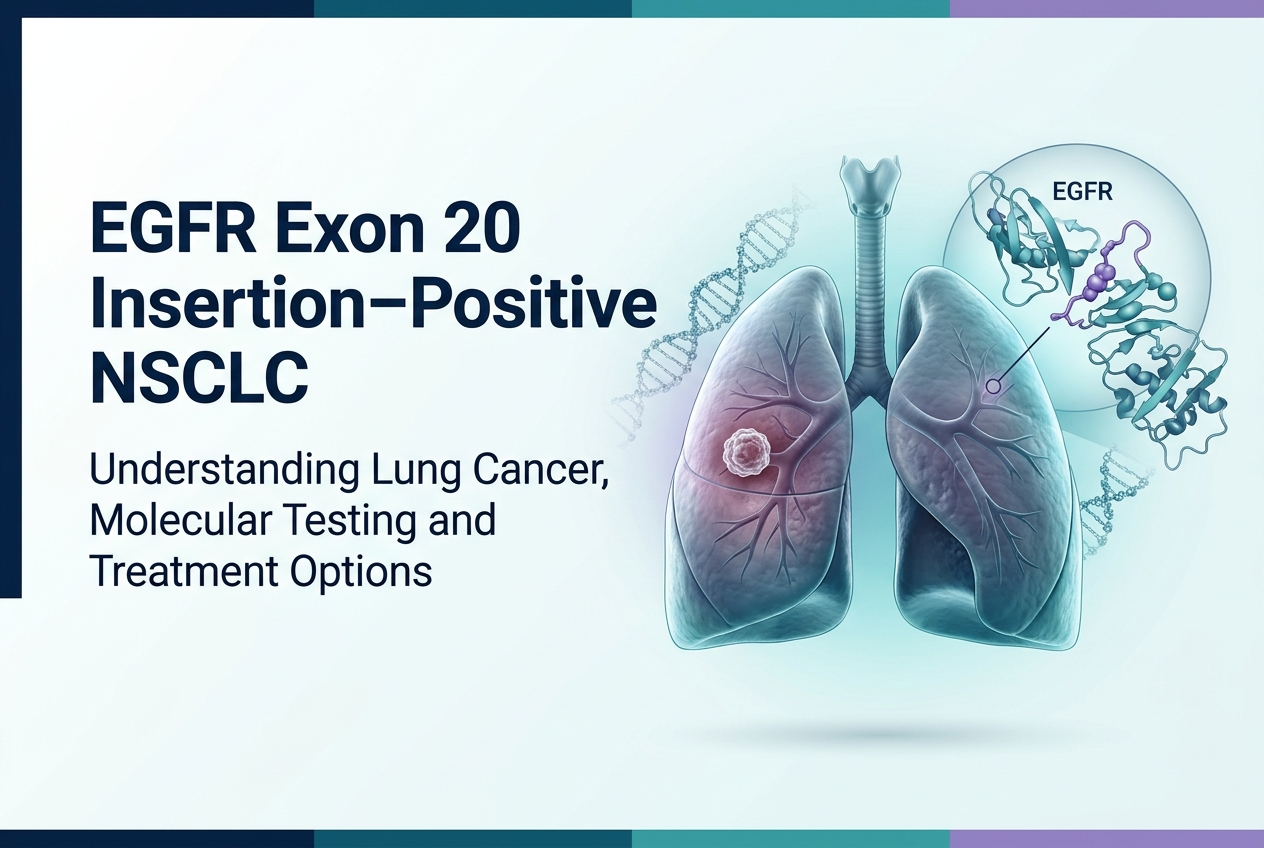
EGFR Exon 20 Insertion–Positive Non-Small Cell Lung Cancer: Symptoms, Diagnosis, Stages and Treatment
Introduction
Non-small cell lung cancer (NSCLC) is the most common category of lung cancer. It includes several different types of tumors that develop from the cells lining the lungs. Some NSCLCs are associated with specific genetic changes that influence how cancer cells grow and respond to treatment.
One important genetic alteration is an epidermal growth factor receptor (EGFR) exon 20 insertion mutation. This mutation can cause abnormal signaling inside cancer cells, contributing to uncontrolled growth and tumor progression.
EGFR exon 20 insertion-positive NSCLC is a molecularly defined subtype of lung cancer. Identifying this mutation is important because it can influence treatment decisions, including the selection of targeted therapies.
Mobocertinib is an oral tyrosine kinase inhibitor that was developed for this specific molecular subtype. It received accelerated approval in the United States in 2021 for certain adults with advanced or metastatic EGFR exon 20 insertion-positive NSCLC following platinum-based chemotherapy. However, its US approval was withdrawn on July 15, 2024, after the required confirmatory study failed to verify clinical benefit.
This article explains EGFR exon 20 insertion-positive NSCLC, its symptoms, diagnosis, treatment approaches and the clinical background of mobocertinib.
What Is EGFR Exon 20 Insertion–Positive NSCLC?
Non-small cell lung cancer is a group of lung cancers that develop when abnormal cells grow uncontrollably in lung tissue.
EGFR is a gene that provides instructions for making a protein called epidermal growth factor receptor. This protein is located on the surface of cells and helps regulate cell growth, division and survival.
An exon 20 insertion mutation occurs when additional genetic material is inserted into a particular region of the EGFR gene. This alteration can change how the EGFR protein functions.
As a result, cancer cells may receive abnormal growth signals, encouraging them to multiply and survive.
EGFR exon 20 insertion mutations are different from more common EGFR mutations, such as exon 19 deletions and exon 21 L858R substitutions. This distinction matters because different EGFR mutations can respond differently to targeted treatments.
Understanding the Different Types of NSCLC
NSCLC includes several major histological types.
1. Lung Adenocarcinoma
Adenocarcinoma is the most common type of lung cancer. It usually develops in the outer areas of the lungs and is frequently associated with identifiable genetic mutations.
EGFR mutations, including exon 20 insertions, may occur in lung adenocarcinoma.
2. Squamous Cell Carcinoma
Squamous cell carcinoma develops from flat cells lining the airways. It is strongly associated with tobacco exposure, although it can also occur in people who have never smoked.
3. Large Cell Carcinoma
Large cell carcinoma is a less common type of NSCLC that can develop in different areas of the lung and may grow rapidly.
The exact histological diagnosis and molecular profile help doctors determine the most appropriate treatment strategy.
Causes and Risk Factors
There is no single cause of EGFR exon 20 insertion-positive NSCLC. Lung cancer develops through genetic and environmental factors that affect normal cell regulation.
Important risk factors include:
Smoking
Tobacco smoking is a major risk factor for lung cancer. Cigarette smoke contains chemicals that can damage DNA and contribute to cancer development.
Secondhand Smoke
Regular exposure to tobacco smoke from other people can increase lung cancer risk.
Radon Exposure
Radon is a naturally occurring radioactive gas that can accumulate inside buildings. Long-term exposure may increase the risk of lung cancer.
Occupational Exposure
Exposure to substances such as asbestos, arsenic, silica and certain industrial chemicals may increase lung cancer risk.
Air Pollution
Long-term exposure to outdoor and indoor air pollution has been associated with an increased risk of lung cancer.
Genetic Changes
EGFR exon 20 insertion mutations are acquired genetic alterations in cancer cells in most cases. They are not generally inherited from parents.
Importantly, having an EGFR mutation does not mean that a person necessarily smoked or had a particular environmental exposure.
Symptoms of EGFR Exon 20 Insertion–Positive NSCLC
Symptoms depend on the location, size and stage of the tumor. Early lung cancer may not cause noticeable symptoms.
Common symptoms include:
Persistent Cough
A cough that continues for several weeks or changes in its usual pattern may be a warning sign.
Coughing Up Blood
Blood in sputum can occur when a tumor affects the airways. Any unexplained blood in sputum requires prompt medical assessment.
Chest Pain
Some patients experience persistent chest discomfort or pain that becomes worse during deep breathing or coughing.
Shortness of Breath
Breathlessness may develop when a tumor obstructs airways, affects lung function or causes fluid accumulation around the lungs.
Unexplained Weight Loss
Unexpected weight loss and reduced appetite may occur as cancer progresses.
Fatigue
Cancer-related fatigue can cause persistent tiredness that does not improve with ordinary rest.
Recurrent Respiratory Infections
Repeated pneumonia or bronchitis may occur when a tumor blocks an airway and interferes with normal drainage.
Symptoms of Advanced Disease
If cancer spreads to other organs, additional symptoms may develop.
Examples include:
Persistent headaches or neurological changes if cancer spreads to the brain.
Bone pain if cancer spreads to the bones.
Abdominal discomfort if cancer affects the liver.
Swelling of the face or neck in certain cases.
These symptoms are not specific to lung cancer. Medical evaluation is necessary to determine the underlying cause.
How Is EGFR Exon 20 Insertion–Positive NSCLC Diagnosed?
Accurate diagnosis involves imaging, tissue examination and molecular testing.
1. Medical History and Physical Examination
A doctor reviews symptoms, smoking history, occupational exposures and general health. A physical examination may help identify signs of respiratory disease or advanced cancer.
2. Chest X-Ray
A chest X-ray can identify suspicious lung abnormalities. However, it cannot reliably determine the exact type or genetic characteristics of a tumor.
3. CT Scan
Computed tomography provides detailed images of the lungs and surrounding structures. It helps assess tumor size, location and possible lymph node involvement.
4. PET-CT Scan
A PET-CT scan may help determine whether cancer has spread to lymph nodes or distant organs.
5. Biopsy
A biopsy involves collecting a tissue sample from a suspicious area. A pathologist examines the sample to confirm whether cancer is present and determine its histological type.
6. EGFR Molecular Testing
Molecular testing is essential for identifying EGFR exon 20 insertion mutations.
Testing may be performed using:
Tumor tissue samples.
Next-generation sequencing (NGS).
Other validated molecular diagnostic methods.
Blood-based circulating tumor DNA testing in selected circumstances.
A negative blood-based result does not always exclude an EGFR mutation. A doctor may recommend tissue testing when appropriate.
7. Additional Biomarker Testing
Doctors may evaluate other molecular markers to understand the tumor's biology and identify potential treatment options.
Stages of Non-Small Cell Lung Cancer
NSCLC is generally classified into four major stages.
Stage I
Cancer is limited to the lung and has not spread to nearby lymph nodes.
Surgery may be an option for suitable patients. Radiation therapy may be considered when surgery is not appropriate.
Stage II
Cancer may be larger or may have spread to nearby lymph nodes.
Treatment may involve surgery, chemotherapy, radiation therapy or a combination of approaches.
Stage III
Cancer has spread to lymph nodes or nearby structures in the chest. Treatment is more complex and often requires a multidisciplinary team.
Depending on the specific stage and molecular findings, treatment may involve chemotherapy, radiation therapy, immunotherapy or targeted approaches.
Stage IV
Cancer has spread to distant organs or areas outside the original lung tumor.
Treatment usually focuses on controlling disease progression, reducing symptoms, preserving quality of life and extending survival.
The stage alone does not determine treatment. Histology, molecular results, overall health and previous treatment response are also important.
Treatment Options for EGFR Exon 20 Insertion–Positive NSCLC
Treatment is selected according to the cancer stage, molecular profile, previous treatment history and the patient's overall condition.
1. Targeted Therapy
Targeted therapies act on specific proteins or molecular pathways involved in cancer growth.
EGFR exon 20 insertion mutations require particular consideration because treatments used for common EGFR mutations may not work equally well for this subtype.
Amivantamab is an important treatment option for eligible patients with EGFR exon 20 insertion-positive NSCLC. Its use depends on the treatment setting, regulatory approval and current clinical guidance.
2. Chemotherapy
Platinum-based chemotherapy may be used in advanced NSCLC. Commonly used medicines include carboplatin or cisplatin in combination with other anticancer drugs.
Chemotherapy may be used alone or alongside other treatments, depending on the clinical situation.
3. Immunotherapy
Immunotherapy helps the immune system recognize and attack cancer cells.
Its suitability depends on factors such as tumor characteristics, PD-L1 expression, molecular findings and the treatment setting. Immunotherapy is not automatically appropriate for every patient with an EGFR mutation.
4. Radiation Therapy
Radiation therapy uses high-energy radiation to destroy cancer cells or reduce tumor size.
It may be used for localized disease, combined treatment plans or symptom relief in advanced cancer.
5. Surgery
Surgery may be considered for selected patients with early-stage NSCLC when the tumor can be completely removed and the patient is medically suitable.
Surgery is generally not the main treatment for widespread metastatic disease.
Mobocertinib: Clinical Background and Role in Lung Cancer
Mobocertinib is an oral tyrosine kinase inhibitor that targets EGFR and was developed specifically for EGFR exon 20 insertion-positive NSCLC.
It was marketed in the United States under the brand name Exkivity.
How Does Mobocertinib Work?
EGFR is involved in signaling pathways that regulate cell growth and survival.
In certain cancers with EGFR exon 20 insertion mutations, the receptor becomes abnormally active. Mobocertinib was designed to inhibit EGFR signaling and reduce the growth-promoting activity of the altered receptor.
It belongs to the class of medicines known as tyrosine kinase inhibitors.
Historical Approved Indication
The US FDA granted accelerated approval to mobocertinib on September 15, 2021.
The indication was for adults with locally advanced or metastatic NSCLC with EGFR exon 20 insertion mutations, detected by an FDA-approved test, whose disease had progressed on or after platinum-based chemotherapy.
This was an accelerated approval and required a confirmatory clinical trial.
Why Was Mobocertinib Withdrawn in the United States?
The confirmatory Phase 3 EXCLAIM-2 study did not meet its primary endpoint of progression-free survival and did not verify the clinical benefit required for the accelerated approval.
Following discussions with the FDA, Takeda announced plans for voluntary withdrawal in October 2023. The US approval was formally withdrawn effective July 15, 2024.
The European Medicines Agency also records that the company withdrew its application for conditional marketing authorisation in July 2022.
Therefore, historical approval should not be confused with current approval or routine treatment recommendations. Regulatory status can differ between countries and should be checked locally.
Mobocertinib Safety and Possible Side Effects
Mobocertinib was associated with several adverse effects during clinical development and use.
Reported side effects included:
Diarrhea.
Nausea and vomiting.
Reduced appetite.
Fatigue.
Rash.
Dry skin.
Inflammation around the nails.
Muscle and joint discomfort.
More serious safety concerns included:
QT interval prolongation and potentially serious heart rhythm problems.
Interstitial lung disease or pneumonitis.
Severe diarrhea and dehydration.
Potential liver-related abnormalities.
These risks require professional assessment and appropriate monitoring.
This section is a general description of reported safety concerns, not a recommendation to use mobocertinib. Patients should not start, stop or change cancer medication without their oncology specialist's advice.
Living With Advanced Lung Cancer
A lung cancer diagnosis can affect physical health, emotional well-being and daily activities.
Supportive care is an important part of treatment.
Nutrition
A balanced diet can help maintain strength and support general health. Patients experiencing appetite loss or weight changes may benefit from advice from an oncology dietitian.
Physical Activity
Gentle physical activity, when medically appropriate, may help maintain mobility and reduce fatigue.
Smoking Cessation
Stopping smoking is beneficial even after a lung cancer diagnosis. Healthcare professionals can provide support and smoking cessation resources.
Emotional Support
Counselling, family support and cancer support groups may help patients manage anxiety, uncertainty and emotional stress.
Palliative Care
Palliative care focuses on improving quality of life by managing pain, breathlessness, fatigue and other symptoms. It can be provided alongside active cancer treatment.
Importance of Molecular Testing
Molecular testing is especially important in advanced NSCLC because different genetic alterations may require different treatment approaches.
For patients with suspected EGFR exon 20 insertion-positive disease, accurate identification of the mutation can help oncologists evaluate suitable treatment options.
A comprehensive molecular report may also identify other actionable alterations that influence treatment planning.
Patients should discuss their pathology report and molecular test results with a qualified oncology specialist.
Conclusion
EGFR exon 20 insertion-positive NSCLC is a distinct molecular subtype of non-small cell lung cancer. Its diagnosis requires appropriate tissue evaluation and molecular testing.
Treatment may include targeted therapy, chemotherapy, radiation therapy, surgery in selected cases and supportive care. The best approach depends on the cancer stage, molecular findings, previous treatment and individual health factors.
Mobocertinib was developed as an oral targeted therapy for this subtype and received accelerated US FDA approval in 2021. However, its US approval was withdrawn in July 2024 because the confirmatory study did not verify clinical benefit.
Patients and caregivers should always consult an experienced oncologist before making treatment decisions and verify the current regulatory status of any cancer medicine in their country.
Medicine Information and Availability Enquiries
For general medicine information and availability enquiries, visit RootAid Pharma:
Patients should confirm the product's identity, regulatory status, quality documentation and suitability with a qualified healthcare professional before use. Website listing or enquiry does not replace medical advice or confirm that a specific medicine is currently in stock.
Frequently Asked Questions (FAQs)
1. What is EGFR exon 20 insertion-positive NSCLC?
It is a subtype of non-small cell lung cancer in which cancer cells contain an insertion mutation in exon 20 of the EGFR gene.
2. What does EGFR stand for?
EGFR stands for epidermal growth factor receptor, a protein involved in regulating cell growth and survival.
3. Is EGFR exon 20 insertion a common lung cancer mutation?
It is less common than EGFR exon 19 deletions and exon 21 L858R mutations.
4. What are the symptoms of EGFR exon 20 insertion-positive NSCLC?
Symptoms may include persistent cough, chest pain, breathlessness, coughing up blood, fatigue and unexplained weight loss.
5. How is EGFR exon 20 insertion detected?
It is identified through molecular diagnostic testing of tumor tissue or, in selected situations, blood-based testing.
6. Is EGFR exon 20 insertion-positive NSCLC treatable?
Yes. Treatment options may include targeted therapies, chemotherapy, radiation therapy and other approaches selected according to the patient's condition.
7. What is mobocertinib?
Mobocertinib is an oral tyrosine kinase inhibitor developed to target EGFR exon 20 insertion-positive NSCLC.
8. What type of cancer was mobocertinib developed to treat?
It was developed for certain adults with locally advanced or metastatic EGFR exon 20 insertion-positive non-small cell lung cancer.
9. What was the brand name of mobocertinib in the United States?
Its US brand name was Exkivity.
10. Is mobocertinib still FDA-approved in the United States?
No. The FDA withdrew its approval effective July 15, 2024.
11. Why was mobocertinib withdrawn?
The required confirmatory Phase 3 EXCLAIM-2 study failed to verify clinical benefit and did not meet its primary endpoint.
12. Is mobocertinib the same as a chemotherapy medicine?
No. Mobocertinib is a targeted tyrosine kinase inhibitor, whereas chemotherapy medicines act through different mechanisms.
13. Can all EGFR-mutated lung cancers be treated with the same targeted therapy?
No. Different EGFR mutations can respond differently to targeted therapies. Treatment must be based on the exact molecular alteration.
14. Is immunotherapy suitable for every patient with EGFR exon 20 insertion-positive NSCLC?
No. Suitability depends on multiple clinical and molecular factors. An oncologist must evaluate the patient's individual situation.
15. Where can I find general medicine information?
For general medicine information and availability enquiries, visit RootAid Pharma at https://rootaidpharma.com.bd. Always confirm current product status with the appropriate healthcare professional.
Medical Disclaimer
This article is intended for educational and informational purposes only. It does not provide medical advice, diagnosis or treatment recommendations. Cancer treatment must be determined by a qualified oncologist based on the patient's diagnosis, molecular test results, medical history and applicable local regulatory guidance.
Mobocertinib's historical approval does not establish that it is currently approved or appropriate for use. Do not purchase, start, stop or change any anticancer medicine without professional medical supervision.
Need help after reading this?
Talk to our support team for sourcing guidance, product availability, and global delivery assistance.