Dacomitinib for EGFR-Mutated Non-Small Cell Lung Cancer: Treatment Guide
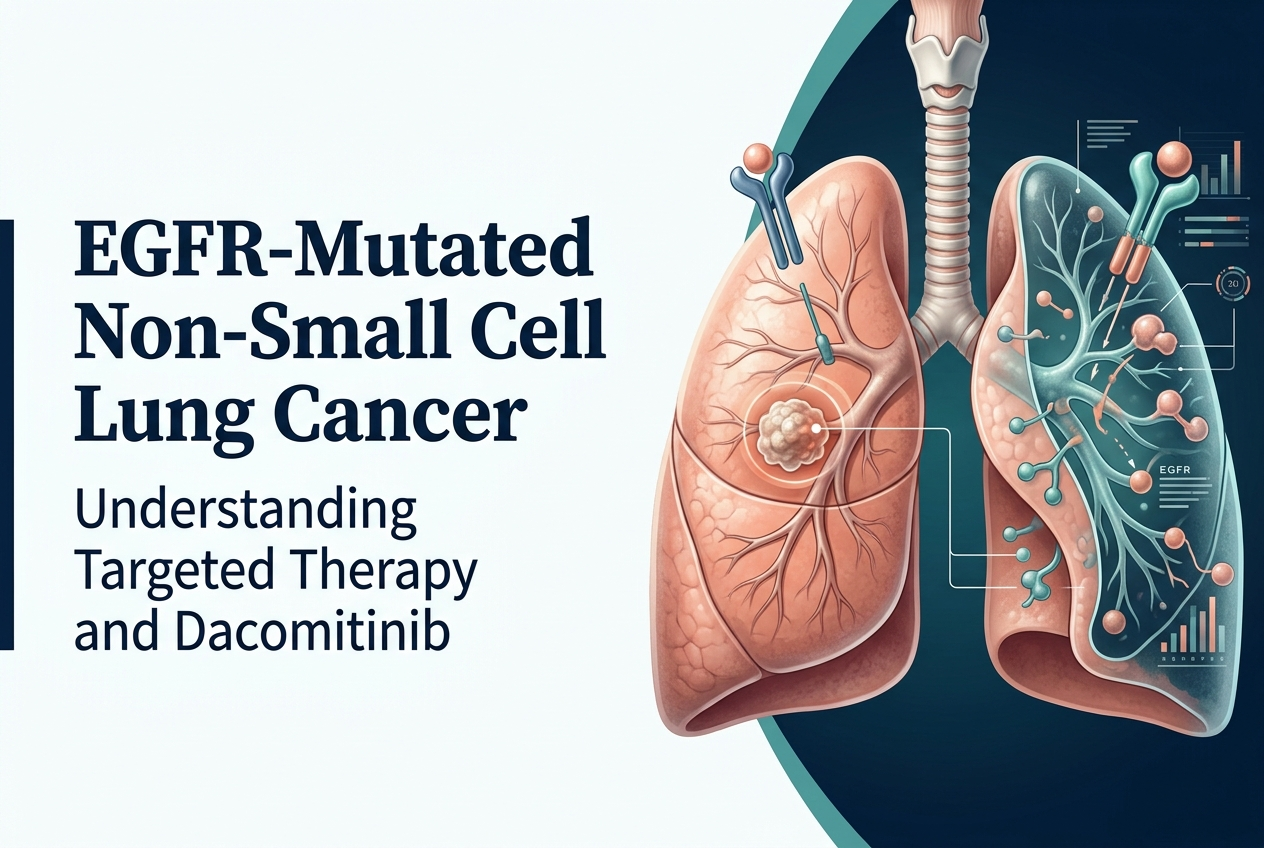
Dacomitinib for EGFR-Mutated Non-Small Cell Lung Cancer: A Complete Treatment Guide
Introduction
Non-small cell lung cancer (NSCLC) is the most common category of lung cancer. It includes several cancer types that develop in the lungs and may differ in their growth patterns, genetic characteristics, and response to treatment. In some patients, cancer cells contain specific changes in the epidermal growth factor receptor (EGFR) gene. These changes can encourage cancer cells to grow and divide.
Dacomitinib is an oral targeted therapy used for a specific group of patients with advanced or metastatic NSCLC whose tumors have certain EGFR mutations. Unlike traditional chemotherapy, which can affect many rapidly dividing cells, dacomitinib targets signaling proteins involved in cancer-cell growth.
This guide explains EGFR-mutated lung cancer, its symptoms, diagnosis, staging, treatment approaches, and the role of dacomitinib. It is intended for educational purposes and does not replace advice from a qualified oncology specialist.
What Is Non-Small Cell Lung Cancer?
Non-small cell lung cancer is a group of lung cancers that arise when abnormal cells in lung tissue grow uncontrollably. The main types include:
Adenocarcinoma: Often develops in the outer areas of the lungs and is a common type of lung cancer associated with EGFR mutations.
Squamous cell carcinoma: Usually begins in cells lining the airways and is often associated with a history of smoking.
Large cell carcinoma: A less common category that can grow and spread rapidly.
NSCLC may be localized to the lung, spread to nearby lymph nodes, or metastasize to distant organs. Treatment depends on the cancer's type, stage, molecular profile, the patient's overall health, and previous treatments.
Understanding EGFR Mutations in Lung Cancer
EGFR is a protein on the surface of certain cells. It helps regulate cell growth and survival. Specific changes in the EGFR gene can cause signaling pathways to remain active, encouraging cancer cells to multiply.
Two important EGFR mutations relevant to dacomitinib treatment are:
EGFR exon 19 deletion
EGFR exon 21 L858R substitution
Dacomitinib is indicated for first-line treatment of patients with metastatic NSCLC whose tumors have these specific mutations, when identified through an appropriate validated test. The precise treatment choice should be made by an oncologist after reviewing molecular testing results and the patient's circumstances.
Not every lung cancer has an EGFR mutation, and not every EGFR mutation necessarily means that dacomitinib is the most suitable treatment. Molecular diagnosis is essential.
What Is Dacomitinib?
Dacomitinib is an oral targeted anticancer medicine classified as an irreversible inhibitor of the ErbB family of receptor tyrosine kinases, including EGFR (HER1), HER2, and HER4.
By blocking these signaling proteins, dacomitinib can interfere with pathways that support the growth and survival of certain cancer cells. Its use is limited to specific clinical circumstances and should be guided by an oncology specialist.
Dacomitinib is a targeted therapy, not a cure guaranteed for every patient. Treatment response varies, and the cancer may eventually become resistant to therapy.
Dacomitinib and EGFR-Mutated NSCLC
Dacomitinib has an established role in the first-line treatment of metastatic NSCLC with EGFR exon 19 deletion or exon 21 L858R substitution mutations.
“First-line treatment” means treatment used as the initial systemic therapy for the relevant advanced or metastatic cancer setting. “Metastatic” means that the cancer has spread from its original location to distant parts of the body.
Before prescribing dacomitinib, the medical team generally reviews:
The confirmed diagnosis and cancer stage
The result of EGFR mutation testing
The patient's performance status and overall health
Existing lung, liver, kidney, or other medical conditions
Current medicines and possible drug interactions
The potential benefits and risks of treatment
Other targeted medicines may be appropriate for some patients. The best option depends on current clinical guidance, individual clinical factors, local approvals, and access to treatment.
Symptoms of Non-Small Cell Lung Cancer
Symptoms vary depending on the location and extent of the cancer. Some patients have few or no symptoms during the early stages.
Possible symptoms include:
A persistent or worsening cough
Coughing up blood
Chest discomfort or pain
Shortness of breath
Wheezing or hoarseness
Repeated respiratory infections
Unexplained weight loss
Reduced appetite
Persistent fatigue
If cancer spreads beyond the lungs, symptoms may reflect the affected organ. For example, bone involvement may cause bone pain, while brain involvement may cause headaches, weakness, seizures, or changes in balance.
These symptoms can also occur in non-cancerous conditions. Persistent, unexplained, or worsening symptoms should be assessed by a healthcare professional.
Causes and Risk Factors
Lung cancer develops through changes in cells over time. There is no single cause in every case, and a person can develop lung cancer without any obvious risk factor.
Recognized risk factors include:
Tobacco Smoke
Smoking is a major risk factor for lung cancer. Exposure to secondhand smoke can also increase risk.
Radon and Environmental Exposures
Radon exposure, air pollution, asbestos, and certain occupational substances can contribute to lung cancer risk.
Family History
A family history of lung cancer may be associated with increased risk, although it does not mean that an individual will necessarily develop the disease.
Genetic Changes
Cancer-related genetic alterations, including EGFR mutations, can influence tumor behavior and treatment selection. These mutations are not simply a measure of whether someone has smoked.
How Is EGFR-Mutated Lung Cancer Diagnosed?
Accurate diagnosis involves several steps.
1. Medical History and Physical Examination
The clinician reviews symptoms, smoking history, occupational exposures, previous illnesses, and other relevant factors.
2. Imaging Tests
A chest CT scan may identify a suspicious lung lesion and help assess nearby structures. PET-CT and brain MRI may be used when appropriate to evaluate the extent of disease.
3. Biopsy
A tissue sample may be collected using bronchoscopy, needle biopsy, surgery, or another suitable method. A pathologist examines the sample to determine whether cancer is present and to identify its type.
In some circumstances, blood-based testing may help identify tumor-related genetic alterations, but the treating team determines which tests are appropriate and how results should be interpreted.
4. Molecular Testing
Testing for EGFR mutations is important when selecting targeted treatment. The result helps establish whether the tumor carries a mutation relevant to dacomitinib or another EGFR-targeted therapy.
5. Staging
Staging describes how far the cancer has spread. It helps guide treatment planning and provides information about prognosis.
Stages of Non-Small Cell Lung Cancer
NSCLC is generally classified into stages:
Stage I: Cancer is limited to a relatively small area of the lung.
Stage II: Cancer may be larger or involve nearby lymph nodes.
Stage III: Cancer may involve more extensive nearby structures or lymph nodes.
Stage IV: Cancer has spread to distant sites or involves metastatic disease.
These descriptions are simplified. Formal staging uses detailed clinical criteria, including tumor size, lymph-node involvement, and distant spread.
Dacomitinib's established indication described in this guide concerns metastatic NSCLC with the specified EGFR mutations. Treatment for earlier-stage disease may involve surgery, radiation, chemotherapy, immunotherapy, targeted therapy, or combinations, depending on the circumstances.
How Does Dacomitinib Work?
Dacomitinib inhibits signaling through members of the ErbB receptor family. In tumors driven by susceptible EGFR mutations, this can reduce signals that promote cancer-cell growth and survival.
Because the medicine affects signaling pathways in normal tissues as well, it can cause side effects. Skin, gastrointestinal, and other tissues may be affected during treatment.
The goal is to control the cancer and delay disease progression while managing treatment-related risks. The response should be evaluated by the oncology team using symptoms, examinations, imaging, and other appropriate assessments.
Dacomitinib Dosage and Administration
The dose must be determined and monitored by the prescribing oncology specialist.
For the indicated adult metastatic NSCLC setting, the commonly referenced recommended dose is 45 mg by mouth once daily, continued until disease progression or unacceptable toxicity. However, individual treatment may require a dose adjustment or interruption because of side effects, other medical conditions, or the clinician's judgment.
Important safety points include:
Take the medicine exactly as prescribed.
Follow the prescribed schedule and any product-specific instructions.
Do not increase, reduce, or stop the dose without consulting the treating clinician.
If a dose is missed or vomiting occurs after taking the medicine, follow the prescribing instructions; do not take an extra dose to compensate.
Tell the clinician about all prescription medicines, non-prescription products, vitamins, and supplements being used.
A pack size, such as 30 tablets, describes the number of tablets in a pack. It does not independently establish how long treatment will last or confirm that the prescribed dose is appropriate for an individual patient.
Possible Side Effects of Dacomitinib
Side effects vary among patients. Commonly reported adverse reactions include:
Diarrhea
Skin rash or acne-like eruptions
Dry or itchy skin
Inflammation or infection around fingernails and toenails
Mouth sores or inflammation of the mouth
Reduced appetite
Weight loss
Hair loss
Cough
Patients should report persistent or troublesome side effects promptly. Early management may help prevent complications and allow the oncology team to decide whether supportive treatment, a dose interruption, or a dose adjustment is needed.
Serious Symptoms Requiring Prompt Medical Attention
Contact a healthcare professional urgently for severe or persistent diarrhea, signs of dehydration, serious skin reactions, chest pain, or new or worsening breathing problems.
Dacomitinib can be associated with interstitial lung disease or pneumonitis, which can be serious. New shortness of breath, worsening cough, or fever should be assessed urgently, particularly if these symptoms are new or deteriorating.
Seek emergency care for severe breathing difficulty, collapse, or other potentially life-threatening symptoms.
Precautions and Drug Interactions
Before starting dacomitinib, inform the prescribing clinician about all existing medical conditions and medicines.
Medicines That Reduce Stomach Acid
Some acid-reducing medicines, particularly proton pump inhibitors, can affect dacomitinib exposure. The clinician may need to review alternatives or provide specific instructions for certain medicines such as H2-receptor antagonists or antacids. Do not change prescribed stomach medicines without professional advice.
Other Prescription Medicines
Dacomitinib may interact with medicines metabolized through certain drug-processing pathways, including CYP2D6 substrates. A clinician or pharmacist should review the full medication list to identify clinically important interactions.
Pregnancy and Breastfeeding
Dacomitinib may harm a developing fetus. Patients who could become pregnant should discuss pregnancy testing and effective contraception with their healthcare team before and during treatment, and for the recommended period after the final dose.
Breastfeeding should be avoided during treatment and for the period specified in the current product information after the last dose. The treating clinician should provide individualized advice.
Sun Protection and Skin Care
Dacomitinib can cause skin reactions and sensitivity to sunlight. Patients should discuss suitable skin care, sun protection, and management of rash with their healthcare team.
Monitoring During Treatment
Regular follow-up is important for evaluating both treatment effectiveness and safety.
Monitoring may include:
Clinical assessment of symptoms and functional status
Imaging to assess the cancer's response
Review of diarrhea, skin reactions, appetite, and body weight
Assessment of breathing symptoms and other potential complications
Review of current medicines and drug interactions
Dose adjustment or treatment interruption when clinically indicated
Patients should keep scheduled appointments and report new symptoms rather than waiting until the next routine visit.
Living With Metastatic Lung Cancer
A metastatic lung cancer diagnosis can affect physical health, emotional well-being, work, family life, and finances. Supportive care is an important part of treatment.
Helpful measures may include:
Maintaining adequate fluid intake, especially if diarrhea occurs
Discussing persistent diarrhea or appetite loss with the clinical team
Seeking nutrition advice if weight loss becomes a concern
Avoiding tobacco smoke and asking for support to stop smoking if needed
Using sun protection and skin care recommended by the clinician
Seeking emotional support from family, counselors, or patient-support services
Discussing symptom control and palliative care when appropriate
Palliative care can help manage symptoms and improve quality of life. It can be provided alongside cancer-directed treatment when appropriate.
What Is the Outlook for EGFR-Mutated NSCLC?
The outlook depends on the cancer stage, the specific tumor biology, the patient's general health, treatment response, and the availability of subsequent treatment options.
Targeted therapy has improved treatment options for selected patients with EGFR-mutated NSCLC. However, outcomes vary, and no medicine guarantees a cure or a particular length of survival.
The treating oncologist is best placed to explain the likely benefits and limitations of a proposed treatment based on the individual's test results and clinical condition.
Dacomitinib and Medicine Information at RootAid Pharma
Patients and caregivers seeking information about cancer medicines should verify the generic name, strength, dosage form, pack size, manufacturer, storage instructions, and prescription requirements before making a purchase.
Daconib 45 mg is listed in Bangladesh medicine references as a dacomitinib tablet, with a listed pack containing 30 tablets. Product information and actual availability may change, so buyers should confirm current details directly before ordering.
For medicine information and availability enquiries, visit RootAid Pharma at https://rootaidpharma.com.bd. Confirm the specific product's current availability and consult a registered oncology specialist before using any anticancer medicine.
Frequently Asked Questions (FAQs)
1. What type of cancer is dacomitinib used to treat?
Dacomitinib is used as first-line treatment for metastatic non-small cell lung cancer with specific EGFR mutations, particularly exon 19 deletion or exon 21 L858R substitution, when confirmed by appropriate testing.
2. Is dacomitinib a chemotherapy medicine?
Dacomitinib is a targeted therapy known as a tyrosine kinase inhibitor. It works differently from conventional cytotoxic chemotherapy.
3. What does EGFR-mutated lung cancer mean?
It means that cancer cells have a change in the EGFR gene that can influence cancer growth and may help determine which targeted treatments are suitable.
4. Does every lung cancer patient qualify for dacomitinib?
No. The cancer type, stage, EGFR mutation result, previous treatment, overall health, and other clinical factors must be considered.
5. Is Daconib the same as dacomitinib?
Daconib is listed as a brand of dacomitinib in Bangladesh medicine references. Patients should verify the generic name and strength on the product packaging and with a pharmacist.
6. What does Daconib 45 mg mean?
It identifies a product containing 45 mg of dacomitinib per tablet. The appropriate dose and schedule must be prescribed by an oncology specialist.
7. Does a pack of 30 tablets mean one month of treatment?
Not necessarily. The duration depends on the prescribed schedule, treatment interruptions, dose adjustments, and the clinician's treatment plan.
8. What are the common side effects of dacomitinib?
Common side effects include diarrhea, skin rash, dry or itchy skin, mouth sores, nail inflammation, reduced appetite, weight loss, and hair loss.
9. Can dacomitinib cause serious side effects?
Yes. Severe diarrhea, significant skin reactions, and lung inflammation are among the important risks. New or worsening breathing problems require urgent medical assessment.
10. Should dacomitinib be taken with food?
Product information generally permits taking dacomitinib with or without food. Patients should follow their own prescription and the current product leaflet.
11. What should I do if I miss a dose?
Follow the instructions provided by the prescriber and product leaflet. Do not take a double dose to make up for a missed dose.
12. Can dacomitinib be used with other medicines?
Some medicines can interact with dacomitinib. The oncology team or pharmacist should review all prescription medicines, over-the-counter products, and supplements.
13. Can pregnant patients take dacomitinib?
Dacomitinib may cause fetal harm. Pregnancy, contraception, and treatment planning must be discussed with the treating specialist.
14. How do doctors know whether dacomitinib is working?
The medical team evaluates symptoms, physical condition, imaging results, and other relevant findings during follow-up.
15. Where can I ask about dacomitinib medicine information?
You can visit https://rootaidpharma.com.bd for medicine information and availability enquiries. Confirm current product availability directly, and use dacomitinib only under specialist supervision.
Medical Disclaimer
This article is for educational and informational purposes only. It is not a substitute for medical advice, diagnosis, or treatment. Dacomitinib is a prescription anticancer medicine that requires appropriate molecular testing, specialist supervision, and monitoring. Do not start, stop, or change cancer treatment without consulting the treating oncologist.
Need help after reading this?
Talk to our support team for sourcing guidance, product availability, and global delivery assistance.