Colorectal Cancer: Symptoms, Diagnosis & Treatment Options
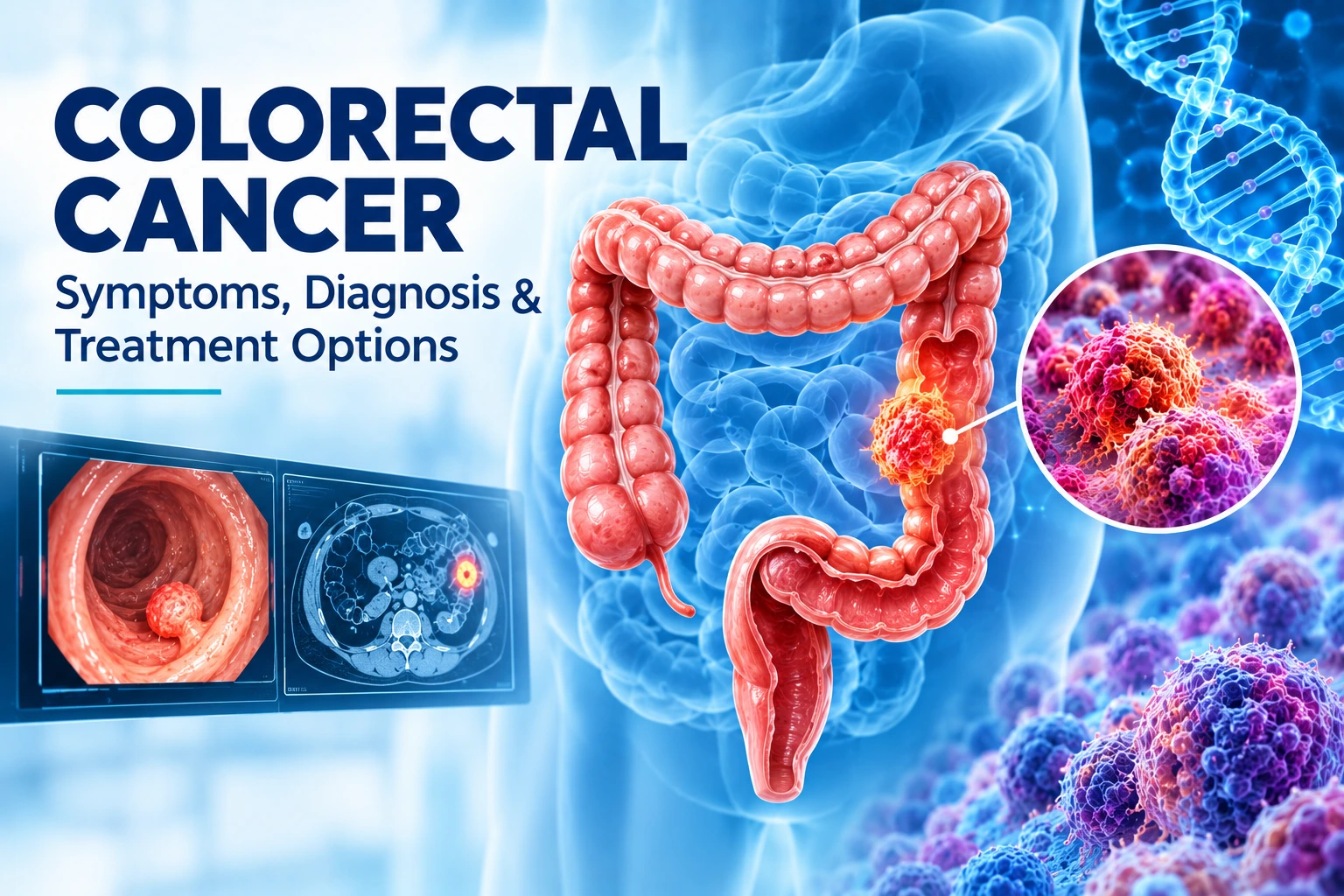
What Is Colorectal Cancer?
Colorectal cancer is a cancer that develops in the colon or rectum, which are parts of the large intestine. Cancer that begins in the colon is called colon cancer, while cancer that begins in the rectum is called rectal cancer. Together, they are commonly referred to as colorectal cancer.
Many colorectal cancers begin as abnormal growths called polyps in the inner lining of the colon or rectum. Some polyps can eventually become cancerous. Screening can sometimes identify and remove these growths before they develop into cancer.
Colorectal cancer is a major global health concern. Treatment depends on whether the disease is localized or has spread, the location of the tumor, pathology, molecular characteristics and the patient's overall health. Available treatments can include surgery, chemotherapy, radiation therapy, targeted therapy and immunotherapy.
Colon Cancer vs. Rectal Cancer
Although colon and rectal cancers are grouped together as colorectal cancer, their treatment can differ.
Colon Cancer
Colon cancer develops in the colon. Surgery is a major treatment for localized disease, while chemotherapy and other systemic treatments may be used depending on stage and tumor characteristics.
Rectal Cancer
Rectal cancer develops in the rectum. Treatment may involve combinations of surgery, radiation therapy, chemotherapy, targeted therapy and, in selected circumstances, surveillance or other approaches.
Causes and Risk Factors of Colorectal Cancer
There is no single cause of colorectal cancer. Risk can be influenced by age, personal and family history, inherited conditions, inflammatory bowel disease and lifestyle factors.
Recognized risk factors include:
- Increasing age
- Personal history of colorectal cancer
- Previous colorectal adenomas or advanced polyps
- Family history of colorectal cancer
- Lynch syndrome
- Familial adenomatous polyposis (FAP)
- Long-standing ulcerative colitis or Crohn colitis
- Obesity
- Cigarette smoking
- Excessive alcohol use
Having a risk factor does not mean that a person will definitely develop colorectal cancer.
Early Symptoms of Colorectal Cancer
Colorectal cancer may cause symptoms involving the digestive system, although some people have no noticeable symptoms during earlier disease.
Possible symptoms include:
- Blood in the stool
- Rectal bleeding
- Persistent changes in bowel habits
- Diarrhea
- Constipation
- Feeling that the bowel does not empty completely
- Narrower-than-usual stools
- Abdominal discomfort
- Bloating
- Abdominal cramps
- Unexplained weight loss
- Fatigue
- Weakness
- Changes in appetite
- Vomiting in some cases
These symptoms can also occur with non-cancerous conditions. Persistent or unexplained symptoms should be evaluated by a qualified healthcare professional.
Blood in the Stool
Blood in the stool can be an important warning sign.
The blood may appear:
- Bright red
- Dark red
- Very dark or mixed with stool
Blood in the stool does not automatically mean colorectal cancer. Hemorrhoids, inflammatory bowel disease, polyps and other conditions can also cause bleeding. Medical evaluation is important when bleeding is persistent, unexplained or recurrent.
Changes in Bowel Habits
A persistent change in normal bowel function can include:
- New constipation
- Persistent diarrhea
- Alternating constipation and diarrhea
- Narrower stools
- A feeling of incomplete bowel emptying
A change that continues without an obvious explanation should be discussed with a healthcare professional.
Abdominal Pain, Bloating and Cramps
Colorectal cancer can sometimes cause abdominal discomfort, gas pains, bloating, fullness or cramping.
However, abdominal symptoms are common and can result from many digestive conditions. The combination of persistent abdominal symptoms with bleeding, bowel changes, unexplained weight loss or fatigue deserves medical assessment.
Unexplained Weight Loss and Fatigue
Unintentional weight loss may occur with colorectal cancer. Fatigue or weakness can also occur, including in patients who develop anemia from chronic blood loss.
Weight loss and fatigue have many possible causes, so these symptoms alone cannot establish a cancer diagnosis.
Colorectal Cancer Screening
Screening aims to find colorectal cancer or precancerous changes before symptoms develop.
Common screening approaches include:
- Fecal immunochemical testing (FIT)
- Stool DNA testing
- Colonoscopy
- CT colonography
- Flexible sigmoidoscopy
Some screening tests can detect polyps that can be removed before they become cancerous.
Screening schedules depend on age, personal risk, family history, previous findings and the screening method. People with increased risk may need earlier or more frequent screening.
Colonoscopy and Diagnostic Testing
When colorectal cancer is suspected, doctors may use diagnostic tests such as:
- Medical history
- Physical examination
- Colonoscopy
- Digital rectal examination when appropriate
- Biopsy
- Imaging studies
- Blood tests
- Tumor-marker testing
- Molecular and biomarker testing
Screening and diagnosis are not the same. A screening test is performed in people without symptoms to look for disease, while diagnostic testing investigates symptoms or abnormal findings.
Biopsy and Pathology
A biopsy involves collecting tissue so that a pathologist can examine it under a microscope.
Pathology can help determine:
- Whether cancer is present
- The type of cancer
- Tumor characteristics
- Features that may influence treatment
Additional laboratory testing may be performed on tumor tissue to identify biomarkers that can help guide therapy.
Biomarker Testing in Colorectal Cancer
Biomarker testing examines genes, proteins and other characteristics of cancer cells.
In colorectal cancer, molecular testing can help identify characteristics that may influence treatment selection. NCI notes that biomarker testing is routinely used to select treatment for people with colorectal cancer.
Testing may assess characteristics such as:
- Mismatch repair status
- Microsatellite instability
- Specific gene alterations
- HER2 status in appropriate settings
- Other potentially actionable molecular changes
Biomarker testing is particularly relevant in advanced disease and can help determine whether certain targeted therapies or immunotherapies may be appropriate.
Colorectal Cancer Stages
Staging determines how far colorectal cancer has progressed.
Broadly, colorectal cancer may be described as:
Stage I
Cancer is relatively localized and has not spread to distant organs.
Stage II
Cancer has grown further through the bowel wall but has not necessarily reached nearby lymph nodes.
Stage III
Cancer has spread to nearby lymph nodes.
Stage IV
Cancer has spread to distant organs or tissues.
The exact stage is determined through pathology, imaging and other clinical findings.
Treatment decisions are based on the specific stage and additional tumor characteristics rather than stage alone.
Surgery for Colorectal Cancer
Surgery is an important treatment for many localized colorectal cancers.
For colon cancer, surgery may involve removing the tumor and a portion of surrounding healthy tissue and then reconnecting the bowel when possible.
For very early cancers found within polyps, removal during colonoscopy may sometimes be sufficient depending on pathology and other factors.
Rectal cancer surgery is planned differently because of the anatomy of the rectum and its relationship with surrounding structures.
Chemotherapy
Chemotherapy uses medicines that interfere with cancer-cell growth and division.
Depending on the disease setting, chemotherapy may be used:
- Before surgery
- After surgery
- For locally advanced disease
- For metastatic disease
- For recurrent cancer
The exact regimen depends on the cancer's location, stage, previous treatments, molecular findings and the patient's health.
Radiation Therapy
Radiation therapy uses high-energy radiation to damage cancer cells.
Radiation has an especially important role in selected rectal cancer treatment plans. Depending on the disease setting, it may be combined with chemotherapy and surgery.
Radiation can also be used in selected advanced or recurrent cases to control particular tumor sites or relieve symptoms.
Targeted Therapy
Targeted therapy is designed to interfere with specific proteins or molecular pathways that help cancer cells grow, divide or spread.
In colorectal cancer, targeted treatment is generally considered when the tumor has characteristics that make a particular treatment appropriate.
Depending on the clinical situation, targeted approaches may involve pathways associated with:
- EGFR
- VEGF
- BRAF
- HER2
- KRAS G12C
- Other molecular targets
Not every colorectal cancer contains the same biomarkers, so molecular testing is important when targeted treatment is being considered.
Immunotherapy
Immunotherapy helps the immune system recognize and attack cancer cells.
Certain colorectal cancers with specific molecular characteristics, such as mismatch repair deficiency (dMMR) or microsatellite instability-high (MSI-H) disease, may be candidates for immune checkpoint inhibitor treatment.
The decision depends on pathology, biomarkers, disease stage and treatment history.
Metastatic Colorectal Cancer
Metastatic colorectal cancer means that cancer has spread beyond the original colon or rectum to distant parts of the body.
Common sites of metastatic disease can include:
- Liver
- Lungs
- Distant lymph nodes
- Other organs
Treatment may include systemic chemotherapy, targeted therapy, immunotherapy when appropriate, surgery or local treatments in selected patients, and clinical trials.
Biomarker testing can help identify treatment options for some patients with advanced colorectal cancer.
Recurrent Colorectal Cancer
Colorectal cancer can return after previous treatment.
Recurrence may occur:
- At or near the original site
- In nearby lymph nodes
- In the liver
- In the lungs
- At other distant locations
Treatment depends on the location and extent of recurrence, previous therapies and the molecular characteristics of the tumor.
In some situations, a new biopsy or molecular assessment may be considered.
Supportive and Palliative Care
Supportive care can be provided throughout colorectal cancer treatment.
It may help manage:
- Pain
- Fatigue
- Nausea
- Digestive problems
- Nutrition concerns
- Treatment-related side effects
- Emotional stress
- Other cancer-related symptoms
Palliative care focuses on symptom relief and quality of life and can be integrated with cancer-directed treatment when appropriate.
Colorectal Cancer FAQs
1. What is colorectal cancer?
Colorectal cancer is cancer that begins in the colon or rectum.
2. What are the common symptoms?
Blood in stool, bowel-habit changes, abdominal discomfort, unexplained weight loss and fatigue are among the possible symptoms.
3. Can colorectal cancer cause constipation?
Yes. Constipation can occur, although many non-cancerous conditions can also cause constipation.
4. Can colorectal cancer cause diarrhea?
Yes. Persistent diarrhea or alternating bowel habits can occur.
5. Is blood in stool always cancer?
No. Blood in stool can have many causes, including hemorrhoids and other gastrointestinal conditions.
6. How is colorectal cancer diagnosed?
Diagnosis may involve colonoscopy, biopsy, imaging and laboratory testing.
7. What is a colonoscopy?
A colonoscopy allows a healthcare professional to examine the lining of the colon and rectum and, when appropriate, remove polyps or obtain tissue samples.
8. Can colorectal cancer be prevented?
Some colorectal cancers may be prevented through screening because certain polyps can be detected and removed before they become cancer.
9. Who should undergo colorectal cancer screening?
Screening recommendations depend on age and individual risk factors. People with family history or inherited conditions may need a different screening approach.
10. What are the main treatments?
Treatment may include surgery, chemotherapy, radiation therapy, targeted therapy and immunotherapy depending on the disease.
11. Is surgery used for colon cancer?
Yes. Surgery is a major treatment for many localized colon cancers.
12. Is radiation used for colorectal cancer?
Radiation has an important role in selected rectal cancer treatment plans and may also be used in other clinical situations.
13. What is biomarker testing?
It examines molecular characteristics of cancer that may help guide treatment selection.
14. Can targeted therapy treat colorectal cancer?
Targeted therapy may be appropriate for selected colorectal cancers with relevant molecular characteristics.
15. Can immunotherapy treat colorectal cancer?
Some colorectal cancers with specific biomarkers may respond to immunotherapy.
16. What is metastatic colorectal cancer?
It is colorectal cancer that has spread to distant parts of the body.
17. Can colorectal cancer return after treatment?
Yes. Recurrence can occur, and treatment depends on where and how the cancer returns.
18. Is colorectal cancer hereditary?
Some inherited conditions, including Lynch syndrome and familial adenomatous polyposis, can substantially increase risk.
19. Can younger adults develop colorectal cancer?
Yes. Although risk generally increases with age, colorectal cancer can occur in younger adults.
20. Where can international patients find colorectal cancer treatment information?
Patients should consult qualified oncology professionals and reliable medical information sources. Treatment availability and regulatory approvals vary between countries.
Global Medicine Information & Support by RootAid Pharma
International Medicine Information for Cancer Care
RootAid Pharma can provide general educational information and international medicine support for patients, caregivers and healthcare-related inquiries.
Information may include:
- Generic medicine information
- Brand-name medicine information
- International medicine availability
- Prescription-related requirements
- Oncology medicine information
- General treatment resources
- International patient assistance
RootAid Pharma is presented as an international medicine information and support resource, not as the manufacturer of the medicines discussed.
Cancer treatment decisions should be made by qualified healthcare professionals based on diagnosis, pathology, stage, biomarkers, previous treatment and individual patient factors.
Need help after reading this?
Talk to our support team for sourcing guidance, product availability, and global delivery assistance.