Capmatinib for MET Exon 14 Skipping Non-Small Cell Lung Cancer
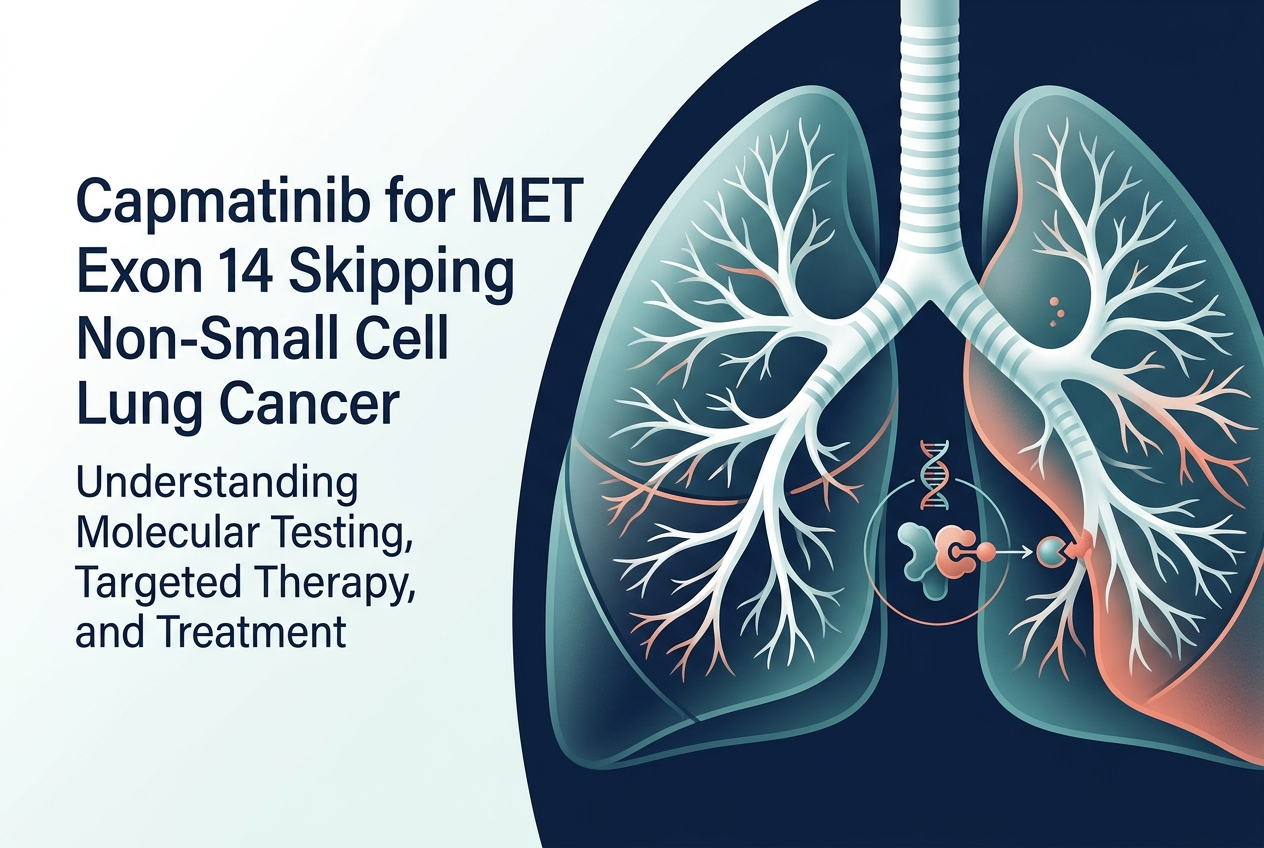
Capmatinib for MET Exon 14 Skipping Non-Small Cell Lung Cancer: Symptoms, Diagnosis, and Treatment
Introduction
Lung cancer is one of the most commonly diagnosed cancers worldwide. It develops when abnormal cells in the lungs grow uncontrollably and may spread to other parts of the body. Treatment depends on the type of lung cancer, its stage, the patient's overall health, and specific molecular changes within the tumor.
One important type is non-small cell lung cancer (NSCLC). Some patients with advanced NSCLC have a genetic alteration known as MET exon 14 skipping. Identifying this alteration can help doctors select a targeted treatment.
Capmatinib is an oral targeted therapy used for adults with metastatic NSCLC whose tumors have a mutation leading to MET exon 14 skipping. It targets the MET signaling pathway involved in the growth and survival of certain cancer cells.
This article explains NSCLC, its symptoms and diagnosis, the importance of molecular testing, and the role of capmatinib in treatment.
What Is Non-Small Cell Lung Cancer?
Non-small cell lung cancer is a broad category that includes several types of lung cancer. The main types are:
Adenocarcinoma: Often develops in the outer areas of the lungs and is a common form of NSCLC.
Squamous cell carcinoma: Usually develops in cells lining the airways.
Large cell carcinoma: A less common type that can develop in different areas of the lung.
NSCLC differs from small cell lung cancer in its biological characteristics and treatment approaches. Doctors use imaging, biopsy results, and other tests to establish the diagnosis and determine the most appropriate treatment.
When NSCLC has spread beyond the original lung and nearby areas to distant parts of the body, it is described as metastatic disease.
What Is MET Exon 14 Skipping?
The MET gene provides instructions for making a protein involved in cell growth, movement, and survival. In some cancers, changes affecting this gene can cause abnormal MET signaling.
MET exon 14 skipping is a genetic alteration that changes how the MET gene's RNA is processed. This can result in a MET protein that is not regulated normally, allowing cancer-promoting signals to remain active.
Not every lung cancer has this alteration. Molecular testing of tumor tissue or, in appropriate circumstances, a blood sample can help determine whether it is present.
The result matters because a patient with metastatic NSCLC and a confirmed MET exon 14 skipping alteration may be eligible for a MET-targeted medicine such as capmatinib.
What Is Capmatinib?
Capmatinib is an oral kinase inhibitor that targets the MET pathway. It is used to treat adults with metastatic NSCLC whose tumors have a mutation leading to MET exon 14 skipping, as detected by an appropriate approved test in jurisdictions where it is authorized.
Capmatinib is a targeted cancer treatment, not a general treatment for every type of lung cancer. Its suitability depends on the patient's diagnosis, molecular test results, medical history, and other medicines.
The medicine should be prescribed and monitored by an oncology specialist. Patients should not start, stop, or change treatment without consulting their treating team.
Symptoms of Non-Small Cell Lung Cancer
Symptoms can vary according to the tumor's location, size, and whether it has spread. Some people have few symptoms in the early stages.
Common symptoms include:
A persistent or worsening cough
Shortness of breath
Chest discomfort or pain
Coughing up blood
Hoarseness
Recurrent chest infections
Unexplained weight loss
Reduced appetite
Persistent tiredness or weakness
If cancer spreads to other organs, additional symptoms may develop. For example, bone involvement may cause pain, while spread to the brain may cause headaches, weakness, seizures, or changes in vision.
These symptoms can also occur with conditions other than cancer. Anyone experiencing persistent or concerning symptoms should seek medical assessment.
Causes and Risk Factors
Lung cancer can develop in people with different backgrounds, and no single factor explains every case. Recognized risk factors include:
Tobacco smoke
Smoking is a major risk factor for lung cancer. Exposure to secondhand smoke also increases risk.
Radon exposure
Radon is a naturally occurring radioactive gas that can accumulate indoors and contribute to lung cancer risk.
Workplace and environmental exposures
Exposure to certain substances, including asbestos and some industrial carcinogens, can increase risk. Outdoor air pollution is also associated with lung cancer.
Personal and family history
A personal history of lung cancer or a family history of the disease may be relevant to an individual's risk.
Genetic changes in cancer cells
Molecular alterations such as MET exon 14 skipping can influence tumor behavior and treatment selection. Such alterations are not necessarily caused by smoking and may occur in people who have never smoked.
How Is NSCLC Diagnosed?
Diagnosis usually involves several steps.
1. Medical history and physical examination
A healthcare professional reviews symptoms, smoking history, occupational exposures, and general health.
2. Imaging tests
A chest CT scan may identify an abnormal mass or enlarged lymph nodes. PET-CT and brain MRI may be used when appropriate to assess the extent of disease.
3. Biopsy
A tissue sample is generally needed to confirm the cancer diagnosis and identify its type. Depending on the tumor's location, samples may be collected using bronchoscopy, a needle biopsy, or another procedure.
4. Molecular testing
Molecular testing can identify genetic changes that may guide treatment. For patients with advanced NSCLC, testing may include alterations in genes such as EGFR, ALK, ROS1, BRAF, MET, RET, NTRK, and others, depending on the clinical situation and applicable guidelines.
For capmatinib treatment, identifying a mutation leading to MET exon 14 skipping is particularly important.
5. Staging
Staging helps determine how far the cancer has spread and supports treatment planning. The stage is assessed using clinical findings, imaging, and pathology results.
Stages of Non-Small Cell Lung Cancer
NSCLC is commonly described using stages:
Stage I: The cancer is relatively small and localized to the lung.
Stage II: The cancer may be larger or involve nearby lymph nodes.
Stage III: The disease may involve more extensive nearby structures or lymph nodes.
Stage IV: The cancer has spread to distant sites or is present in both lungs or other areas in a way classified as metastatic disease.
The exact stage depends on tumor size, lymph-node involvement, and whether distant spread has occurred. Individual staging should be established by the treating team.
Capmatinib's established indication is for metastatic NSCLC with a mutation leading to MET exon 14 skipping; it is not automatically appropriate for every stage or subtype of lung cancer.
Treatment Options for NSCLC
Treatment is selected according to the cancer's stage, molecular characteristics, symptoms, and the patient's overall health.
Surgery
Surgery may be an option for selected patients with localized NSCLC when the tumor can be removed safely and completely.
Radiation therapy
Radiation uses high-energy beams to destroy cancer cells or control a tumor in a specific area. It may be used alone or alongside other treatments, depending on the clinical situation.
Chemotherapy
Chemotherapy uses medicines that affect cancer-cell growth. It may be used in different stages of NSCLC, sometimes in combination with immunotherapy or other treatments.
Immunotherapy
Immunotherapy helps the immune system recognize or attack cancer cells. Suitability depends on factors such as tumor characteristics, prior treatment, and the patient's medical history.
Targeted therapy
Targeted therapies act on particular molecular changes in cancer cells. Examples include treatments directed at specific EGFR, ALK, ROS1, RET, BRAF, or MET alterations.
For patients with metastatic NSCLC and confirmed MET exon 14 skipping, capmatinib may be an appropriate targeted treatment option.
How Does Capmatinib Work?
Capmatinib inhibits MET kinase activity. In tumors driven by MET exon 14 skipping, abnormal MET signaling can support cancer-cell growth and survival. Blocking this pathway may help control the disease.
Unlike chemotherapy, which affects various rapidly dividing cells, a targeted therapy acts on a particular molecular pathway. However, targeted treatment can still cause significant side effects and requires medical supervision.
The response varies between patients. Some may experience tumor shrinkage or disease control, while others may not respond or may eventually develop resistance.
Important Safety Information About Capmatinib
Capmatinib can cause side effects and requires monitoring by a qualified healthcare professional.
Reported side effects include:
Swelling or fluid retention, especially in the limbs
Nausea or vomiting
Fatigue
Musculoskeletal pain
Reduced appetite
Cough or shortness of breath
More serious problems can occur. The prescribing information includes warnings concerning interstitial lung disease or pneumonitis, liver toxicity, and fetal harm.
Patients should promptly contact their medical team if they develop new or worsening breathing difficulties, persistent cough, yellowing of the skin or eyes, dark urine, or other concerning symptoms.
The oncology team may order blood tests, review other medicines, and monitor for complications. Patients should disclose all prescription medicines, non-prescription products, and supplements they use because drug interactions may occur.
Capmatinib may harm an unborn baby. Pregnancy-related risks and contraception should be discussed with the treating team before and during treatment as advised by the prescribing information. Breastfeeding recommendations should also be discussed with a healthcare professional.
This article does not provide an individualized dose or treatment plan. The correct regimen and any changes must be determined by the prescribing oncologist.
Monitoring During Treatment
Monitoring helps the medical team evaluate treatment response and identify side effects early.
Depending on the patient's condition, monitoring may include:
Clinical assessment of symptoms and general health
Blood tests to evaluate liver function and other relevant parameters
Imaging scans to assess response
Review of swelling, breathing symptoms, appetite, and energy levels
Assessment of possible interactions with other medicines
Patients should attend scheduled appointments and report new symptoms. They should not adjust the medicine themselves if side effects occur.
Living With Metastatic Lung Cancer
A diagnosis of metastatic lung cancer can affect physical health, emotional well-being, family life, and finances. Supportive care is an important part of treatment.
Nutrition and hydration
A balanced diet can help maintain strength, but appetite changes and treatment side effects may make eating difficult. A doctor or registered dietitian can help develop an appropriate plan.
Physical activity
Activity should be adapted to the patient's condition and energy level. Gentle movement may help some patients maintain mobility, but exercise plans should be discussed with the healthcare team.
Emotional support
Counselling, support groups, and conversations with family or trusted people may help patients manage anxiety and uncertainty.
Symptom management
Palliative care can help relieve pain, breathlessness, nausea, and other symptoms. It can be provided alongside cancer-directed treatment and does not mean that active treatment must stop.
Frequently Asked Questions
1. What type of cancer is capmatinib used for?
Capmatinib is indicated for adults with metastatic non-small cell lung cancer (NSCLC) whose tumors have a mutation leading to MET exon 14 skipping, as detected by an appropriate approved test.
2. Is capmatinib suitable for all lung cancer patients?
No. Its established indication is specific to metastatic NSCLC with a qualifying MET exon 14 skipping alteration. A specialist must review the diagnosis and test results.
3. What does MET exon 14 skipping mean?
It is a genetic alteration affecting the processing of MET gene RNA. It can cause abnormal MET signaling that supports cancer growth.
4. Is a molecular test needed before capmatinib treatment?
Yes. The presence of a mutation leading to MET exon 14 skipping should be established using an appropriate test before treatment is selected.
5. Is capmatinib chemotherapy?
No. Capmatinib is a targeted kinase inhibitor that blocks the MET pathway. It differs from conventional chemotherapy.
6. Can capmatinib cure metastatic lung cancer?
A cure cannot be guaranteed. Treatment response differs between patients, and the aim may be to shrink or control the cancer. The treating oncologist can explain the expected benefits and limitations.
7. What are common side effects of capmatinib?
Reported side effects include swelling, nausea, vomiting, fatigue, musculoskeletal pain, reduced appetite, cough, and shortness of breath. Serious adverse reactions can also occur.
8. Can capmatinib cause breathing problems?
Yes. New or worsening respiratory symptoms may indicate a serious lung reaction, including interstitial lung disease or pneumonitis. Seek prompt medical advice if these symptoms occur.
9. Does capmatinib require blood-test monitoring?
The treating team may order blood tests, including liver-function tests, to monitor for side effects and assess overall safety.
10. Can capmatinib interact with other medicines?
Yes. Some medicines can affect capmatinib or interact with it. Patients should provide their healthcare professional with a complete list of medicines and supplements.
11. Can patients change their capmatinib dose themselves?
No. Dose changes, interruptions, and restarting treatment must be guided by the prescribing oncologist.
12. Is capmatinib used for small cell lung cancer?
Its established indication described in this article is for metastatic NSCLC with a mutation leading to MET exon 14 skipping. It should not be assumed to be suitable for small cell lung cancer.
13. Does smoking history determine whether capmatinib can be used?
No. Treatment eligibility depends on the diagnosis and relevant molecular findings, not smoking history alone.
14. Can capmatinib be used during pregnancy?
Capmatinib may cause fetal harm. Pregnancy risks and appropriate precautions must be discussed with the treating healthcare professional.
15. Where can I find information about cancer medicines?
Patients and caregivers can consult their oncologist, pharmacist, official prescribing information, and reputable medicine-information resources. For medicine information and availability enquiries, visit RootAid Pharma at https://rootaidpharma.com.bd.
Conclusion
MET exon 14 skipping is an important molecular alteration in a subset of patients with metastatic non-small cell lung cancer. Identifying this alteration can help doctors consider targeted treatments.
Capmatinib works by inhibiting MET signaling and may be an option for eligible adults with metastatic NSCLC whose tumors have a qualifying MET exon 14 skipping mutation. Appropriate molecular testing, specialist supervision, and ongoing monitoring are essential.
For cancer-related symptoms, diagnosis, or treatment decisions, patients should consult a qualified healthcare professional. Medicine selection should always be based on the individual's diagnosis and clinical circumstances.
Medical Disclaimer
This article is for educational and informational purposes only. It does not replace professional medical advice, diagnosis, or treatment. Capmatinib is a prescription cancer medicine and should be used only under appropriate medical supervision. Indications, regulatory approvals, and prescribing requirements may differ by country. Always consult the current official prescribing information and a qualified oncology specialist.
Need help after reading this?
Talk to our support team for sourcing guidance, product availability, and global delivery assistance.