Cabozantinib: Uses in Kidney, Liver and Thyroid Cancer Treatment
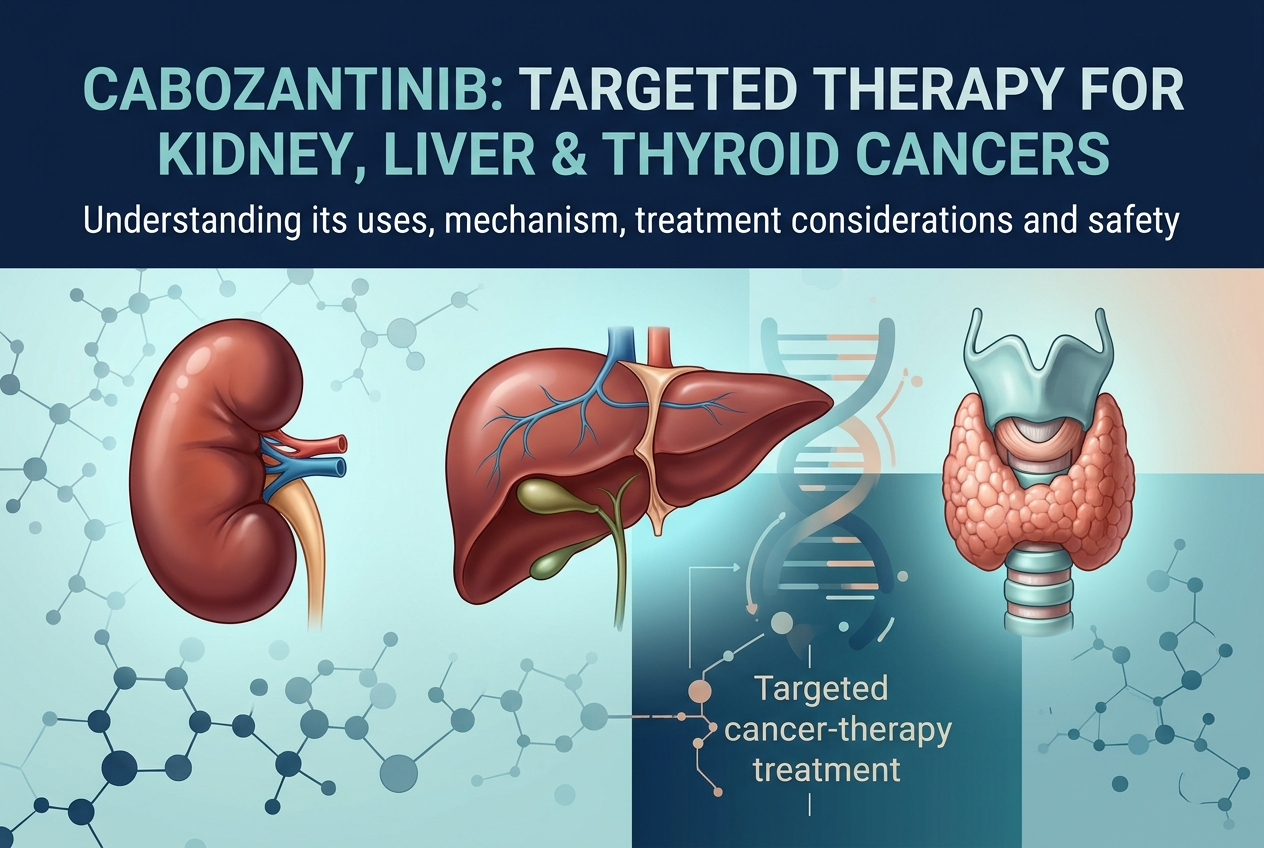
Cabozantinib: Uses in Kidney, Liver and Thyroid Cancer Treatment
Introduction
Cancer treatment has advanced significantly with the development of targeted therapies. Unlike conventional chemotherapy, which can affect many rapidly dividing cells, targeted cancer medicines are designed to interfere with specific proteins and signalling pathways that help cancer cells grow, survive and spread.
Cabozantinib is an oral targeted anticancer medicine used in the treatment of several types of advanced cancer. It belongs to a group of medicines known as tyrosine kinase inhibitors (TKIs). Depending on the formulation, local regulatory approval and the patient's diagnosis, cabozantinib may be used for advanced renal cell carcinoma (kidney cancer), hepatocellular carcinoma (a type of primary liver cancer), differentiated thyroid cancer and certain neuroendocrine tumours.
This article explains the cancers associated with cabozantinib, how the medicine works, possible side effects, monitoring requirements and important treatment considerations.
What Is Cabozantinib?
Cabozantinib is an oral anticancer medicine that inhibits several receptor tyrosine kinases involved in tumour growth, blood vessel formation and cancer progression.
It is commonly described as a multi-targeted tyrosine kinase inhibitor. Its targets include MET, VEGFR2 and AXL, among other signalling proteins. These pathways can contribute to cancer-cell survival, tumour growth, invasion and the development of blood vessels that supply a tumour.
Cabozantinib is a prescription medicine. It should only be used under the supervision of an oncologist or another specialist experienced in cancer treatment.
Which Cancers Are Treated With Cabozantinib?
Cabozantinib has approved uses in several cancer settings. These include:
Advanced renal cell carcinoma (RCC), a type of kidney cancer.
Hepatocellular carcinoma (HCC), a type of primary liver cancer, in patients previously treated with sorafenib.
Locally advanced or metastatic differentiated thyroid cancer that has progressed after prior VEGFR-targeted treatment and is radioactive iodine-refractory or unsuitable for radioactive iodine.
Certain previously treated, unresectable or metastatic well-differentiated pancreatic and extra-pancreatic neuroendocrine tumours, under the relevant approved indication.
The exact approved uses vary by country and product formulation. A specialist must determine whether cabozantinib is appropriate for an individual patient.
1. Cabozantinib for Renal Cell Carcinoma (Kidney Cancer)
What Is Renal Cell Carcinoma?
Renal cell carcinoma is the most common type of kidney cancer in adults. It begins in the cells lining the small tubes inside the kidney that help filter blood and produce urine.
Some kidney cancers remain confined to the kidney, while others may grow into nearby tissues or spread to distant organs. Advanced renal cell carcinoma may involve the lungs, bones, liver, brain or lymph nodes.
Symptoms of Kidney Cancer
Early kidney cancer may not cause noticeable symptoms. As the disease progresses, possible symptoms include:
Blood in the urine.
Persistent pain in the side or lower back.
A lump or swelling in the side or abdomen.
Unexplained weight loss.
Persistent fatigue.
Fever without an obvious infection.
Reduced appetite.
These symptoms can occur for many reasons and do not automatically indicate cancer. Medical assessment is necessary to identify the cause.
How Cabozantinib Works in Kidney Cancer
Kidney tumours can depend on signals that encourage the formation of new blood vessels. This process is called angiogenesis. Tumours use these blood vessels to receive oxygen and nutrients.
Cabozantinib blocks several signalling pathways, including VEGFR2, MET and AXL. By interfering with these pathways, it can help slow tumour growth and the development of tumour-supporting blood vessels.
For selected patients with advanced renal cell carcinoma, cabozantinib may be prescribed alone or in combination with nivolumab, an immunotherapy medicine. The choice depends on the patient's disease characteristics, previous treatment, overall health and specialist assessment.
2. Cabozantinib for Hepatocellular Carcinoma (Liver Cancer)
What Is Hepatocellular Carcinoma?
Hepatocellular carcinoma is the most common form of primary liver cancer. It begins in hepatocytes, the main functional cells of the liver.
Chronic liver disease and cirrhosis are important risk factors. Hepatitis B, hepatitis C, long-term alcohol-related liver damage and metabolic dysfunction-associated steatotic liver disease can also contribute to liver cancer risk.
Symptoms of Liver Cancer
Possible symptoms include:
Unexplained weight loss.
Loss of appetite.
Pain or discomfort in the upper right abdomen.
Abdominal swelling.
Nausea or vomiting.
Yellowing of the skin or eyes (jaundice).
Persistent tiredness.
A feeling of fullness after eating a small amount.
Some people with liver cancer have few symptoms during the early stages. People with chronic liver disease may require regular monitoring according to their healthcare provider's advice.
How Cabozantinib Works in Liver Cancer
Cabozantinib interferes with multiple proteins involved in tumour growth and blood vessel formation. These include VEGFR2, MET and AXL.
For certain adults with hepatocellular carcinoma who have previously received sorafenib, cabozantinib may be considered as a subsequent systemic treatment.
The patient's liver function, general condition, previous therapies and potential treatment risks are important factors when deciding whether cabozantinib is suitable.
3. Cabozantinib for Differentiated Thyroid Cancer
What Is Differentiated Thyroid Cancer?
Differentiated thyroid cancer develops from thyroid follicular cells. The main types include papillary and follicular thyroid cancer, along with some related subtypes.
Many differentiated thyroid cancers can be treated effectively with surgery and, when appropriate, radioactive iodine. However, some cancers may continue to progress despite these treatments or may not respond to radioactive iodine.
Symptoms of Thyroid Cancer
Possible symptoms include:
A lump or swelling in the neck.
Persistent hoarseness or voice changes.
Difficulty swallowing.
Difficulty breathing.
Persistent neck discomfort.
Swollen lymph nodes in the neck.
A neck lump does not necessarily mean thyroid cancer. Evaluation may include ultrasound, thyroid function tests and a biopsy when indicated.
When Is Cabozantinib Considered?
Cabozantinib may be used for certain patients aged 12 years and older with locally advanced or metastatic differentiated thyroid cancer when the disease has progressed following prior VEGFR-targeted therapy and is radioactive iodine-refractory or the patient is not eligible for radioactive iodine.
This is a specific treatment setting. Cabozantinib is not intended for every patient with thyroid cancer, and it is not a routine treatment for all thyroid nodules or early-stage thyroid cancers.
4. Cabozantinib for Certain Neuroendocrine Tumours
Neuroendocrine tumours (NETs) develop from cells that have features of both nerve cells and hormone-producing cells. They can arise in different parts of the body.
Under the relevant approved indication, cabozantinib may be used for previously treated, unresectable, locally advanced or metastatic well-differentiated pancreatic neuroendocrine tumours and extra-pancreatic neuroendocrine tumours.
The decision depends on tumour differentiation, location, disease extent, previous treatment and the applicable product approval.
How Does Cabozantinib Work?
Cabozantinib blocks the activity of several receptor tyrosine kinases. These proteins act like communication switches inside cells. They help regulate cell growth, survival, movement and the formation of blood vessels.
Some of the key targets include:
VEGFR2: Helps regulate the formation of new blood vessels. Blocking this pathway may reduce the blood supply that supports tumour growth.
MET: Involved in cell growth, survival, movement and invasion. Abnormal MET signalling can contribute to cancer progression.
AXL: Associated with cell survival, invasion and treatment resistance in some cancers.
By inhibiting several pathways, cabozantinib can interfere with processes that support cancer progression. Its effects and clinical benefits differ between cancer types and individual patients.
Diagnosis and Tests Before Treatment
Before starting cabozantinib, the treating team usually reviews the cancer diagnosis, disease extent, previous treatment and the patient's general health.
Depending on the cancer type, assessment may include:
Imaging tests such as CT, MRI or ultrasound.
Tissue biopsy and pathology review.
Blood tests, including complete blood count.
Liver and kidney function tests.
Blood pressure measurement.
Urine testing for protein.
Review of other medicines and possible drug interactions.
During treatment, the oncologist may repeat blood tests, blood pressure checks, urine tests and imaging to assess safety and response.
Cabozantinib Dosage and Administration
Cabozantinib dosing depends on the specific product, formulation, cancer indication, combination treatment and patient-related factors.
For example, cabozantinib tablets are available in different strengths in some markets. The 20 mg tablet strength is not necessarily the full daily treatment dose. The dose may be adjusted or interrupted by the oncologist if side effects occur or if the patient's clinical condition requires it.
Important administration considerations for cabozantinib tablets include taking the medicine on an empty stomach, generally at least one hour before or at least two hours after food, according to the applicable product instructions.
Patients should:
Follow the exact prescription provided by their oncologist.
Swallow tablets as directed.
Avoid changing the dose without medical advice.
Ask their healthcare team what to do if a dose is missed.
Tell the healthcare team about all medicines, supplements and herbal products they use.
Cabozantinib tablets and capsules are different formulations and must not be substituted for one another without specialist direction.
Possible Side Effects of Cabozantinib
Like other targeted anticancer medicines, cabozantinib can cause side effects. Not every patient experiences the same effects, and their severity can vary.
Commonly reported side effects may include:
Diarrhoea.
Fatigue or weakness.
Nausea and vomiting.
Reduced appetite.
Weight loss.
Constipation.
Mouth sores or inflammation.
Changes in taste.
Hand-foot skin reaction.
High blood pressure.
Changes in hair colour.
Abnormal liver function tests.
Serious Side Effects Requiring Medical Attention
Some adverse effects can be serious. Patients should contact their healthcare team promptly if they experience symptoms such as:
Severe or unusual bleeding.
Severe abdominal pain.
Chest pain or sudden shortness of breath.
Severe headache, confusion or vision changes.
Very high blood pressure.
Severe or persistent diarrhoea.
Signs of a blood clot.
Poor wound healing.
Severe skin reactions.
Cabozantinib can also increase the risk of gastrointestinal perforation or fistula, blood clots, serious bleeding and complications related to surgery or wound healing. The treating specialist should explain the warning signs and monitoring plan.
Precautions Before and During Treatment
Before starting cabozantinib, patients should tell their doctor if they have:
A history of bleeding.
High blood pressure.
Heart or blood vessel disease.
Liver problems.
A history of blood clots.
Recent or planned surgery.
A wound that has not healed.
A history of gastrointestinal problems.
The medicine may need to be withheld before planned surgery and restarted only when the specialist considers it safe and adequate healing has occurred.
Patients should also discuss pregnancy, breastfeeding and fertility considerations with their healthcare provider. Cabozantinib may cause harm to an unborn baby, and breastfeeding is generally not recommended during treatment.
Living With Cancer During Targeted Therapy
Cancer treatment involves more than taking medicine. Supportive care can help patients manage symptoms and maintain quality of life.
Helpful steps may include:
Attend regular follow-up appointments: Monitoring helps the medical team assess treatment response and identify side effects.
Maintain balanced nutrition: A dietitian can help address reduced appetite, weight loss or digestive symptoms.
Monitor blood pressure: Follow the monitoring schedule provided by the treating team.
Report new symptoms early: Do not wait for a routine appointment if a serious or unusual symptom develops.
Discuss physical activity: Appropriate activity may help manage fatigue, depending on the patient's health.
Seek emotional support: Counselling, family support and cancer support services may help patients and caregivers.
Patients should not start, stop or change any cancer medicine without consulting their treating specialist.
Is Cabozantinib a Cure for Cancer?
Cabozantinib is a targeted anticancer treatment, not a guaranteed cure. In selected patients, it may help control cancer, delay disease progression or provide clinical benefit.
The expected outcome depends on the cancer type, stage, tumour biology, previous treatment, general health and response to therapy. The oncologist is best placed to discuss realistic treatment goals.
Cabozantinib 20 mg: Important Product Information
Cabozantinib 20 mg is a tablet strength used in some cabozantinib tablet products. A 20 mg strength may be used as part of a prescribed dose or for dose adjustment, depending on the treatment plan.
The supplied product information lists:
Product name provided: Caboxib 20 mg
Generic name: Cabozantinib
Pack size provided: 30 tablets
The exact manufacturer, formulation, registration status and product details should be confirmed from the original packaging and relevant regulatory information. Pack size is not the same as the prescribed daily dose.
Medicine Information and Availability Enquiries
For medicine information and product-related enquiries, visit RootAid Pharma at:
RootAid Pharma is a medicine information and trading platform. Patients should confirm product details and current availability directly with the supplier and obtain cabozantinib only with a valid prescription and specialist guidance.
Frequently Asked Questions (FAQs)
1. What is cabozantinib used for?
Cabozantinib is a targeted anticancer medicine used for selected cases of advanced kidney cancer, liver cancer, differentiated thyroid cancer and certain neuroendocrine tumours, depending on the approved formulation and indication.
2. Is cabozantinib used for kidney cancer?
Yes. Cabozantinib is used to treat advanced renal cell carcinoma in selected patients. It may be prescribed alone or with nivolumab in an approved treatment setting.
3. Can cabozantinib treat liver cancer?
It may be used for hepatocellular carcinoma in certain patients who have previously received sorafenib.
4. Is cabozantinib used for thyroid cancer?
Yes. It may be used for selected locally advanced or metastatic differentiated thyroid cancers that have progressed after prior VEGFR-targeted treatment and are radioactive iodine-refractory or unsuitable for radioactive iodine.
5. Does cabozantinib treat every type of thyroid cancer?
No. Its approved use for differentiated thyroid cancer applies to a specific clinical setting. Other thyroid cancer types may require different treatment approaches.
6. What is Caboxib 20 mg?
The information supplied identifies Caboxib 20 mg as a product associated with the generic name cabozantinib. The exact brand identity and formulation should be verified from the original packaging.
7. Is 20 mg the usual daily dose?
Not necessarily. The correct dose depends on the cancer indication, formulation, combination treatment and individual patient. The 20 mg tablet may be part of a prescribed dose or used for dose adjustment.
8. How does cabozantinib work?
It blocks several receptor tyrosine kinases, including VEGFR2, MET and AXL, which are involved in tumour growth, survival and blood vessel formation.
9. Is cabozantinib chemotherapy?
No. It is a targeted therapy known as a tyrosine kinase inhibitor, rather than a conventional cytotoxic chemotherapy medicine.
10. What are common side effects?
Common side effects may include diarrhoea, fatigue, nausea, reduced appetite, weight loss, high blood pressure, mouth sores and hand-foot skin reactions.
11. Can cabozantinib cause serious side effects?
Yes. Serious risks can include bleeding, blood clots, gastrointestinal perforation, fistula, severe hypertension and wound-healing complications.
12. Should cabozantinib be taken with food?
Cabozantinib tablets are generally taken on an empty stomach. Patients should follow the exact instructions supplied with their product and prescription.
13. Can cabozantinib tablets and capsules be substituted?
No. Tablet and capsule formulations are not interchangeable. Patients must use the formulation prescribed by their specialist.
14. How long does cabozantinib treatment continue?
Treatment duration varies. It may continue while the cancer is responding or stable and side effects remain manageable. The oncologist decides when treatment should be changed or stopped.
15. Can patients stop cabozantinib when they feel better?
No. Patients should never stop or change the medicine without consulting their oncologist, even if they feel better.
16. Where can I enquire about cabozantinib?
For medicine information and product-related enquiries, visit RootAid Pharma at https://rootaidpharma.com.bd. Confirm current product details and availability directly with the supplier.
Medical Disclaimer
This article is intended for educational and informational purposes only. It does not replace professional medical advice, diagnosis or treatment. Cabozantinib is a prescription anticancer medicine that can cause serious adverse effects. Its use, formulation, dose and monitoring must be determined by a qualified oncology specialist. Never start, stop or adjust cancer treatment without consulting your healthcare provider.
Need help after reading this?
Talk to our support team for sourcing guidance, product availability, and global delivery assistance.