Bladder Cancer: Symptoms, Diagnosis & Treatment
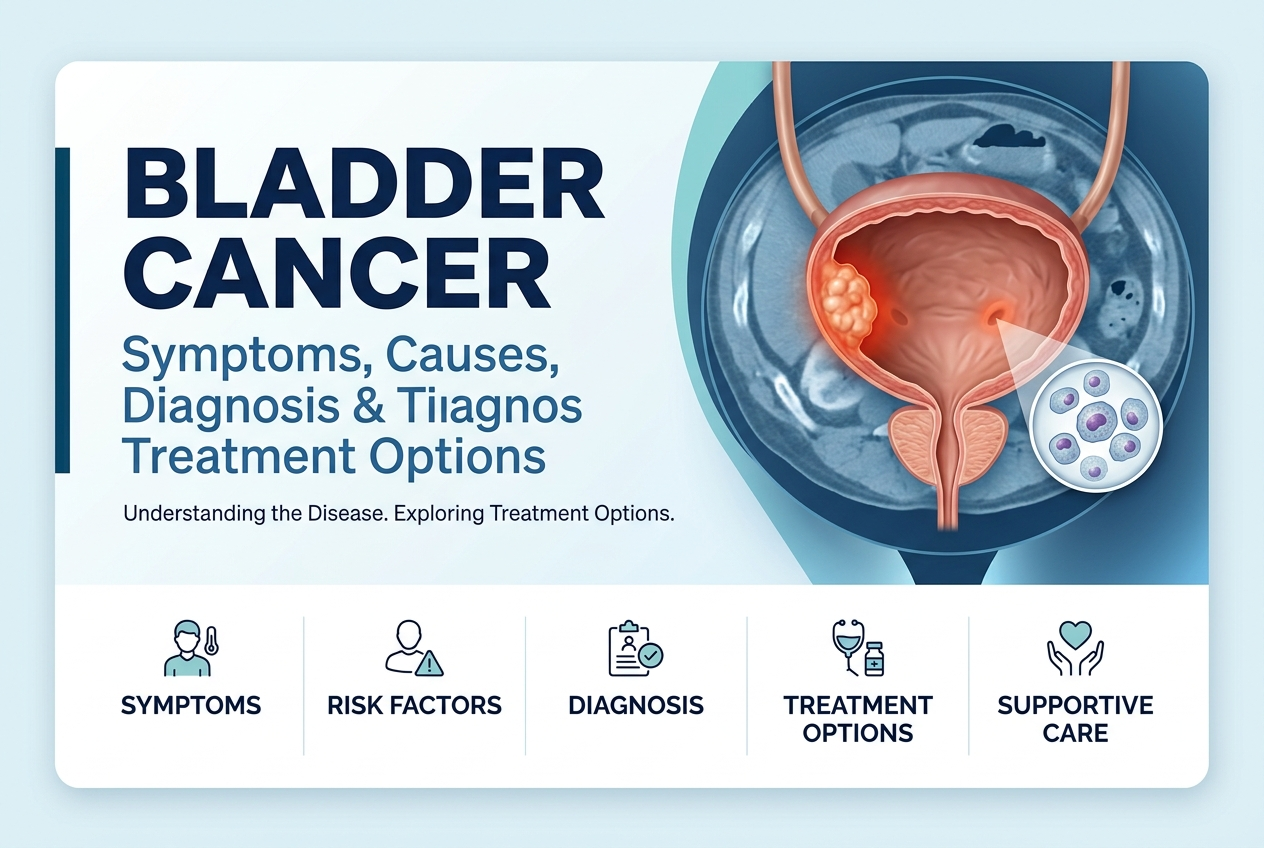
Bladder Cancer: Symptoms, Causes, Diagnosis and Treatment Options
Bladder cancer is a disease in which abnormal cells grow in the urinary bladder, the organ that stores urine before it leaves the body. It can affect people of different ages, although it is more common in older adults. Recognizing possible symptoms and understanding available diagnostic tests can help people seek appropriate medical assessment.
The treatment plan depends on the cancer's type, grade, stage, overall health, and whether the disease has spread into the bladder muscle or beyond. Options may include surgery, medicines placed directly into the bladder, chemotherapy, immunotherapy, targeted therapy, and other supportive treatments.
What Is Bladder Cancer?
The bladder is a hollow, muscular organ in the lower abdomen. It stores urine produced by the kidneys and releases it through the urethra during urination.
Most bladder cancers begin in urothelial cells, which line the inside of the bladder and other parts of the urinary tract. This type is called urothelial carcinoma, also known as transitional cell carcinoma.
Bladder cancer is commonly described according to how deeply it has grown:
Non-muscle-invasive bladder cancer: The cancer has not grown into the main muscle layer of the bladder.
Muscle-invasive bladder cancer: The cancer has grown into the bladder muscle or beyond.
Advanced or metastatic bladder cancer: The disease has spread to nearby structures, lymph nodes, or distant organs.
These distinctions matter because treatment and follow-up can be very different for each group.
Types of Bladder Cancer
1. Urothelial Carcinoma
Urothelial carcinoma is the most common bladder cancer type. It may be non-muscle-invasive or muscle-invasive, and treatment is selected according to the tumor's grade, stage, and other clinical features.
2. Squamous Cell Carcinoma
Squamous cell carcinoma begins in squamous cells and is less common in many regions. Its risk factors and treatment considerations may differ from those of urothelial carcinoma.
3. Adenocarcinoma
Adenocarcinoma is a rare type that develops from gland-like cells. Further evaluation is needed to determine the exact tumor origin and appropriate management.
4. Other Rare Tumors
Other uncommon cancers can occur in or around the bladder. Accurate pathology testing helps doctors identify the specific disease and choose suitable treatment.
Causes and Risk Factors of Bladder Cancer
There is not always one identifiable cause of bladder cancer. Several factors are associated with increased risk:
Smoking: Tobacco use is a major risk factor because harmful chemicals can enter the bloodstream and be excreted into urine.
Workplace chemical exposure: Certain industrial chemicals have been associated with bladder cancer risk.
Increasing age: The likelihood of bladder cancer generally increases with age.
Previous bladder cancer: People previously treated for bladder cancer may have a risk of recurrence.
Chronic bladder irritation: Some long-term bladder conditions may contribute to risk in particular circumstances.
Certain cancer treatments or exposures: Specific previous treatments or environmental exposures may affect risk.
A risk factor does not mean that a person will definitely develop cancer. People without known risk factors can also develop bladder cancer.
Symptoms of Bladder Cancer
The most common warning sign is blood in the urine, medically called hematuria. The urine may look pink, red, or brown, or blood may only be detected by a laboratory test.
Other possible symptoms include:
Urinating more frequently than usual
Burning or pain during urination
Feeling an urgent need to urinate
Waking frequently at night to urinate
Lower abdominal discomfort
Pain in one side of the lower back
Reduced appetite, fatigue, or unintended weight loss in more advanced disease
Difficulty passing urine in some cases
These symptoms can also be caused by urinary tract infections, kidney stones, and other conditions. Blood in the urine should be medically evaluated even if it occurs only once or disappears on its own.
How Is Bladder Cancer Diagnosed?
Diagnosis involves assessing symptoms, reviewing medical history, and performing tests to identify the cause and extent of the abnormality.
Medical History and Urine Testing
A clinician may ask about smoking, workplace exposures, previous urinary problems, and family or medical history. A urine sample may be checked for blood, infection, or abnormal cells.
Urine tests alone cannot reliably rule out bladder cancer. Further investigation may be needed when symptoms or test results are concerning.
Cystoscopy
Cystoscopy is a key diagnostic procedure. A thin instrument with a light and camera is passed through the urethra to allow the doctor to inspect the inside of the bladder. A tissue sample may be collected if an abnormal area is found.
Biopsy and Pathology
A biopsy allows a pathologist to examine tissue under a microscope. The report helps establish the tumor type and grade and can provide information needed to plan treatment.
Imaging Tests
Depending on the situation, doctors may request a CT urogram, CT scan, MRI, ultrasound, or other imaging tests. These can help assess the urinary tract and investigate whether the disease has spread.
Staging
After diagnosis, further tests may be needed to determine whether the cancer is limited to the bladder lining, has invaded the muscle, or has spread elsewhere. The stage is an important part of treatment planning.
Bladder Cancer Stages
Bladder cancer is classified according to how deeply the tumor has grown and whether it has spread.
Stage 0: Abnormal cancer cells are confined to the inner lining.
Stage I: The cancer has grown into tissue beneath the lining but not into the main muscle layer.
Stage II: The cancer has invaded the bladder muscle.
Stage III: The cancer has spread into certain nearby tissues or organs and may involve regional lymph nodes, depending on the specific stage.
Stage IV: The cancer has extensive local spread or has reached distant sites.
Doctors also consider tumor grade, which describes how abnormal the cancer cells look and how they may behave. Stage and grade provide different types of information.
Bladder Cancer Treatment Options
Treatment depends on the stage and grade, whether the cancer has returned, the patient's health, and personal preferences. More than one treatment may be used.
1. Transurethral Resection of Bladder Tumor (TURBT)
TURBT is a procedure in which a doctor removes or samples a bladder tumor through the urethra using a cystoscope. It is commonly used to diagnose and initially treat many bladder tumors that have not invaded the muscle.
Follow-up cystoscopies and additional treatment may be recommended because some bladder cancers can recur.
2. Intravesical Therapy
Intravesical therapy means placing medicine directly into the bladder through a catheter. Depending on the tumor's characteristics, treatment may include chemotherapy medicines or Bacillus Calmette-Guérin (BCG) immunotherapy.
These treatments are used in selected non-muscle-invasive bladder cancers to treat remaining cancer cells or reduce the risk of recurrence or progression.
3. Surgery for Muscle-Invasive Cancer
For some muscle-invasive bladder cancers, treatment may involve radical cystectomy, which removes the bladder and may include nearby tissues and lymph nodes. A procedure to create a new way for urine to leave the body is generally needed if the bladder is removed.
In selected cases, bladder-preserving treatment using a combination of surgery, chemotherapy, and radiation may be considered.
4. Chemotherapy
Chemotherapy uses medicines to kill cancer cells or slow their growth. It may be given before surgery, after surgery in selected cases, directly into the bladder, or systemically through the bloodstream.
The medicines and combinations depend on the cancer stage, kidney function, general health, and treatment goals.
5. Immunotherapy
Immunotherapy helps the immune system recognize and fight cancer cells. BCG is used directly inside the bladder for selected non-muscle-invasive disease. Systemic immune checkpoint inhibitors may be considered in certain settings, including some advanced bladder cancers.
The choice of immunotherapy depends on the clinical situation and, where relevant, previous treatments and biomarker findings.
6. Targeted Therapy
Targeted therapies act on specific molecular pathways or features involved in cancer growth. Some patients with advanced urothelial cancer may be eligible for targeted treatment based on the tumor's characteristics and previous therapy.
For example, erdafitinib may be an option for selected patients whose tumors have susceptible FGFR genetic alterations. Testing and specialist assessment are needed to determine whether a targeted medicine is appropriate.
7. Radiation Therapy
Radiation therapy uses high-energy radiation to damage cancer cells. It may be combined with chemotherapy as part of a bladder-preserving approach for selected patients, or used to help control symptoms in advanced disease.
Advanced or Metastatic Bladder Cancer
When bladder cancer spreads beyond the bladder, treatment usually focuses on controlling the disease, relieving symptoms, and maintaining quality of life. Depending on the patient's situation, treatment may include systemic chemotherapy, immunotherapy, targeted therapy, antibody-drug conjugates, or combinations of medicines.
The treating oncology team considers prior treatment, kidney function, general health, tumor biomarkers, and the expected benefits and risks of each option. Clinical trials may also be appropriate for some patients.
There is no single medicine that works for everyone, and treatment response varies from person to person.
Living With Bladder Cancer
Managing bladder cancer involves follow-up care as well as treatment. Helpful steps may include:
Attending scheduled cystoscopy, imaging, and laboratory appointments
Reporting blood in the urine or new urinary symptoms promptly
Asking the healthcare team about possible side effects and how to manage them
Seeking support for anxiety, fatigue, sleep difficulties, or changes in daily routines
Discussing smoking cessation if relevant
Asking for clear information about treatment goals, alternatives, and expected follow-up
Patients should not start, stop, or change prescription cancer medicines without advice from their healthcare professional.
Medicine Information and Bladder Cancer Treatment
Medicines used in bladder cancer vary according to the tumor's stage, type, molecular features, and previous treatment. Options can include intravesical chemotherapy, BCG, systemic chemotherapy, immunotherapy, and targeted medicines.
Erdafitinib, for example, is used only for specific advanced urothelial cancer situations when the required FGFR alterations and other treatment criteria are met. It is not a general treatment for every bladder cancer patient.
RootAid Pharma provides general medicine information and international medicine-support guidance where available. It should not be represented as the manufacturer of a medicine unless that is independently verified. Product availability and regulatory approvals may differ by country.
Frequently Asked Questions About Bladder Cancer
1. What is the most common symptom of bladder cancer?
Blood in the urine is the most common symptom, although it can also occur with non-cancerous conditions.
2. Does blood in the urine always mean bladder cancer?
No. Infection, stones, and other urinary conditions can cause blood in the urine, but medical evaluation is important.
3. Can bladder cancer cause burning during urination?
Yes. Burning or discomfort during urination can occur, but it also commonly occurs with urinary infections and other conditions.
4. What is urothelial carcinoma?
It is a cancer that begins in urothelial cells lining the urinary tract and accounts for most bladder cancers.
5. How is bladder cancer diagnosed?
Assessment may include urine tests, cystoscopy, biopsy, and imaging.
6. What is cystoscopy?
It is a procedure that allows a doctor to look inside the bladder using a thin instrument with a camera.
7. What does non-muscle-invasive bladder cancer mean?
It means the cancer has not grown into the main muscle layer of the bladder.
8. What is TURBT?
TURBT is a procedure to remove or sample bladder tumors through the urethra.
9. Can bladder cancer return after treatment?
Yes. Recurrence can occur, which is why follow-up appointments and cystoscopy may be necessary.
10. What is intravesical therapy?
It is treatment delivered directly into the bladder through a catheter.
11. Is BCG used for bladder cancer?
Yes. BCG is an intravesical immunotherapy used for selected non-muscle-invasive bladder cancers.
12. Is surgery always required?
No. Treatment varies by stage and risk. Some patients receive bladder-directed medicine or other approaches, while others need major surgery or combined treatment.
13. What treatments are used for advanced bladder cancer?
Depending on the case, options may include chemotherapy, immunotherapy, targeted therapy, and other systemic treatments.
14. Is targeted therapy suitable for every patient?
No. Some targeted medicines require specific tumor characteristics or genetic alterations.
15. Can smoking increase bladder cancer risk?
Yes. Smoking is a major risk factor for bladder cancer.
16. Can bladder cancer be prevented?
Not every case can be prevented, but avoiding tobacco and reducing relevant workplace chemical exposures can help reduce risk.
17. Is there a routine screening test for everyone?
There is no standard screening test recommended for all people at average risk. Testing decisions depend on symptoms and individual risk.
18. Can bladder cancer spread to other organs?
Yes. Advanced bladder cancer can spread beyond the bladder, and doctors use staging tests to assess its extent.
19. Why are follow-up visits important?
Follow-up helps detect recurrence, monitor treatment effects, and address new symptoms.
20. Where can patients get reliable treatment information?
Patients should consult a qualified urologist or oncologist and use reputable cancer-information sources to prepare for appointments.
Global Medicine Information & Support by RootAid Pharma
RootAid Pharma shares general educational information about medicines and cancer-treatment categories for an international audience. This information can help patients and caregivers prepare questions for healthcare professionals and understand treatment discussions.
Diagnosis, prescription decisions, medicine selection, dosing, monitoring, and treatment changes must be managed by qualified healthcare professionals. Availability and regulatory approval can vary by country.
Medical Disclaimer
This article is intended for educational purposes only. It does not replace professional medical advice, diagnosis, or treatment. Symptoms described here may have causes other than cancer. Consult a qualified healthcare professional for assessment and personalized guidance. Never start, stop, or change a cancer medicine without medical advice.
Need help after reading this?
Talk to our support team for sourcing guidance, product availability, and global delivery assistance.