Avatrombopag: Uses, Benefits, Side Effects, and Low Platelet Count Treatment
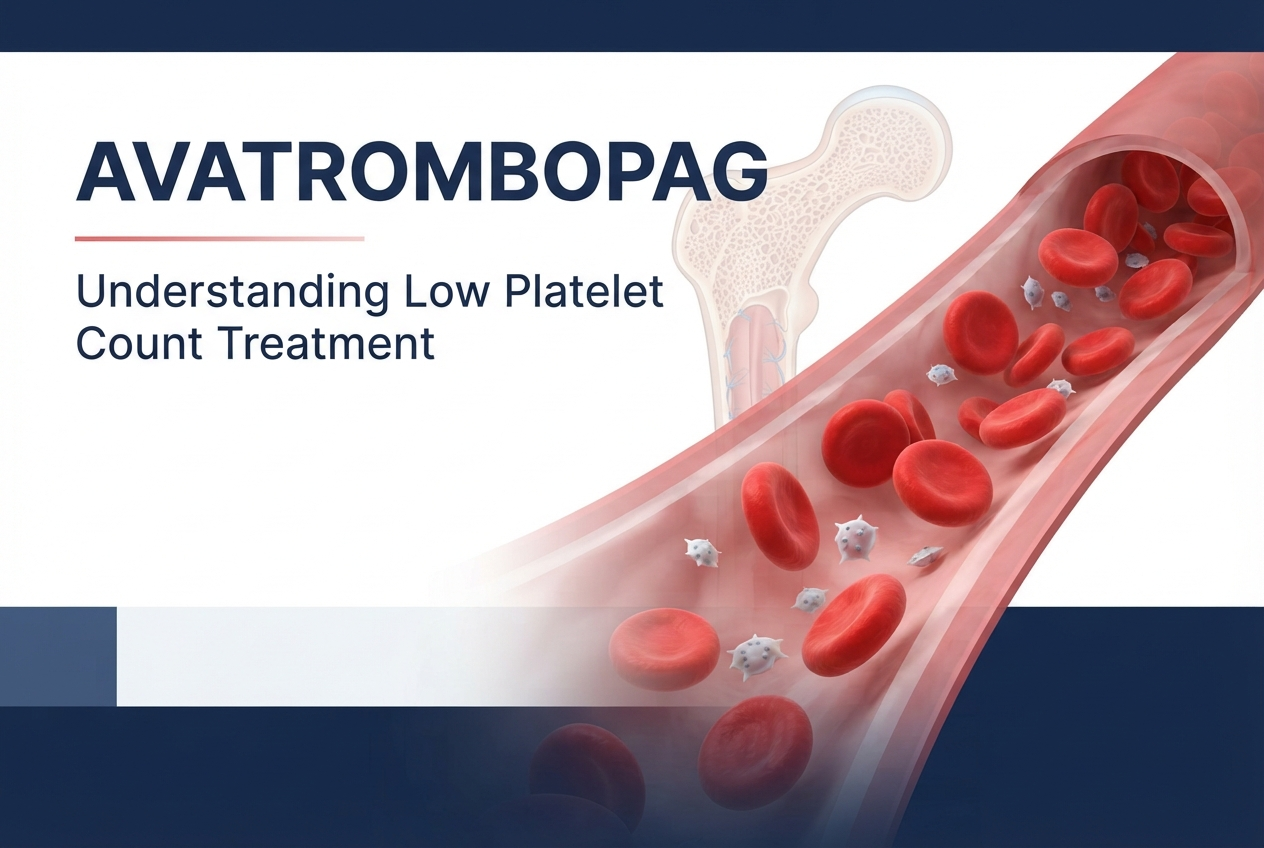
Avatrombopag: Uses, Benefits, Side Effects, and Treatment of Low Platelet Count
Introduction
Platelets are small blood cells that help the body control bleeding. When the platelet count becomes too low, a condition known as thrombocytopenia, a person may experience easy bruising, nosebleeds, gum bleeding, or other bleeding problems.
Avatrombopag is an oral prescription medicine that helps increase platelet production. It belongs to a group of medicines called thrombopoietin (TPO) receptor agonists. Doctors may prescribe it for certain patients with chronic immune thrombocytopenia (ITP) or thrombocytopenia associated with chronic liver disease before a planned medical procedure.
Avatrombopag is not a cancer medicine and does not treat cancer itself. However, low platelet counts can also occur in people receiving cancer treatment. Whether avatrombopag is appropriate in that situation requires specialist assessment and depends on the underlying cause and approved indication.
What Is Avatrombopag?
Avatrombopag is an oral thrombopoietin receptor agonist. It stimulates the body's platelet-producing cells in the bone marrow, known as megakaryocytes, helping increase platelet production.
The medicine is available as 20 mg tablets in some markets. A pack containing 30 tablets is a product presentation; it does not mean that every patient should take one tablet daily for 30 days. Treatment duration and frequency depend on the diagnosis, platelet count, and the prescribing specialist's instructions.
What Is Thrombocytopenia?
Thrombocytopenia means that the blood contains fewer platelets than expected. Platelets help form clots to stop bleeding after an injury.
A low platelet count may develop for several reasons, including:
Reduced platelet production in the bone marrow
Increased platelet destruction by the immune system
Certain infections
Chronic liver disease
Some medicines
Other underlying medical conditions
The seriousness of thrombocytopenia depends on the platelet count, the reason it developed, and whether the patient has active bleeding.
What Conditions Is Avatrombopag Used For?
1. Chronic Immune Thrombocytopenia (ITP)
Immune thrombocytopenia is a condition in which the immune system mistakenly attacks and destroys platelets. Some patients continue to have low platelet counts despite previous treatment.
Avatrombopag may be prescribed for adults with chronic ITP who have had an insufficient response to previous treatment. It helps the bone marrow produce more platelets and may reduce the risk of bleeding associated with a low platelet count.
2. Thrombocytopenia Associated With Chronic Liver Disease
Some people with chronic liver disease have low platelet counts. For selected adults who are scheduled to undergo a medical procedure, avatrombopag may be prescribed to increase platelet levels before the procedure.
The treatment is planned around the procedure and the patient's platelet count. It is not intended for routine long-term treatment of every person with liver disease.
3. Persistent or Chronic ITP in Children
In certain countries, approved product information also includes specific use in children aged one year and older with persistent or chronic ITP who have not responded adequately to previous treatment. The formulation and dose depend on the child's age and clinical circumstances.
Always follow the locally approved product information and specialist advice.
How Does Avatrombopag Work?
Avatrombopag activates the thrombopoietin receptor, also called the TPO receptor. This receptor plays an important role in the growth and development of platelet-producing cells in the bone marrow.
By stimulating this pathway, avatrombopag helps:
Support the development of megakaryocytes.
Increase platelet production.
Raise the platelet count in suitable patients.
Help reduce bleeding risk associated with low platelet counts.
The medicine does not directly correct every underlying cause of thrombocytopenia. The response must be monitored through blood tests.
Signs and Symptoms of Low Platelet Count
Some people with thrombocytopenia have no noticeable symptoms. Others may experience:
Easy bruising
Small red or purple spots on the skin (petechiae)
Nosebleeds
Bleeding gums
Longer-than-usual bleeding from minor cuts
Heavier menstrual bleeding
Blood in urine or stool in some cases
Severe or uncontrolled bleeding requires urgent medical attention.
How Is Thrombocytopenia Diagnosed?
Doctors may use several tests to identify low platelet counts and determine the underlying cause.
Complete Blood Count (CBC)
A CBC measures platelet levels as well as red and white blood cells. It is commonly used to detect thrombocytopenia.
Peripheral Blood Smear
A blood smear allows a laboratory specialist to examine blood cells under a microscope and assess their appearance.
Medical History and Physical Examination
The doctor may ask about bleeding symptoms, previous illnesses, liver disease, infections, and medicines that could affect platelet levels.
Additional Tests
Depending on the patient's condition, further tests may include liver function tests, infection screening, or other investigations to identify the cause of thrombocytopenia.
Avatrombopag 20 mg: Important Treatment Information
Avatrombopag 20 mg tablets are used under medical supervision. The treatment schedule is different for chronic ITP and chronic liver disease-related thrombocytopenia before a procedure.
For chronic ITP, the official US prescribing information describes a 20 mg once-daily starting regimen for adults, with adjustments based on platelet response. For chronic liver disease before a planned procedure, the dose is determined by the platelet count and is given for a limited five-day course.
These are prescribing-label details, not personal treatment instructions. The correct regimen must be selected by the treating specialist. Patients should not start, stop, or change the dose themselves.
Possible Side Effects of Avatrombopag
Like other prescription medicines, avatrombopag can cause side effects. The reported effects may vary depending on the condition being treated.
Possible side effects include:
Headache
Tiredness
Nausea
Abdominal discomfort
Fever
Joint pain
Nosebleeds
Gum bleeding
Bruising
Swelling in the limbs
Not every patient experiences these effects. Contact a healthcare professional if symptoms are persistent, severe, or concerning.
Serious Safety Warning: Blood Clots
TPO receptor agonists, including avatrombopag, have been associated with thrombotic or thromboembolic complications. These are conditions in which blood clots develop in blood vessels.
Seek urgent medical attention for warning signs such as:
Sudden chest pain
Shortness of breath
Painful or swollen leg
Sudden weakness or difficulty speaking
Sudden vision or balance problems
Doctors monitor platelet counts and assess clotting risk during treatment. The goal is to achieve an appropriate platelet count, not to make it higher than necessary.
Who Should Use Avatrombopag With Extra Caution?
Before prescribing avatrombopag, the doctor should review the patient's medical history and current medicines.
Extra caution may be needed in people with:
A history of blood clots
Chronic liver disease
Other conditions associated with increased clotting risk
Pregnancy or plans to become pregnant
Breastfeeding
Medicines that may interact with avatrombopag
Patients should tell their doctor about all prescription medicines, over-the-counter products, and supplements they use.
Drug Interactions
Some medicines can affect how avatrombopag works in the body. In particular, certain medicines that influence CYP2C9 and CYP3A4 enzymes may change avatrombopag exposure and require treatment adjustments in patients with ITP.
Do not start or stop another medicine without discussing it with the prescribing healthcare professional.
Monitoring During Avatrombopag Treatment
Regular monitoring is important to assess whether treatment is working and to reduce potential risks.
Depending on the indication, the doctor may monitor:
Platelet count before and during treatment
Signs of bleeding
Symptoms of blood clots
Response to treatment
Other relevant health conditions
The monitoring schedule depends on the reason for treatment and the patient's clinical condition.
Can Avatrombopag Be Used for Cancer-Related Low Platelet Counts?
Cancer and some cancer treatments can be associated with low platelet counts. However, avatrombopag is not a general-purpose treatment for chemotherapy-induced thrombocytopenia and is not approved as a treatment for cancer itself.
A patient with cancer who develops a low platelet count needs an assessment by an oncologist or hematologist. The specialist will identify the cause and decide whether any platelet-support treatment is appropriate.
Patients should never take avatrombopag for cancer-related low platelet counts without a specialist's recommendation.
Avatrombopag and Supportive Care
Medicine is only one part of managing thrombocytopenia. Patients should follow their doctor's advice and take precautions to reduce bleeding risks.
Helpful measures may include:
Attend scheduled blood tests.
Report unusual bruising or bleeding.
Discuss medicines that may increase bleeding risk.
Avoid activities with a high risk of injury if advised by the doctor.
Seek medical help for serious or persistent bleeding.
Follow the prescribed treatment plan.
Diet or supplements should not be considered a replacement for medical treatment.
Avatrombopag 20 mg: Pack Size Information
The product information supplied for this article is:
Generic Name: Avatrombopag
Strength: 20 mg
Pack Size: 30 Tablets
Drug Class: Thrombopoietin Receptor Agonist
The pack size identifies the number of tablets in the product pack. It does not determine the patient's prescribed dose or treatment duration.
Medicine Information at RootAid Pharma
Patients and healthcare professionals looking for medicine-related information can visit RootAid Pharma.
For enquiries about medicine information and current availability, visit:
Product availability, brand details, and pack presentations should be confirmed directly with the supplier. RootAid Pharma is referenced here as a medicine information and trading website, not as the manufacturer of avatrombopag.
Frequently Asked Questions (FAQs)
1. What is avatrombopag used for?
Avatrombopag is used to treat certain forms of low platelet count, including chronic ITP and thrombocytopenia in adults with chronic liver disease who are scheduled for a procedure.
2. Is avatrombopag a cancer medicine?
No. Avatrombopag is not a cancer treatment. It is a TPO receptor agonist that helps increase platelet production.
3. What is avatrombopag 20 mg?
It is a tablet strength containing 20 mg of avatrombopag. The prescribed dose and schedule depend on the patient's condition.
4. Does avatrombopag increase platelet count?
Yes. It stimulates the TPO receptor pathway, supporting the development of platelet-producing cells in the bone marrow.
5. Is avatrombopag used for ITP?
Yes. It is indicated for certain patients with chronic immune thrombocytopenia who have not responded sufficiently to previous treatment.
6. Is avatrombopag used in liver disease?
It may be used in adults with chronic liver disease-related thrombocytopenia who are scheduled to undergo a medical procedure.
7. Can avatrombopag cure ITP?
Avatrombopag helps manage platelet counts in suitable patients. It should not be described as a cure for ITP.
8. What are the common side effects?
Reported side effects include headache, tiredness, nausea, abdominal discomfort, bruising, and nosebleeds. The effects vary by patient and indication.
9. Can avatrombopag cause blood clots?
Yes. Blood clotting complications are an important safety concern. Doctors monitor platelet counts and assess clotting risks during treatment.
10. How long does avatrombopag treatment last?
Treatment duration depends on the indication. Chronic ITP treatment may require ongoing monitoring, while the chronic liver disease procedure-related regimen is a short course.
11. Can I take avatrombopag without a prescription?
No. It is a prescription medicine and should only be used under medical supervision.
12. Is avatrombopag suitable for every patient with low platelets?
No. Its suitability depends on the cause of thrombocytopenia, medical history, platelet count, and other clinical factors.
13. Does avatrombopag treat chemotherapy-related thrombocytopenia?
It is not a general-purpose or routinely approved treatment for chemotherapy-induced thrombocytopenia. An oncologist or hematologist must assess the patient.
14. What does a 30-tablet pack mean?
It means the pack contains 30 tablets. It does not mean the patient should take one tablet daily for 30 days.
15. Where can I find medicine information about avatrombopag?
For medicine information and availability enquiries, visit RootAid Pharma at https://rootaidpharma.com.bd.
Medical Disclaimer
This article is intended for general educational and informational purposes only. It does not replace professional medical advice, diagnosis, or treatment. Avatrombopag should only be used under the supervision of a qualified healthcare professional. Always consult your doctor or pharmacist before starting, changing, or stopping any medicine.
Need help after reading this?
Talk to our support team for sourcing guidance, product availability, and global delivery assistance.