Advanced Kidney Cancer: Cabozantinib Treatment Guide
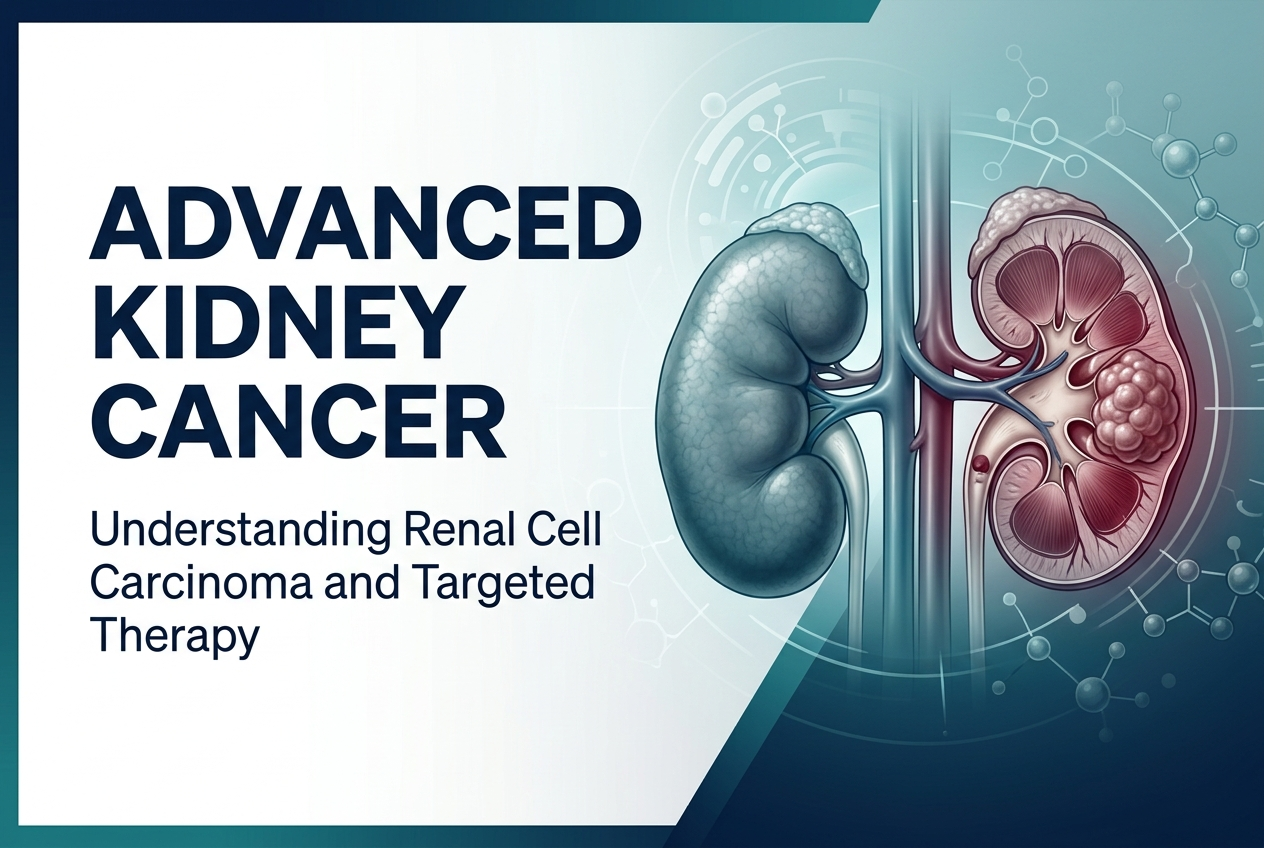
Advanced Kidney Cancer: Understanding Cabozantinib Treatment for Renal Cell Carcinoma
Introduction
Kidney cancer is a disease in which abnormal cells grow in one or both kidneys. One of the most common types of kidney cancer in adults is renal cell carcinoma (RCC). When the disease becomes advanced or spreads to other parts of the body, treatment may involve targeted therapy, immunotherapy, surgery, or a combination of approaches.
Cabozantinib is an oral targeted therapy used in certain patients with advanced renal cell carcinoma. It belongs to a group of medicines called tyrosine kinase inhibitors (TKIs), which block signals involved in cancer growth and the development of blood vessels that supply a tumour. It is an established treatment option for selected patients, but its suitability depends on the cancer type, stage, previous treatment, and the patient's overall health.
This guide explains advanced kidney cancer, its symptoms, diagnosis, treatment options, and the role of cabozantinib. It also discusses important safety considerations for patients and caregivers.
What Is Kidney Cancer?
The kidneys are two bean-shaped organs located on either side of the spine, below the rib cage. They filter waste products and excess fluid from the blood, help regulate blood pressure, and maintain the body's electrolyte balance.
Kidney cancer develops when cells in the kidney acquire changes that cause them to grow uncontrollably. Renal cell carcinoma begins in the small structures responsible for filtering blood and is the most common type of kidney cancer in adults.
Other kidney tumours exist, and not every kidney mass is cancerous. Correct diagnosis is therefore essential before treatment begins.
What Is Advanced Renal Cell Carcinoma?
Advanced renal cell carcinoma generally refers to cancer that has grown into nearby structures, cannot be completely removed with surgery, or has spread to distant parts of the body. Cancer that spreads from the kidney to another organ is called metastatic kidney cancer.
RCC may spread to the lungs, bones, liver, brain, or distant lymph nodes. The exact pattern of spread varies from person to person.
The treatment plan depends on factors such as:
The subtype of renal cell carcinoma.
Whether the cancer is confined to the kidney or has spread.
The patient's general health and kidney function.
Previous cancer treatments.
Laboratory and imaging results.
The expected benefits and risks of each treatment option.
Advanced kidney cancer does not have one universal treatment plan. An oncologist determines the most appropriate approach for each patient.
Common Symptoms of Kidney Cancer
Early kidney cancer may cause no noticeable symptoms and can sometimes be discovered during imaging performed for another reason.
As the disease progresses, possible symptoms include:
Blood in the urine, which may appear pink, red, or brown.
Persistent pain in the side or back.
A lump or swelling in the side or abdomen.
Unexplained weight loss.
Reduced appetite.
Ongoing fatigue.
Recurrent fever without a clear cause.
Anaemia or other abnormal blood test results.
These symptoms can also occur with conditions other than cancer, including kidney stones and urinary tract infections. Anyone experiencing blood in the urine or persistent unexplained symptoms should seek medical assessment rather than assume that cancer is the cause.
Risk Factors for Renal Cell Carcinoma
The exact cause of kidney cancer is not always known. However, several factors are associated with an increased risk.
Smoking
Tobacco smoking increases the risk of renal cell carcinoma. Stopping smoking can improve overall health and may reduce future cancer risk.
High Blood Pressure
Hypertension has been associated with kidney cancer. Blood pressure should be monitored and managed with appropriate medical advice.
Excess Body Weight
Overweight and obesity are associated with a higher risk of developing certain kidney cancers.
Family History and Inherited Conditions
A family history of kidney cancer may increase risk. Some inherited conditions, including von Hippel–Lindau disease, are associated with particular forms of renal cell carcinoma.
Long-Term Kidney Disease
Certain people with long-standing kidney disease, particularly those receiving long-term dialysis, may have an increased risk of specific kidney abnormalities and cancers.
Having one or more risk factors does not mean a person will definitely develop kidney cancer. People can also develop RCC without any recognised risk factors.
How Is Kidney Cancer Diagnosed?
Diagnosis usually combines clinical assessment, imaging, and laboratory tests. A specialist may recommend several investigations depending on the suspected tumour and the patient's condition.
Medical History and Physical Examination
The healthcare professional asks about symptoms, medical history, family history, smoking, and other relevant risk factors. A physical examination may help identify abdominal swelling or other findings.
Imaging Tests
Imaging is important for identifying a kidney mass and assessing whether the disease has spread.
CT scan: Provides detailed images of the kidneys and nearby structures.
MRI: May be useful when more detailed assessment of certain tissues or blood vessels is needed.
Ultrasound: Can help distinguish fluid-filled cysts from solid masses.
Chest imaging or other scans: May be used to investigate possible spread to other organs.
Blood and Urine Tests
Blood tests may assess kidney function, blood cell counts, liver function, and other general health indicators. Urine testing can identify blood or other abnormalities.
These tests cannot independently confirm every case of kidney cancer, but they help clinicians assess the patient's condition and plan treatment.
Kidney Biopsy
A biopsy is not necessary in every case. Depending on the imaging findings and the proposed treatment, a specialist may recommend taking a tissue sample to establish the diagnosis or clarify the tumour type.
Stages of Kidney Cancer
Kidney cancer is commonly described using stages that indicate how far the disease has progressed.
Stage I: The tumour is relatively small and confined to the kidney.
Stage II: The tumour is larger but remains confined to the kidney.
Stage III: The cancer has spread to certain nearby major blood vessels, surrounding structures, or regional lymph nodes.
Stage IV: The cancer has spread to more distant organs or has extended into certain structures beyond the kidney.
The precise staging criteria are more detailed than this simplified overview. Staging helps the cancer team choose treatment and discuss prognosis.
Cabozantinib is primarily relevant to selected cases of advanced renal cell carcinoma; it is not automatically required for every patient with kidney cancer.
What Is Cabozantinib?
Cabozantinib is an oral targeted anticancer medicine. It inhibits several tyrosine kinases, including pathways involving MET, AXL, and vascular endothelial growth factor receptors (VEGFRs). These pathways can contribute to tumour growth, the formation of new blood vessels, and cancer progression.
By blocking selected signalling pathways, cabozantinib can slow cancer growth in some patients. It is not a conventional chemotherapy medicine, although it can cause significant adverse effects and requires close medical supervision.
Cabozantinib is used for several cancer indications, depending on the product formulation and applicable approval. These include certain cases of advanced renal cell carcinoma and selected cases of hepatocellular carcinoma and thyroid cancer. The precise indication must be checked against the relevant product information and local regulatory approval.
How Is Cabozantinib Used for Advanced Kidney Cancer?
Cabozantinib may be prescribed for adults with advanced renal cell carcinoma in selected treatment settings. It may be used alone or, for eligible patients, in combination with nivolumab, an immunotherapy medicine.
The decision depends on the patient's clinical condition, the cancer's risk category, previous treatments, and the treatment strategy chosen by the oncology team.
Cabozantinib is not appropriate for every kidney cancer patient. The doctor considers potential benefits, side effects, interactions with other medicines, and monitoring requirements before prescribing it.
What Does Cabozantinib Do?
Cabozantinib targets signalling proteins involved in cancer cell activity and tumour blood-vessel development. By interfering with these pathways, it may delay disease progression or reduce tumour size in some patients.
Treatment response varies. Some patients experience improvement or stable disease, while others may not respond or may need a change in treatment because of progression or side effects.
No targeted medicine can guarantee a cure.
CABOXEN 20 mg: Product Information
CABOXEN 20 mg is listed in Bangladesh as a cabozantinib capsule product. The product information provided for this article identifies a pack size of 90 capsules.
The pack size describes the number of capsules supplied; it does not establish the correct daily dose or duration of treatment. The appropriate formulation and dose must be confirmed by the prescribing oncologist and the official product information.
Patients should not start, stop, split, open, or change the way they take a cancer medicine without professional instructions. Do not substitute one cabozantinib formulation for another without checking with the oncology team, because different formulations and indications may have different dosing instructions.
Other Treatment Options for Kidney Cancer
Cabozantinib is one option among several. Treatment may include one or more of the following approaches.
Surgery
Surgery is a major treatment for kidney cancer that can be removed safely. A partial nephrectomy removes the tumour while preserving part of the kidney; a radical nephrectomy removes the affected kidney and may include nearby tissues when indicated.
Selected patients with advanced disease may also be considered for surgery as part of an individualised treatment plan.
Immunotherapy
Immunotherapy helps the immune system recognise and attack cancer cells. Medicines such as nivolumab may be used alone or in combinations for selected patients. Nivolumab plus cabozantinib is one treatment option for eligible patients with advanced RCC.
Combination treatment can increase both treatment activity and the possibility of side effects, so careful monitoring is essential.
Other Targeted Therapies
Other targeted medicines may be considered depending on the tumour subtype, prior treatment, patient risk category, and local clinical guidance. The choice should be made by a specialist familiar with kidney cancer.
Radiation Therapy
Radiation therapy is not the main treatment for every kidney tumour, but it may help control symptoms or treat selected sites of cancer spread, such as painful bone metastases.
Clinical Trials
Clinical trials may provide access to new treatment approaches. Patients can ask their oncology team whether a suitable trial is available.
Possible Side Effects of Cabozantinib
Cabozantinib can cause side effects ranging from mild symptoms to serious complications. The type and severity vary among patients.
Common or important side effects may include:
Diarrhoea.
Nausea or vomiting.
Reduced appetite.
Weight loss.
Fatigue or weakness.
Mouth sores.
Changes in taste.
High blood pressure.
Redness, tenderness, or peeling of the skin on the palms and soles.
Constipation.
Abnormal liver function tests.
Serious risks can include severe bleeding, blood clots, gastrointestinal perforation or fistula, impaired wound healing, severe hypertension, and certain heart or liver complications. The full risk profile is described in the product's prescribing information.
When to Seek Urgent Medical Help
Seek urgent medical care for symptoms such as:
Severe or uncontrolled bleeding.
Sudden chest pain or difficulty breathing.
Severe abdominal pain.
Black stools or vomiting blood.
Sudden weakness, confusion, or severe headache.
A serious allergic reaction.
Severe dehydration from persistent diarrhoea or vomiting.
Patients should contact their treating team promptly about new, worsening, or unusual symptoms. Do not wait for a routine appointment if symptoms may indicate a serious complication.
Precautions Before and During Treatment
Before starting cabozantinib, patients should give their doctor a complete list of prescription medicines, over-the-counter products, vitamins, and herbal supplements.
Important precautions include:
Blood pressure: Monitor as directed, because cabozantinib may cause or worsen hypertension.
Bleeding risk: Tell the doctor about bleeding disorders, recent bleeding, or medicines that affect blood clotting.
Surgery and dental procedures: Cabozantinib can affect wound healing. The oncology team should manage treatment around planned procedures.
Liver function: Blood tests may be required to monitor liver health.
Pregnancy and breastfeeding: Discuss reproductive risks with the healthcare professional and follow the product-specific precautions.
Drug interactions: Certain medicines and supplements can affect cabozantinib exposure.
Adherence: Follow the exact instructions for the prescribed formulation and do not change the dose independently.
Patients should also ask their pharmacist or doctor how to handle a missed dose, vomiting after a dose, or suspected overdose. The answer depends on the specific prescribing instructions.
Monitoring During Kidney Cancer Treatment
Regular follow-up helps the care team assess whether treatment is working and whether side effects are developing.
Monitoring may include:
Blood pressure measurements.
Blood tests, including liver function and blood counts.
Assessment of kidney function and hydration.
Review of appetite, weight, diarrhoea, fatigue, and skin symptoms.
Imaging to assess tumour response or disease progression.
Review of other medicines and possible interactions.
The monitoring schedule is individualised. Patients should attend appointments and report symptoms honestly, even when they seem minor.
Living With Advanced Kidney Cancer
A diagnosis of advanced kidney cancer can affect physical health, emotions, family life, and finances. Supportive care can help patients manage symptoms and maintain quality of life while receiving cancer treatment.
Helpful steps may include:
Keeping a written record of symptoms and questions for the oncology team.
Following professional advice on nutrition and fluid intake.
Staying physically active within personal limits.
Asking for help with fatigue and daily activities.
Seeking psychological support or joining a reputable cancer support group.
Discussing pain management and palliative care when needed.
Palliative care can be provided alongside active cancer treatment. Its purpose is to relieve symptoms, support quality of life, and help patients and families navigate difficult decisions.
Frequently Asked Questions
1. What type of cancer is cabozantinib used for?
Cabozantinib is used for selected cases of advanced renal cell carcinoma and certain other cancers, depending on the formulation and approved indication. These may include hepatocellular carcinoma and particular thyroid cancers.
2. Is cabozantinib used for kidney cancer?
Yes. Cabozantinib is an established targeted therapy option for selected patients with advanced renal cell carcinoma. An oncologist determines whether it is appropriate for a particular patient.
3. Is cabozantinib chemotherapy?
Cabozantinib is a targeted therapy known as a tyrosine kinase inhibitor. It works differently from conventional chemotherapy, but it can still cause significant adverse effects.
4. Can cabozantinib cure advanced kidney cancer?
A cure cannot be guaranteed. Treatment may control the disease, shrink tumours, or delay progression in some patients. Outcomes depend on many individual factors.
5. Can cabozantinib be combined with immunotherapy?
For eligible patients with advanced renal cell carcinoma, cabozantinib may be combined with nivolumab. This combination must be prescribed and monitored by an oncology specialist.
6. Is CABOXEN 20 mg the same as every other cabozantinib product?
Products may contain the same active ingredient but differ in formulation, strength, instructions, or approved indications. Patients should not switch products or formulations without confirmation from their doctor or pharmacist.
7. Does a pack of 90 capsules mean 90 days of treatment?
No. Pack size only describes the number of capsules in the pack. The number of days supplied depends on the prescribed regimen and any treatment interruptions or dose adjustments.
8. What are the common side effects of cabozantinib?
Possible side effects include diarrhoea, fatigue, nausea, reduced appetite, mouth sores, high blood pressure, and skin problems affecting the hands and feet. Serious side effects are also possible.
9. Does everyone taking cabozantinib experience side effects?
No. Side effects vary between individuals. Some patients experience mild effects, while others require treatment adjustments or additional medical care.
10. What should patients do if side effects develop?
Contact the treating oncology team for advice. Serious symptoms, including major bleeding, severe abdominal pain, chest pain, or breathing difficulty, require urgent medical assessment.
11. Is regular monitoring necessary?
Yes. Monitoring may include blood pressure checks, laboratory tests, symptom review, and imaging to evaluate treatment response.
12. Can cabozantinib interact with other medicines?
Yes. Some prescription medicines, supplements, and herbal products can interact with cabozantinib. Provide the healthcare team with a complete list of everything being taken.
13. Can patients stop cabozantinib when they feel better?
Patients should not stop or change treatment independently. The oncology team will decide whether treatment should continue, be adjusted, or be discontinued.
14. Is cabozantinib suitable for every stage of kidney cancer?
No. Its role is primarily in selected advanced renal cell carcinoma treatment settings. Localised kidney cancer may be managed with surgery or other approaches, depending on the circumstances.
15. Where can I find information about CABOXEN 20 mg?
For product details, patients should consult the official product information, their prescribing oncologist, and a qualified pharmacist. For medicine information and availability enquiries, visit RootAid Pharma at https://rootaidpharma.com.bd. Confirm current product availability directly with the website or its team.
Conclusion
Advanced renal cell carcinoma requires an individualised treatment plan based on the cancer's stage, subtype, and the patient's overall health. Cabozantinib is an important targeted therapy option for selected patients and may be used alone or in combination with immunotherapy in appropriate settings.
Because cabozantinib can cause serious adverse effects and interact with other medicines, it must be used under specialist supervision. Patients should follow the prescribed instructions, attend monitoring appointments, and report concerning symptoms promptly.
For medicine information and availability enquiries, visit RootAid Pharma at https://rootaidpharma.com.bd.
Medical Disclaimer
This article is for general educational and informational purposes only. It does not replace a medical consultation, diagnosis, or treatment plan. Cabozantinib is a prescription anticancer medicine and should be used only under the supervision of a qualified oncology professional. Indications, formulations, warnings, and dosing instructions may differ by product and country. Always consult the current official prescribing information and your healthcare team.
Need help after reading this?
Talk to our support team for sourcing guidance, product availability, and global delivery assistance.